SutiExpense vs SAP Concur

SutiExpense is an AI-powered expense management platform that automates the full expense cycle, from intelligent receipt capture and data extraction through configurable approvals, corporate card reconciliation, and reimbursement, inside one unified SutiSpend platform, with workflows that adapt to how your organization already works and native connections to your accounting, ERP, and travel systems. SAP Concur […]
Best Tableau Alternatives for Small Businesses in 2026
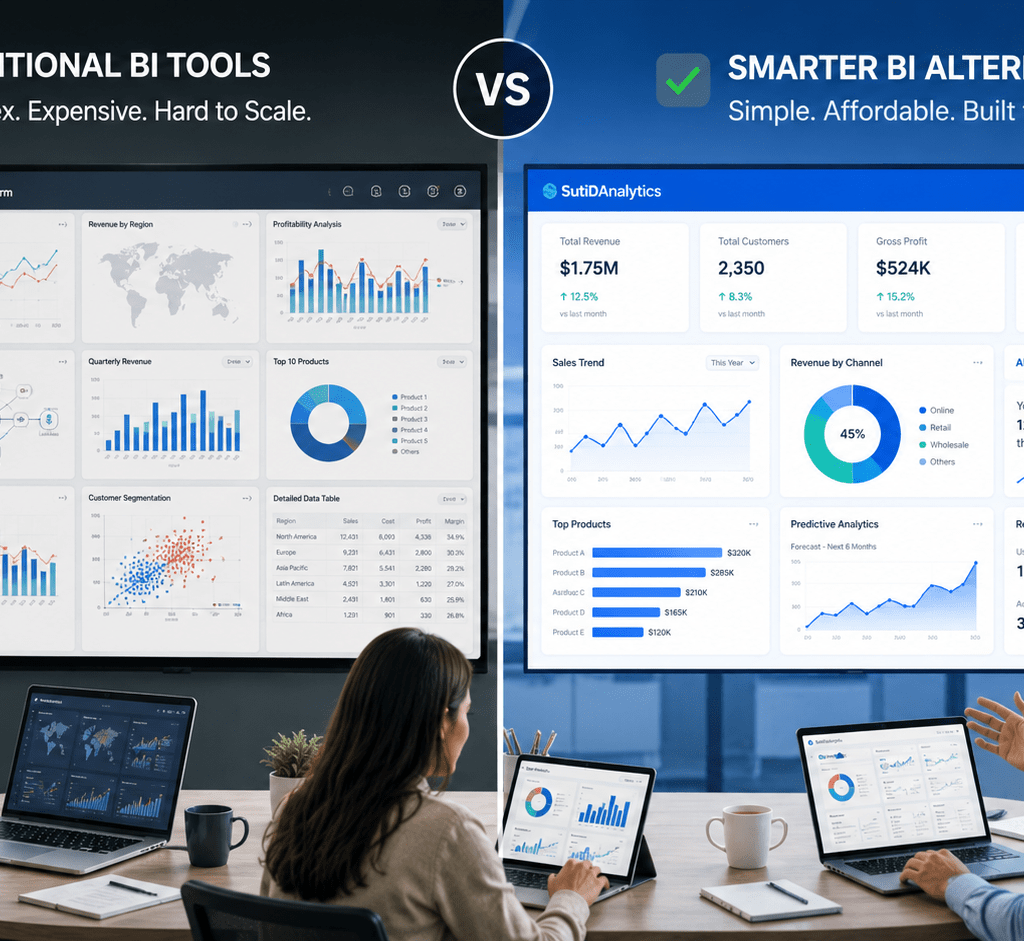
Data-driven decisions shouldn’t come with enterprise price tags. Here’s your complete guide to switching. Why Small Businesses Are Rethinking Tableau Tableau has earned its reputation as a powerhouse in the business intelligence world. Its visual depth, interactive dashboards, and data exploration capabilities have made it the go-to tool for data teams at large organizations. But […]
How to Choose the Right Analytics Software for Your Small Business
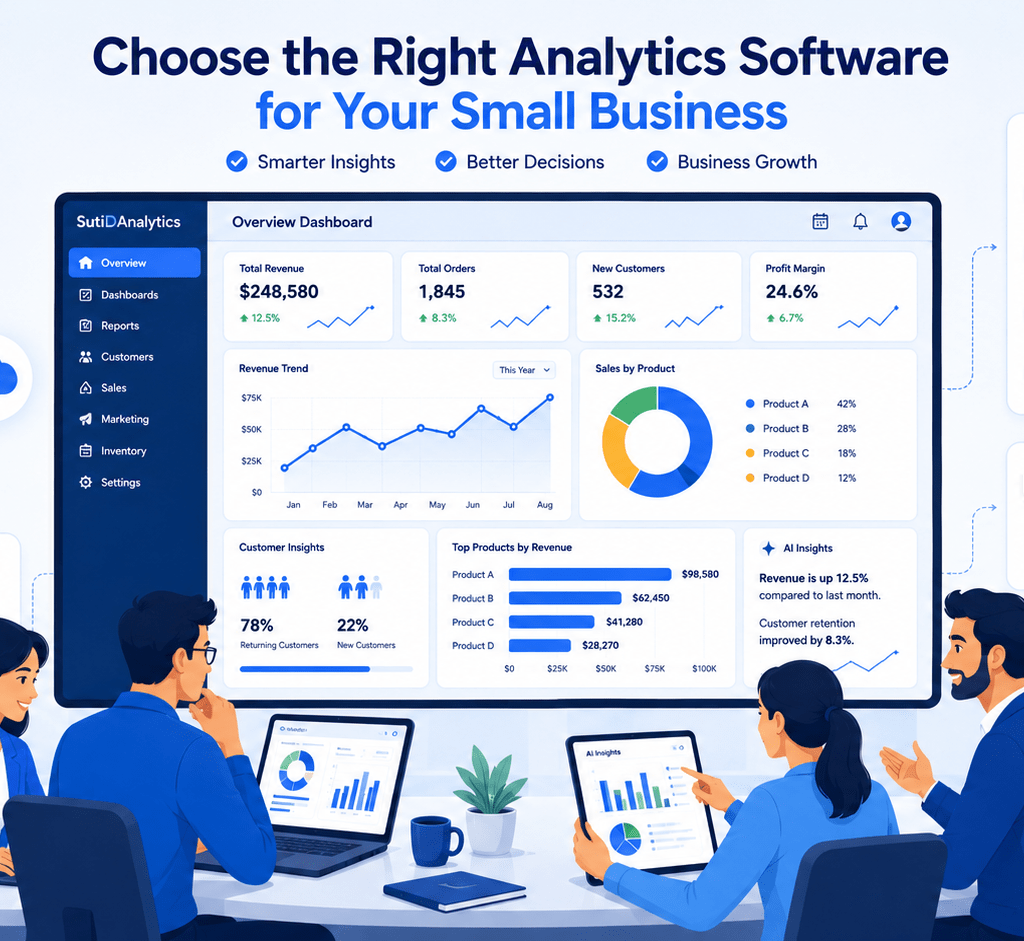
Most small businesses are sitting on more data than ever — sales figures, customer behavior, website traffic, and inventory levels. And yet, decisions still get made on gut feel. It’s not a data problem. It’s a tool problem. The analytics software that works brilliantly for a 500-person enterprise often overwhelms a 20-person SMB. It’s expensive, […]
Top 5 Business Analytics Mistakes SMBs Make (And How to Fix Them)

You invested in data. You set up dashboards. You told your team you were going to make your business a “data-driven business.” And yet — decisions are still being made on gut feel. Reports still arrive late. And nobody’s quite sure whether the numbers they’re looking at are accurate. Sound familiar? The truth is, most […]
Rules-Based Automation vs AI-Driven Expense Automation: Practical Differences

The phrase “AI-powered expense management” appears in the marketing material of nearly every platform in the category. It appears with enough frequency that it has become functionally meaningless as a differentiator. Every platform that uses machine learning to categorize a receipt, flag an anomaly, or predict a policy match will describe itself as AI-powered. The […]
Manual Review vs Automated Policy Controls in Expense Management

Manual expense review feels like control. A human reviewer looks at a submission, applies judgment, and either approves it or returns it for correction. The process is visible, traceable to a person, and produces a documented outcome. It carries the intuitive weight of oversight that organizations associate with financial governance. The problem is that manual […]
Operational ROI vs Financial ROI in Expense Automation Investments

Two finance leaders at organizations of similar size, similar complexity, and similar implementation timelines can evaluate the same expense automation investment and reach opposite conclusions about whether it delivered value. One reports strong ROI. The other reports that the platform underperformed expectations. Neither is wrong. They are measuring different things. This is the ROI perspective […]
How Travel & Expense Platforms Differ by Market Segment: SMB, Mid-Market, Enterprise

Most T&E platform evaluations are framed as a search for the best option. The underlying assumption is that platform quality is a fixed property: that one platform is objectively superior and the evaluation task is to identify it. That assumption explains why so many platform selections disappoint. T&E platforms are not universally best or worst. […]
How CFOs Shortlist Expense Management Vendors in Practice

Most expense management vendor selections don’t fail at the final decision. They fail earlier, when the shortlist is built on the wrong criteria, when demo scripts substitute for real evaluation, or when the constraints driving the decision are never named out loud. The CFO who runs a structured shortlisting process gets a better outcome than […]
Native Integrations vs Middleware in Expense Management Systems

Integration failures are one of the most common reasons expense management implementations underperform. Not the software itself. The connections around it. Finance teams discover this after go-live. Expense data doesn’t appear in the ERP on time. Card transactions reconcile inconsistently. A system update on one side breaks the data flow on the other, and no […]