
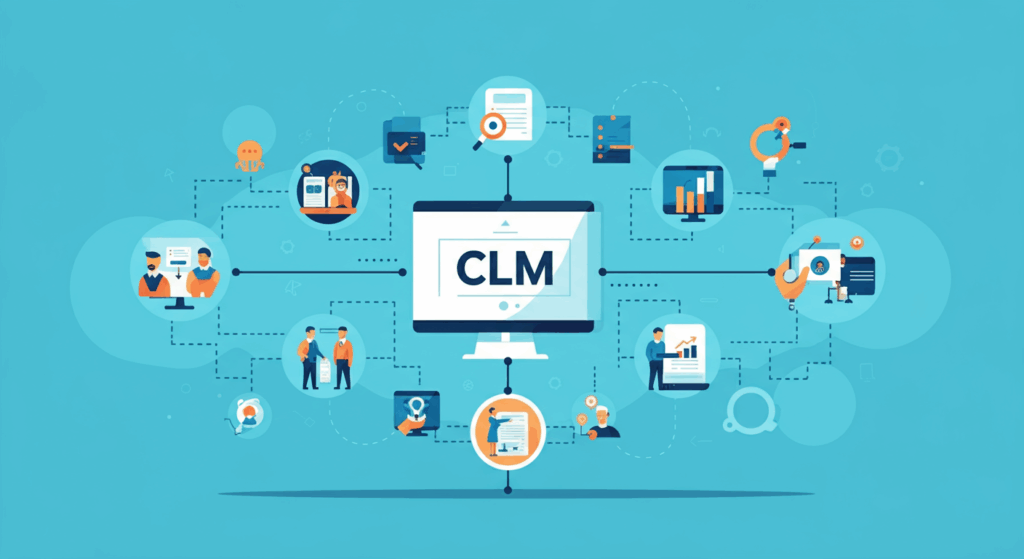
Contract Lifecycle Management has become one of the most strategic investments for modern organizations. Businesses rely on contracts for revenue, supplier relationships, compliance, and risk management, and a robust CLM system brings automation, visibility, and discipline across the entire lifecycle. CLM deployment is a large-scale operational transformation that touches legal teams, procurement, finance, sales, and business leadership. Without careful planning, organizations often face challenges that lead to delays, extra costs, low adoption, and disappointing results.

Below are the most common pitfalls companies experience during CLM deployment, along with best practices to avoid them and ensure a smooth, successful rollout.
Pitfall 1: Deploying Without a Strategic Roadmap
Many teams jump straight into implementation without aligning on goals, metrics, or the long-term vision. A CLM platform is powerful, but without a clear strategy, it easily becomes underutilized or misconfigured
Best Practices to Avoid This
- Define measurable outcomes such as cycle time reduction, improved compliance monitoring, faster review speed, or increased contract visibility.
- Align stakeholders early so legal, sales, procurement, and finance all understand the purpose and expected impact.
- Build a phased roadmap that starts with foundational capabilities before expanding to advanced workflows or AI features.
A clear strategy ensures that the implementation team always knows the “why” behind every configuration decision.
Pitfall 2: Poor Data Migration and Unstructured Legacy Contracts
Migrating contract data from old systems or shared drives into a CLM is often the most underestimated part of the project. Legacy contracts may be scattered, incomplete, or mislabeled, and missing or inaccurate metadata can weaken analytics and searchability.
Best Practices to Avoid This
- Conduct a detailed analysis of your existing contract repository to identify duplicates, incomplete records, or outdated versions.
- Standardize naming conventions, metadata structures, and folder hierarchies before migration begins.
- Use AI-assisted extraction to automatically pull metadata and key clauses from old agreements.
- Test data mapping thoroughly with small samples to catch errors early.
Strong data quality accelerates adoption and ensures your CLM delivers reliable insights from day one.
Pitfall 3: Overly Complex Workflows in the Initial Phase
Teams often attempt to automate every possible scenario right away. Overly complicated workflows slow down implementation and make the system rigid, confusing, or difficult to maintain.
Best Practices to Avoid This
- Start with simple, high-impact workflows that cover the majority of contract scenarios.
- Enable basic approvals and routing first, then add escalations, conditional triggers, automated fallback clauses, or advanced validations later.
- Maintain modular workflows so changes can be made without disrupting the entire process.
A phased approach keeps the CLM flexible, scalable, and easier for users to adopt.
Pitfall 4: Lack of Change Management and Inadequate Training
Even the best CLM system will fail if teams are not trained or are resistant to change. Legal, procurement, and sales teams often have established habits, and any shift in contract processes can initially feel disruptive.
Best Practices to Avoid This
- Communicate the value of the CLM, focusing on how it reduces manual effort and speeds up work.
- Provide role-based training tailored to legal reviewers, contract creators, approvers, and administrators.
- Create self-help resources—videos, FAQs, cheat sheets, and short tutorials—to support ongoing learning.
- Celebrate quick wins to encourage adoption and show tangible impact.
Change management is not optional; it is the backbone of any successful CLM deployment.
Pitfall 5: Neglecting Integration with Existing Systems
A CLM should never operate in isolation. It must integrate with CRM, ERP, e-signature tools, procurement platforms, and document repositories. Without proper integration planning, organizations end up with siloed data and broken workflows.
Best Practices to Avoid This
- Identify all upstream and downstream systems early in the project.
- Prioritize integration with CRM for contract initiation and ERP for vendor, customer, and finance data.
- Use standardized APIs to ensure secure and reliable data exchange.
- Validate integration flows with end users to eliminate mapping or synchronization errors.
A well-integrated CLM creates a connected contracting ecosystem that eliminates manual work across departments.
Pitfall 6: Failing to Standardize Templates and Clause Libraries
Without standardization, teams may continue using old versions, outdated language, or inconsistent terms that limit the system’s value.
Best Practices to Avoid This
- Conduct a comprehensive audit of all existing templates and clauses.
- Consolidate duplicates and remove legacy versions that no longer align with policy.
- Build a centralized clause library with approved fallback language and negotiation guidance.
- Review templates annually to ensure they reflect updated regulations and business needs.
Standardization lays the foundation for accurate drafting, faster negotiation, and better compliance.
Pitfall 7: Ignoring Metadata Configuration and Reporting Needs
Many organizations underestimate the importance of metadata, yet metadata drives search, reporting, audits, compliance checks, and renewal management.
Best Practices to Avoid This
- Identify critical metadata fields such as contract value, renewal dates, governing law, risk level, and key obligations.
- Configure mandatory fields to ensure consistency across contract records.
- Use AI to auto-extract metadata from uploaded documents.
- Establish dashboards and alerts based on metadata to improve decision-making and proactive risk management.
Metadata is what transforms a CLM from a document storage system into a strategic insights engine.
Pitfall 8: Underutilizing Automation and AI
Modern CLM platforms offer AI-driven drafting assistance, automated approval routing, risk scoring, clause suggestions, and renewal reminders. Yet many organizations adopt only the basic features.
Best Practices to Avoid This
- Start with simple automation such as auto-fill fields, approval routing, and expiry alerts.
- Expand to AI features like contract summaries, anomaly detection, risk scoring, and clause recommendations.
- Integrate AI insights into reviewer workflows to reduce time spent on manual analysis.
- Continuously refine automation rules based on user feedback and evolving business needs.
Leveraging automation early unlocks speed, accuracy, and long-term efficiency.
Pitfall 9: Evaluating Technology Instead of Evaluating Usability
A feature-rich CLM is valuable only if people can use it comfortably. Some teams prioritize technical capabilities over user experience, which slows adoption and triggers frustration.
Best Practices to Avoid This
- Choose a CLM with intuitive navigation and a clean interface.
- Conduct hands-on demos where legal, procurement, and sales teams test real scenarios.
- Optimize the system for self-service so users can generate contracts with minimal assistance.
- Continuously collect user feedback to improve usability and simplify workflows.
Usability ensures that the CLM becomes part of everyday operations instead of an optional tool.
Conclusion
CLM deployment is not just a technology rollout. It is an organizational transformation that affects every stage of contracting—from request to renewal. By recognizing the common pitfalls and applying the best practices above, organizations can avoid delays, reduce risk, improve adoption, and maximize the value of their contracting platform.
With a strong roadmap, clean data, integrated systems, and a user-centered approach, your CLM deployment can deliver faster cycle times, better compliance, and a more predictable contracting process. With the right strategy, your business will not just implement a CLM system—you will elevate the entire contract lifecycle into a modern, automated, and insight-driven operation.