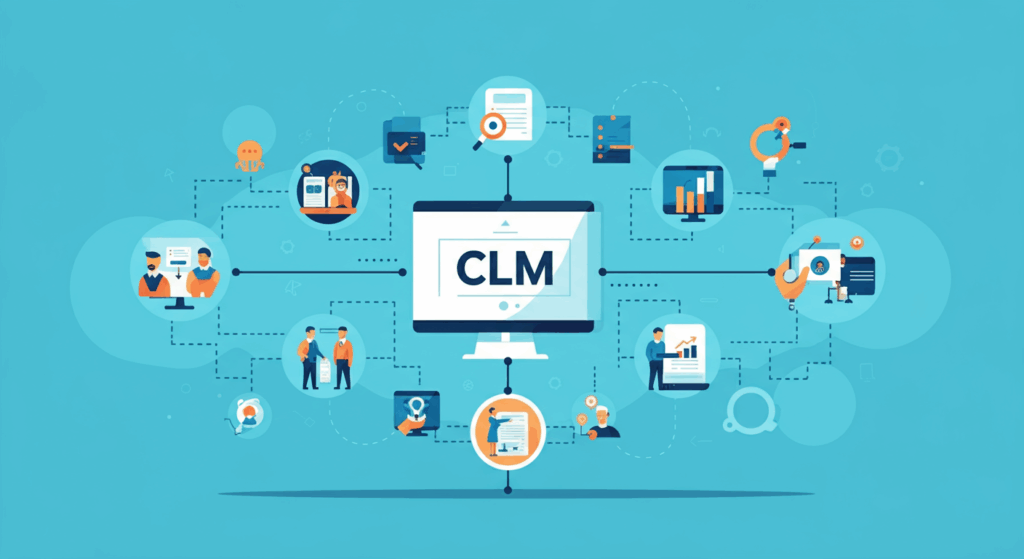
Implementing a Contract Lifecycle Management platform is a strategic upgrade for any business, but choosing the right solution is only half the journey. The real value emerges when your teams can adopt, use, and scale the system without friction. SutiCLM is designed to deliver this seamless transformation, offering automated workflows, AI-powered insights, a unified repository, and deep integrations that simplify every stage of contracting. But like any enterprise solution, success depends on executing the right implementation plan.
Whether you’re deploying SutiCLM for the first time or expanding it across departments, here are ten essential steps to ensure a smooth and impactful implementation.
Begin With a Clear Vision for Your Contracting Process
Every successful SutiCLM implementation starts with well-defined goals. Before configuring anything, outline what you want to achieve.
Common objectives include:
- Standardizing templates and clause libraries
- Reducing contract cycle times
- Improving compliance and audit readiness
- Increasing visibility into obligations, risks, and renewals
- Automating manual tasks such as redlining or approvals
A shared vision ensures that legal, procurement, sales, finance, and executive teams all move in the same direction and measure success the same way.
Map Your End-to-End Contract Workflows
SutiCLM supports customizable workflows that can match even the most complex enterprise processes. To set the foundation, map your existing workflows across request, drafting, negotiation, review, approval, signature, storage, and renewal.
Ask questions like:
- Who initiates each contract type?
- Which teams review or approve?
- Where do bottlenecks typically occur?
- How many versions are produced?
- Which steps can SutiCLM automate?
Documenting every stage helps you configure the system so it aligns perfectly with your business rules.
Categorize Your Contract Data Before Migration
SutiCLM thrives on structured, high-quality data. Before migrating documents into the centralized repository, review your existing contracts to eliminate duplicates, fix naming inconsistencies, and identify outdated versions.
A strong pre-migration process includes:
- Categorizing contract types
- Defining metadata fields such as values, dates, owners, and risks
- Tagging key clauses
- Standardizing folder structures
- Archiving expired or irrelevant agreements
Clean data ensures accurate search results, stronger reporting, and smoother AI-assisted extraction once you begin using SutiCLM’s advanced features.
Build a Standardized Template and Clause Library in SutiCLM
One of SutiCLM’s biggest strengths is its ability to enforce standardization and reduce negotiation cycles. To achieve this, invest time in building a clean template and clause library.
Steps to follow:
- Consolidate existing templates
- Identify approved fallback clauses
- Configure clause categories and usage rules
- Add clause descriptions and guidance for negotiation teams
- Define version control policies
With a centralized library, SutiCLM ensures your teams always use compliant, approved content while AI suggests the right clauses automatically.
Configure Automated Workflows for Each Contract Type
SutiCLM allows you to automate routing, escalations, notifications, risk scoring, and approval logic. Start by creating automated workflows for high-volume or high-risk contract types such as NDAs, vendor agreements, and customer contracts.
Best practices include:
- Creating conditional approval paths
- Defining escalation triggers based on value, risk, or region
- Automating reminders for pending tasks
- Assigning role-based responsibilities
Automation reduces delays, minimizes errors, and ensures that no contract falls through the cracks.
Integrate SutiCLM with Your Business Ecosystem
SutiCLM integrates with key enterprise systems like CRM, ERP, HRMS, procurement platforms, and e-signature tools. Integration eliminates duplicate data entry, improves accuracy, and creates a connected contracting workflow.
Typical integrations include:
- CRM (for deal and customer data)
- ERP (for supplier and financial information)
- e-Signature platforms such as SutiSign
- Email and cloud storage systems
- Issue tracking or ticketing tools
Ensure that data flows both ways and that ownership rules are clearly defined during implementation
Leverage SutiCLM’s AI Features Early
SutiCLM’s AI capabilities significantly accelerate deployment and long-term adoption. The platform supports:
- AI-based contract summarization
- Clause recommendations
- Risk scoring
- Auto-extraction of metadata
- Intelligent search across large repositories
Adopting AI early ensures your teams benefit from faster drafting, better risk visibility, and reduced manual review effort from day one.
Provide Role-Based Training for Every Team
A smooth SutiCLM implementation depends heavily on user adoption. Not all teams use the platform the same way, so training must be role-specific.
Examples:
- Legal teams need training on clause libraries, redlining, and approvals
- Sales teams need training on contract initiation and status tracking
- Procurement teams need training on vendor contracts and renewals
- Executives need training on dashboards and customized reports
Use a blend of instructor-led sessions, tutorial videos, FAQs, and quick reference guides to build confidence and reduce friction.
Put SutiCLM in Practice Before Full Rollout
A pilot helps identify gaps, refine configurations, and gather valuable user feedback before going live across the organization.
During the pilot:
- Test end-to-end workflows
- Validate metadata fields
- Confirm approval logic
- Check document formatting and version control
- Evaluate integration accuracy
The pilot ensures your enterprise rollout is stable, user-friendly, and aligned with real-world usage.
Monitor, Optimize, and Continuously Improve
SutiCLM offers robust dashboards and analytics that help you track contract cycle times, bottlenecks, approval delays, upcoming renewals, and risk trends. After going live, monitor these insights to continuously optimize your contracting process.
Key areas to evaluate:
- Are templates being used correctly?
- Are approvals taking too long?
- Are users raising support requests about repetitive issues?
- Are automated reminders and escalations working as expected?
- Are teams fully using AI-based recommendations?
Continuous improvement ensures your SutiCLM deployment keeps evolving alongside business needs.
Final thoughts
A smooth SutiCLM implementation is not just about installing software—it is about transforming how your organization manages contracts. By following these ten steps, you create a strong foundation for automation, compliance, visibility, and smarter decision-making. With clean data, well-designed workflows, intelligent templates, deep integrations, and comprehensive training, SutiCLM becomes more than a contracting platform—it becomes a strategic engine that supports growth, reduces risk, and empowers every team.
Implement it right, and SutiCLM will elevate your contract lifecycle from a manual burden to a connected, intelligent, and fully optimized experience.