Is choosing between traditional Contract Management System (CMS) and Contract Lifecycle Management (CLM) making you confused?
You are not alone; many contract managers, contract owners, and contract authors also struggle to decide which option is best for them to reach their specific goal, like managing the entire contract lifecycle, reducing errors, and improving compliance.
While business contracts are essential for any business, you need to manage them well. Businesses have used both the CMS and CLM for contract creation purposes.
You can study the blog to understand both, how they work, what are the best features, the benefits of CLM software, and other important things.
A Brief on Traditional Contract Management
Contract Management is required when there is a contract. Every department in a business organization, i.e. Legal, Procurement, or HR, must deal with these contracts.
Contract Management is held between two or more than two parties.
There are 4 stages of Contract Management:
1.Drafting of Agreement
In this first step, all the parties’ terms and conditions are drafted. Negotiation is an important matter here. The agreement is only drafted after the deal-making part is over between the respective stakeholders.
2.Execution
In the second step, the contract moves to become legally bound after all the parties have signed it. Nowadays, e-signature is more acceptable as it is done quickly and has stronger authentication.
3.Contract Monitoring
In the third step, businesses need to keep tabs on important dates and deadlines so that forgetting something does not turn into an expensive mistake.
4.Termination & Renewal
In the fourth step, all the contract-bound parties need to decide whether they will terminate the contract or want to renew it
The legal team needs to initiate the contract renewal process quickly if they want renewal.
This is what traditional Contract Management is all about.
A Brief on Contract Lifecycle Management
The Contract Lifecycle Management offers a broader and more strategic view of contract management. It is especially effective for medium and large organizations.
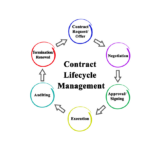
It starts with contract creation then moves to the next stages like negotiation and execution and lastly, it ends with renewal or expiration.
Unlike Contract Management, the stages of Contract Lifecycle Management are many and it is a complex affair.
It starts with
1.Request for Contract
All the interested parties reach a consensus after discussing the terms and conditions. Drafting of a contract starts here.
2.Authoring of Contract
The actual draft of the contract is called Contract Authoring. All the parties put their terms and conditions in writing. Contract authors or the respective parties collaborate for the authoring of the contract.
3.Contract Approval
The contract authors send the document for approval purposes to internal stakeholders after the drafting phase is over.
4.Negotiation
It is the toughest phase of Contract Lifecycle Management. All the contract authors discuss the terms and conditions in detail and reach an agreement.
5.Execution
Post the negotiation, all the parties sign the contract. It becomes effective. The contract authors use the e-signature technique for digital CLM.
6.Maintaining Compliance
In a contract whatever is written is an obligation. The contract owner needs to assign each of the obligations to DRIs or Directly Responsible Individuals to check whether it is maintained as per compliance or not.
7.Contract Amendment
Sometimes, the contract needs to be amended. Contract amendments usually go through negotiation, approval, and e-signature phase.
8.Renewal or Date Extension
The parties may agree to extend the contract post the legally binding date or renew it.
9.Reports
Contract managers can help shape the company’s strategy with useful insights and reports by leveraging the analysis tools.
CLM vs. Traditional Contract Management: The Key Differences
| Serial No. | Aspect | Contract Lifecycle Management | Traditional Contract Management |
| 1 | Technology | Leverage AI-powered technology to manage the life cycle of an organization’s contracts. | Does not leverage any automating process. |
| 2 | Operational Method | Boarder aspect starting from strategy development to post-execution. | Mostly Focuses on day-to-day aspects of the contract. |
| 3 | Nature of Task | Strategy focused. | Administrative task-focused. |
| 4 | Duration | Long-term view with a focus on Contract lifecycle starting from contract authoring to contract termination. | Short-term view with a focus on end-to-end contract creation and management. |
| 5 | Time Management | Being an automated process, CLM does not take too much time in contract creation. | Being a manual process, Contract Management takes too much time in contract creation. |
| 6 | Storage | Centralized storage location for all contracts. | No centralized contract storing option. |
| 7 | Reminder System | Schedule and send automatic alerts and notifications. | There is no such option in contract management. |
| 8 | Contract Streamlining | The Collaborative editor mechanism allows many people to work on the contract in real-time. | There is no such option in contract management. |
| 9 | Approval Workflows | Get approval from the right people at the right time seamlessly. | The system is not so transparent and smooth. |
| 10 | Analytics | Quickly capture the data about a contract’s performance for analysis purposes. | No such provision here. |
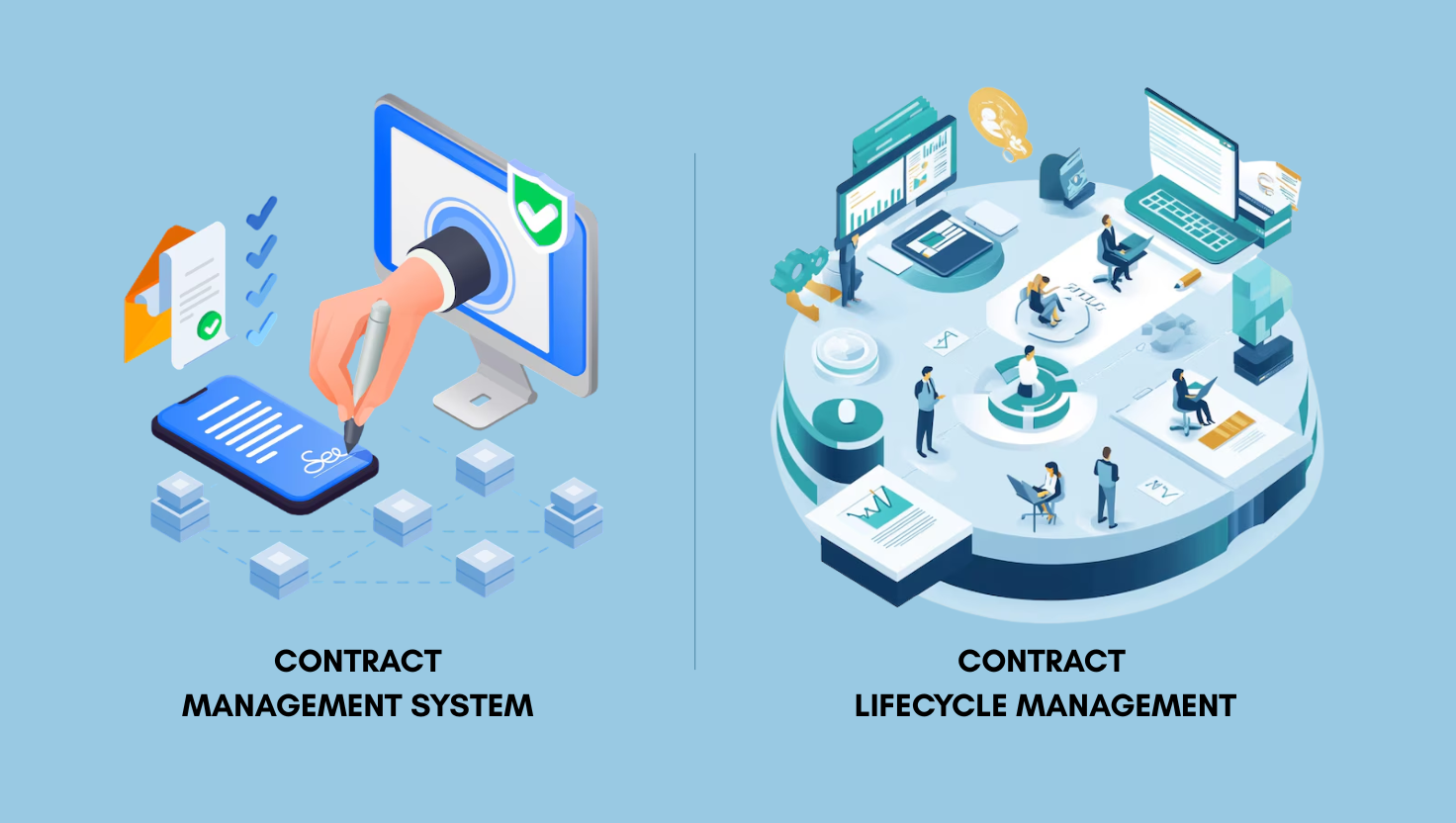
These are the basic differences between Contract Management System and Contract Lifecycle Management.
Now we are going to understand how Contract Management Software works.
A Brief on Contract Lifecycle Management Software
The solution is basically a digital contract management platform that can take care of a contract throughout all its stages. The software allows its users to seamlessly manage the contract and extract important information from it as well.
Why Should Businesses Use Software?
When your business is small or you have just started a startup then manual contract management is okay. When your business grows gradually and you must handle multiple contracts then you will have no other choice than leveraging the contract automation option.
The software can help you improve compliance by giving the contract owners more authority over their agreement. The solution can make the entire agreement creation process smoother and the contract owner will also be free to do other important tasks rather than focusing on paperwork every day.
Benefits of Using the Contract Lifecycle Management Software
Now you are going to understand why automation has become indispensable and not optional anymore.
Look at the benefits of the software.
1.Easy to Use
The CLM software utilizes customized templates, reducing the time required for content authoring. It has features like a word processor and real-time collaboration to reduce the number of errors while making the content quality high.
2.Smooth Negotiation Process
The contract owners can send password-protected links to other respective parties. This saves them from the hazards of sending the contract again through email. All the respective parties can suggest some changes, write comments, and even track the progress of the contract.
3.Easy Signature Procedure
The solution has made the physical signature completely obsolete. The encrypted e-signature has made the signature easy, quick, and secure also.
4.Fulfillment of Contractual Obligations
A business needs to comply with contractual obligations to save itself from financial losses. The business owners can track and manage the contacts, assign the right people with contract-related tasks, and track all the people in one place. This fulfilling of obligations can help a business by cutting unnecessary risks.
5.Advanced Level of Analytics
The Report feature in CLM helps the contract data to turn into valuable business insights. The contract authors, managers, and owners can create new business strategies with these insights. If any problem arises in the contract process, they can fix it quickly with the help of these insights.
6.Quick Auditing
It has a central audit system where it keeps all the user activities. These logs give the admin. better access to the system, fast-tracking the audit process, and improving compliance.
7.Secured Data Storage
The central contract storage system has a search and filter tool that can help users find and view contracts easily. The software has robust data protection features abiding by the data protection law.
8.CLM Application
The CLM app allows you to track the contract revision, manage the obligations, follow the compliance, and approve the contract just by clicking the app on your mobile.
These 8 features of the Contract Lifecycle Management software distinguish from the Contract Management System.
Final Thoughts
Though Contract Management and Contract Lifecycle Management are distinct they are eventually connected processes. While Contract Management is focused on creating, negotiating, managing, and tracking the contract, the CLM deals with the larger picture and deals with entire lifecycle management of the contract.