Employee leave has traditionally been viewed as a necessary administrative task, an operational requirement rather than a strategic opportunity. As workplaces become more data-driven, HR leaders are uncovering the immense value hidden within leave activity. Every request, approval, denial, certification deadline, and return-to-work pattern reveals something meaningful about workforce health, cultural dynamics, scheduling efficiency, and organizational resilience. Yet these insights remain invisible when organizations rely on spreadsheets, shared calendars, or disconnected systems.
HR analytics changes that landscape entirely. When leave data is consolidated with attendance, payroll, scheduling, and performance information, it becomes a rich source of intelligence that enables HR leaders to predict staffing needs, identify burnout before it escalates, and assess whether leave policies are applied equitably across the organization. With platforms like SutiHR, organizations move beyond basic tracking and transform leave management into a strategic, insight-driven function that directly supports organizational stability and employee well-being.
Key Takeaways
- HR analytics uncover hidden patterns in leave behavior that reveal burnout, risk of absenteeism, or workload imbalances.
- Predictive modeling helps organizations anticipate staffing shortages, leave surges, and operational risks before they occur.
- Integrated analytics expose inconsistencies in manager decisions, documentation practices, and compliance workflows.
- When combined with performance, engagement, and scheduling insights, leave data provides a deeper understanding of workforce health.
- SutiHR’s analytics dashboards turn raw leave data into actionable, real-time workforce intelligence.
Revealing Patterns in Burnout, Absenteeism, and Engagement
Leave analytics provide one of the clearest indicators of underlying workforce challenges. An increase in sick leave within a particular team may signal burnout or harmful workload expectations, while low PTO usage can reveal cultural barriers or chronic understaffing. When leave patterns are compared with overtime hours, performance history, or engagement data, the insights become even more meaningful. A consistently overburdened team that rarely takes PTO is often approaching a tipping point. Rising absenteeism may reflect morale concerns or ineffective leadership. These insights allow HR to respond early, before issues lead to turnover, disengagement, or compliance risks.
Importance of Predictive Analytics
Predictive analytics amplify HR’s ability to plan and respond strategically. By evaluating historical leave trends, seasonal behavior, skill distribution, and department-level workload patterns, predictive models can identify when specific teams are likely to experience staffing shortages or leave surges. For example, industries such as healthcare may see spikes in medical leave during flu season, while manufacturing plants may see increases in PTO during slower production cycles. Beyond seasonal trends, predictive analytics highlight emerging risks, such as teams showing early signs of burnout through reduced PTO usage, rising overtime hours, or increased intermittent absences.
These models allow HR and operations leaders to forecast not only when leave may occur but also its potential impact on productivity, customer service levels, or project timelines. With this foresight, organizations can build staggered schedules, cross-train additional staff, approve temporary support, or adjust deadlines. Predictive analytics shifts workforce planning from reactive firefighting to proactive stability management.
Forecasting Workforce Availability and Planning Ahead
With predictive tools, organizations are no longer limited to managing leave as it occurs. They can build staffing strategies around anticipated patterns, improving organizational agility. Instead of scrambling to fill sudden absences, managers have insight into when absences are likely, how long they may last, and the operational adjustments needed to maintain coverage. This not only improves efficiency but also reduces the emotional toll on employees who otherwise shoulder unpredictable workloads.
Improving Policy Effectiveness and Identifying Gaps
Analytics provide visibility into how leave policies function in practice. HR can identify whether approval timelines vary significantly between managers, whether specific departments consistently require more documentation than others, or whether underutilized leave types indicate confusion or cultural hesitations. When inconsistencies arise, HR can quickly correct them, strengthening fairness, compliance, and employee trust. Over time, these insights lead to more accessible, equitable, and well-communicated leave policies.
Want to experience seamless HR management?
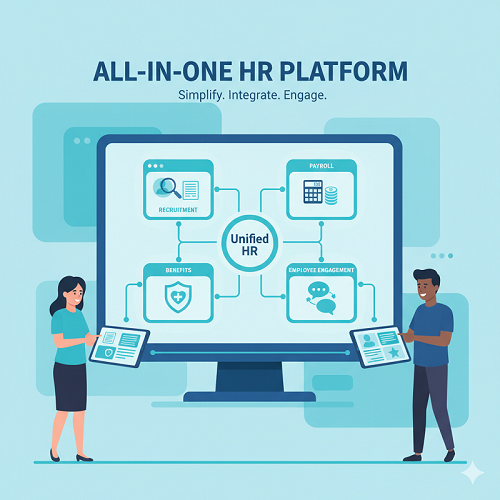
Schedule a personalized demo and see how SutiHR can help streamline recruitment, payroll, benefits, and employee engagement—all in one platform.
Enhancing Compliance Through Data Visibility
Compliance obligations under FMLA, ADA, and state-specific leave programs require accuracy and consistency. Leave analytics help HR track legal thresholds, certification deadlines, and time-sensitive compliance requirements. They illuminate patterns that may raise concern, such as managers prematurely denying leave, inconsistent application of eligibility criteria, or overlooked documentation. With visibility into these trends, HR can address issues before they escalate into legal exposure, ensuring policies are followed consistently and accurately across the organization.
Improving the Employee Experience with Data-Driven Insights
Leave is often requested during moments of vulnerability, medical challenges, caregiving demands, or family transitions. Analytics help HR remove friction from that process by spotlighting delays, bottlenecks, and communication issues that negatively impact employees. For example, if approval times differ significantly across teams, or if returning employees consistently struggle with reintegration, HR can refine processes and create stronger support systems. The result is a more compassionate, transparent leave experience that reinforces trust and engagement.
Integrating Leave Analytics Into Broader HR Strategy
Leave data becomes even more powerful when integrated with other HR systems. By examining connections between leave patterns and turnover, training completion, performance outcomes, or DEI metrics, HR gains a comprehensive understanding of workforce dynamics. A department experiencing both high absenteeism and low engagement may require leadership development. A team with low PTO usage and high turnover may be chronically understaffed. These insights guide decisions related to job design, hiring strategy, employee wellness, and culture-building initiatives.
Cost Savings and ROI of Leave Analytics
The financial benefits of leave analytics are often substantial. By identifying absenteeism hotspots, forecasting staffing shortages, and detecting early signs of burnout, organizations can reduce overtime expenses, prevent costly turnover, and allocate staff more effectively. Predictive insights minimize the need for last-minute temporary workers, reduce scheduling inconsistencies, and help avoid dips in productivity caused by unmanaged absences.
Improved compliance management is another primary source of savings. Analytics reveal documentation gaps, missed deadlines, or inconsistent workflows that could otherwise lead to costly audits or legal challenges. Additionally, when employees experience smoother leave processes, with faster approvals, clear communication, and predictable outcomes, engagement and retention improve. Lower turnover alone delivers a long-term financial impact, as the cost of replacing a single employee can reach 30–50% of that employee’s annual salary.
The ROI of leave analytics is therefore not just operational; it touches compliance, productivity, culture, retention, and long-term workforce stability.
How SutiHR Powers Data-Driven Leave Management
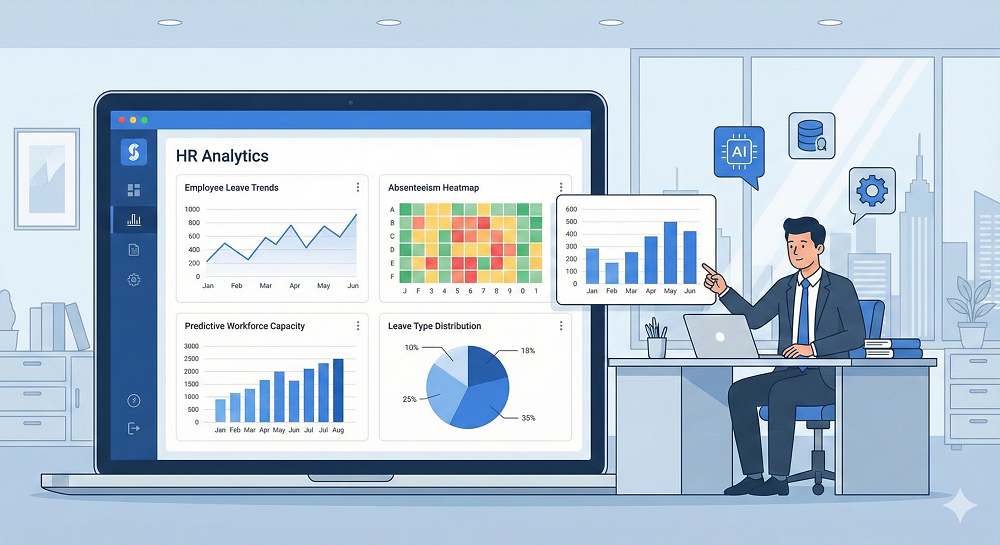
SutiHR consolidates leave activity with attendance, payroll, scheduling, and performance systems to create a unified analytics environment. HR leaders gain immediate access to real-time dashboards that highlight trends, reveal risk areas, and offer predictive insights without manual calculation. Automated alerts notify HR of compliance issues or unusual activity, while customizable reporting allows executives to measure workforce health with clarity and confidence. SutiHR empowers HR to evolve from reactive oversight to proactive, data-informed workforce planning.
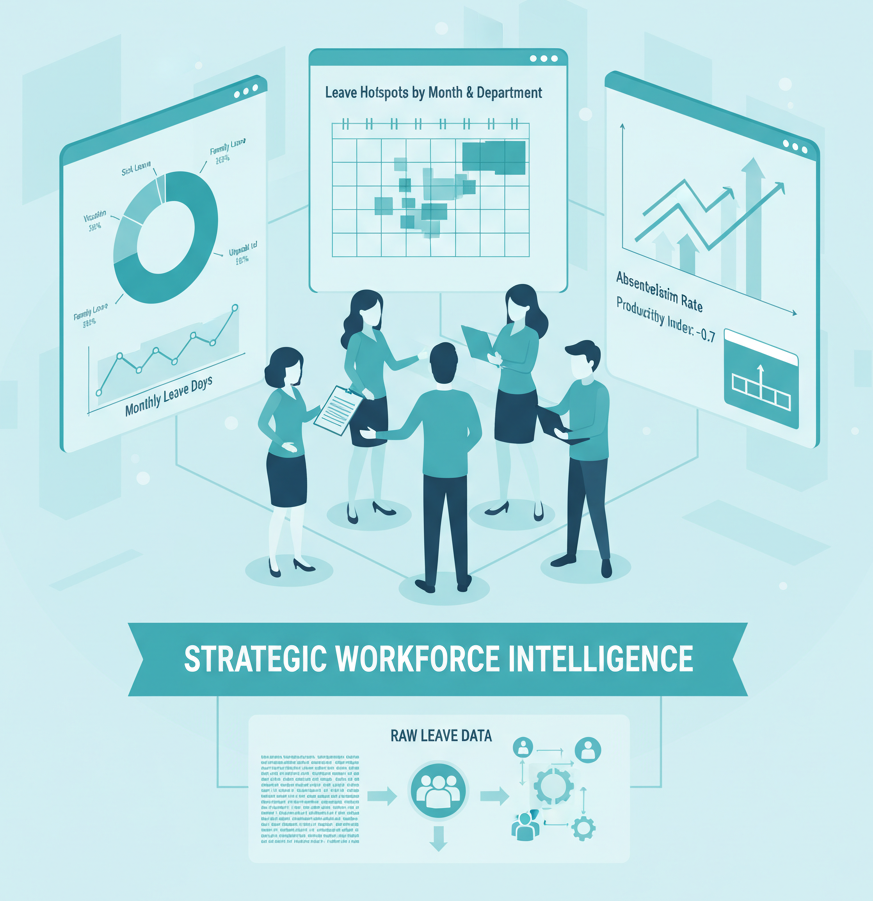
Turn Leave Data Into Workforce Intelligence
See how SutiHR’s analytics dashboards transform employee leave trends into actionable insights.
Conclusion
Leave management is no longer a simple administrative requirement; it is a strategic lens through which organizations can understand workforce health, operational capacity, and cultural strength. HR analytics transform leave data into actionable intelligence that reveals hidden patterns, predicts future needs, and drives more consistent, fairer policy execution. With the predictive and real-time capabilities offered by platforms like SutiHR, HR leaders can proactively plan for staffing needs, strengthen compliance, improve employee experience, and build a more resilient, insight-driven organization.
FAQs
Analytics reveal patterns such as rising sick leave, declining PTO use, and increasing overtime, clear indicators that a team may be approaching burnout and in need of intervention.
Yes. By analyzing historical leave trends and operational cycles, predictive models can accurately anticipate leave surges, high-risk periods, and workload bottlenecks.
They highlight documentation gaps, inconsistent approvals, delayed certifications, and deviations from required workflows, allowing HR to correct issues before they pose legal risks.
Absolutely. Smaller HR teams often lack the capacity for manual monitoring. Analytics streamlines decision-making, reduces administrative load, and improves accuracy across the board.
SutiHR integrates leave, attendance, payroll, and performance data into a single system, giving HR leaders comprehensive workforce insights without manual data consolidation.