

A leave policy is far more than a procedural document tucked away in an employee handbook; it is a critical legal, cultural, and operational framework that shapes how an organization supports its workforce through medical needs, family obligations, and unexpected life events. When a policy is vague or inconsistently applied, organizations expose themselves to significant legal risk, decrease employee trust, and create operational instability. As federal and state regulations continue to expand, especially with the rise of remote work, HR teams must adopt policies that not only comply with regulatory requirements but also support workforce well-being transparently and equitably.
A modern leave policy must be comprehensive, clearly written, and accessible. It must explain entitlement rules, documentation requirements, job protections, and wage-replacement programs in a way that employees can understand and that HR can enforce. Digitizing the policy within software like SutiHR brings this framework to life. When rules, eligibility checks, and calculations are automated within the system, organizations eliminate ambiguity, prevent errors, and ensure that every leave decision, from request to return-to-work, is traceable, consistent, and legally defensible.
Key Takeaways
- A compliant leave policy must balance federal, state, and company-specific requirements.
- Clear definitions, eligibility rules, documentation requirements, and consistent processes reduce risk.
- Automation ensures policies are applied uniformly and updated instantly when laws change.
Why Compliant Leave Policies Matter More Than Ever
Creating a compliant leave policy is no longer optional; it is essential. Federal programs such as FMLA intersect with a growing number of state-regulated paid family and medical leave programs. For organizations with distributed or hybrid teams, employees may be subject to multiple overlapping rules, making compliance far more complex than it was even five years ago. A single location may require paid sick leave accruals, while another mandates job-protected paid family leave or emergency leave provisions. Without a clearly defined policy that accounts for these differences, HR teams often make manual judgment calls that inadvertently violate regulations or create inconsistent treatment across departments.
The consequences of non-compliance can be severe. Legal action related to FMLA mismanagement, improper job restoration, retaliation claims, or failure to track leave correctly can cost employers thousands, or even millions, in fines, settlements, and legal fees. Many organizations face Department of Labor audits because a supervisor inconsistently approved leave, failed to request documentation properly, or counted protected leave as absenteeism. A compliant policy protects against these vulnerabilities by establishing clear rules, uniform approval processes, and documented expectations for employees and managers.
Equally important is the impact on employee trust and well-being. Leave policies are accessed during moments of stress, medical challenges, family emergencies, and the birth or adoption of a child. Employees navigating these situations need clarity, not confusion. When policies are applied inconsistently or when employees receive different answers depending on who they speak to, it damages morale, increases turnover risk, and undermines the employer’s reputation. A comprehensive, consistently enforced policy reinforces fairness and demonstrates that the organization values its people beyond their productivity.
From an operational perspective, a compliant leave policy provides the structure managers need to plan staffing, reduce disruptions, and maintain business continuity. Without standardized request, approval, and tracking processes, managers struggle to anticipate staffing shortages or coordinate coverage. Payroll teams may receive incomplete or inaccurate leave information, leading to costly corrections and frustrated employees. HR may spend hours reconciling spreadsheets, reviewing past emails, and researching misapplied rules. A well-written and automated leave policy eliminates this friction, turning leave management from a reactive administrative burden into a predictable, manageable process.
How to Build a Compliant Leave Policy
Step 1 — Clearly Define the Types of Leave Your Organization Offers
A compliant policy begins with clarity. Employees must understand the full range of leave programs available to them, whether mandated by law or provided voluntarily. This includes medical leave, parental and bonding leave, bereavement leave, military service leave, jury or civic duty leave, and company-specific programs such as PTO, sick time, floating holidays, or unpaid personal leave. Ambiguous or incomplete lists create confusion, especially when employees attempt to coordinate multiple programs at once. For example, an employee taking medical leave often needs clear direction on how FMLA, state-paid medical leave, short-term disability, and accrued sick time interact.
The language used in this section should be simple, inclusive, and accessible. Avoid legal jargon or discretionary terms like “special circumstances” that leave room for interpretation. The goal is to ensure every employee, regardless of department, tenure, or education level, can understand what they are entitled to and how to access it.
Step 2 — Establish Eligibility Requirements That Are Transparent and Enforceable
Eligibility rules determine who qualifies for each type of leave program. These requirements often vary based on factors such as employment status, length of service, average working hours, and geographic location. For example, FMLA requires at least 12 months of service and 1,250 hours worked, while state programs may not require tenure at all. Some organizations unintentionally apply eligibility rules inconsistently, which creates the risk of discrimination claims or policy misinterpretation.
A compliant policy specifies these rules in detail and explains how eligibility is calculated. It should clarify whether time on furlough counts toward tenure, how part-time hours are considered, and how eligibility is evaluated during onboarding or transitions. When these rules are automated within leave management software, employees receive consistent communication, and HR avoids manual tracking errors.
Step 3 — Clarify Documentation and Certification Requirements
Documentation requirements are often at the core of compliance. Employers must balance the need for medical verification with the obligation to respect employee privacy and avoid over-collection of information. Policies should specify what documentation is required for medical leave, intermittent leave, military leave, or jury duty, along with how and when employees must submit it. This section should also outline what happens if documentation is incomplete or not submitted on time, helping set expectations while preserving fairness.
A strong policy also explains how confidentiality is maintained, who within HR may review protected information, and how documentation is stored. Automation strengthens this process by tracking deadlines, sending reminders, and centralizing uploaded documents securely.
Step 4 — Outline the Exact Process for Requesting, Approving, and Denying Leave
This is where many organizations encounter compliance challenges. Without a structured request and approval process, employees may rely on verbal conversations with managers, emails may be overlooked, and approvals may occur inconsistently. A compliant policy defines a single method for submitting leave requests, such as a self-service portal, and specifies required notice periods, approval timelines, and escalation paths when managers are unavailable.
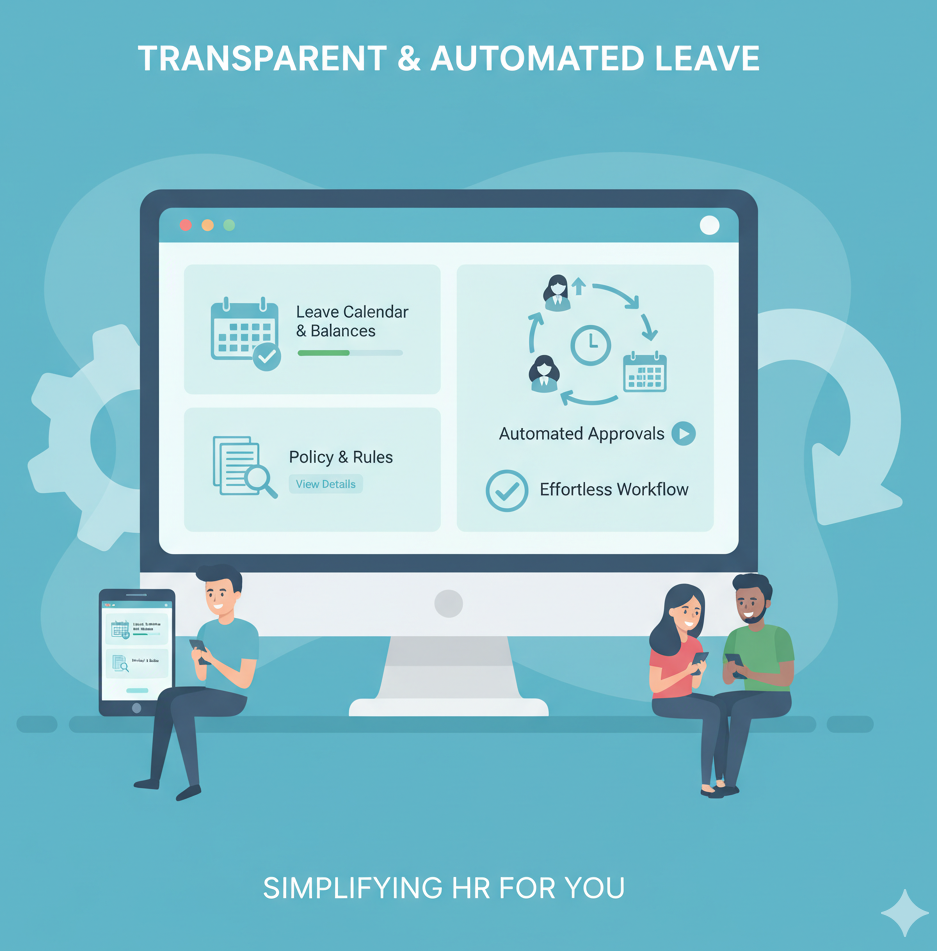
A streamlined, automated workflow ensures that all requests follow the same process, reducing both delays and errors. Employees receive confirmation, managers receive notifications, and HR retains an auditable trail of every action. This visibility is critical during compliance audits or internal reviews, where organizations must demonstrate that leave rules were applied fairly and consistently.
Make Your Leave Policy Easy to Follow
Empower employees with transparent, automated rules using SutiHR’s Leave Management module.
Step 5 — Embed Compliance Into the Policy Itself
Compliance must be intentionally built into the policy’s structure. This includes alignment with FMLA, ADA, state paid family leave programs, and local sick-leave requirements. It also requires clear rules for job protection, benefits continuation, and coordination of paid and unpaid programs. The policy should explain how overlapping programs interact, for example, whether state PFML runs concurrently with FMLA or whether employees must exhaust PTO before accessing disability benefits.
Automation plays a pivotal role in compliance enforcement. Modern leave management systems evaluate eligibility, track protected leave usage, calculate entitlements across programs, and maintain complete audit logs. When legislation changes, system rules can be updated globally, ensuring that employees always receive accurate, up-to-date information and benefits.
Conclusion
A compliant employee leave policy is the foundation of a fair, legally sound, and operationally stable workplace. It protects employees during life’s most challenging moments and safeguards organizations from legal exposure and costly administrative errors. When supported by modern technology, compliant policies become living frameworks that evolve with new laws, organizational changes, and workforce needs. By combining clear communication, structured processes, and automation through platforms like SutiHR, organizations create a leave experience that is transparent, predictable, and rooted in employee well-being.
FAQs
Leave policies should be reviewed at least annually and updated whenever federal or state laws change or when organizational policies shift.
Ambiguous or inconsistent policies increase the risk of legal violations, employee disputes, and inequitable treatment across teams.
Clear rules reduce anxiety during leave, increase trust, and promote fairness, particularly during medical or family-related events.
Each state may have unique leave programs with different eligibility rules, wage replacement requirements, and job protections, requiring careful coordination.
Software cannot replace legal review, but it can enforce rules, track entitlements, manage documentation, and dramatically reduce compliance errors.