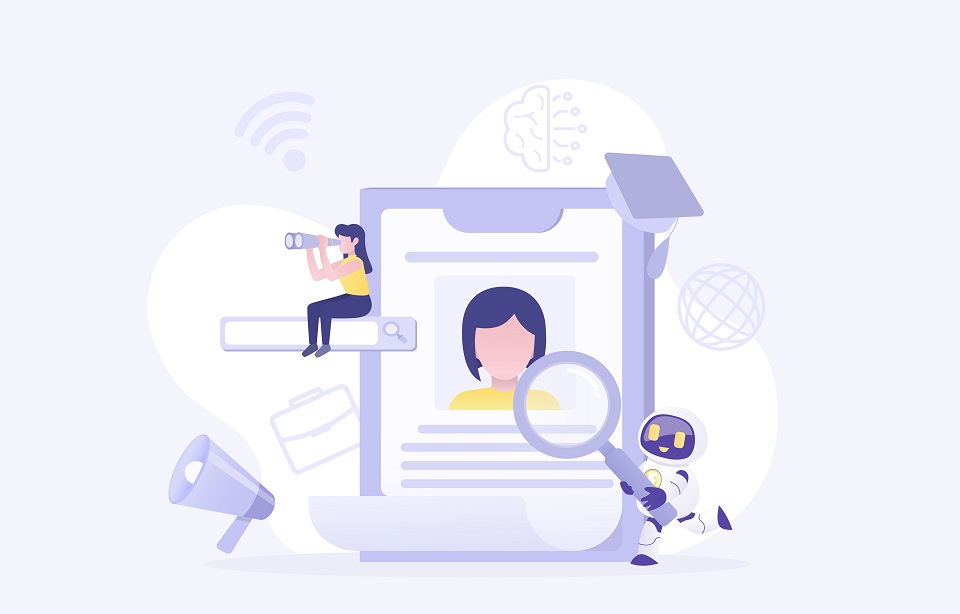
AI has worked its way into various aspects of business operations, and recruitment is no exception. The integration of AI into hiring processes addresses a number of challenges and inefficiencies traditionally faced by HR practitioners. As AI continues to evolve, its potential to redefine recruitment strategies grows. AI offers innovative solutions that can streamline processes and improve outcomes. Businesses that harness AI effectively can transform their approach to recruitment. This change in process can result in more strategic hiring and a stronger workforce.
Addressing Talent Acquisition Challenges
The recruitment process is not without its challenges, such as unconscious bias, inefficient time management, and the overwhelming volume of applications. HR professionals are likely to receive hundreds, if not thousands, of resumes for a single position. On average, a recruiter can spend 10 to 20 hours per week reviewing resumes.
AI offers solutions by automating repetitive tasks and providing data-driven insights that lead to more informed hiring decisions. By automating initial screenings and candidate assessments, AI frees up valuable time for HR professionals. This automation of repetitive tasks allows recruiters to focus on strategic initiatives and personal interactions with potential candidates. AI can also quickly analyze recruitment data and identify patterns and trends, essentially enabling companies to refine their processes and improve their talent acquisition strategies continuously.
Eliminating Bias and Enhancing Diversity
When programming AI algorithms, they can be taught to disregard demographic information. Demographic information, such as age, race, or gender, could lead to biased hiring decisions. By focusing solely on qualifications and skills, AI systems help foster a diverse and inclusive workplace. The focus on skills and qualifications rather than personal characteristics can lead to a more equitable recruitment process, opening doors for a wider range of qualified candidates. Furthermore, AI tools should be updated and refined regularly to ensure they remain free of biases, helping organizations build a workforce that reflects diverse perspectives and experiences.
Streamlining the Recruitment Process
AI-driven recruitment tools can sort through thousands of resumes in a fraction of the time it would take a human recruiter. Not only does this accelerate the hiring process it also allows HR personnel to focus on strategic planning and candidate engagement. By automating routine tasks like resume screening, AI enables recruiters to allocate their time and resources more effectively. The result is ultimately enhancing the overall efficiency of the recruitment process. Additionally, AI can help track the progress of candidates through the hiring pipeline. As data is collected on candidates’ progress, AI can provide valuable insights into where improvements can be made to reduce time-to-hire and improve the applicant experience.
AI Talent Sourcing and Screening
AI enhances talent sourcing by sifting through extensive databases and identifying candidates who best fit the job requirements. This is achieved through machine learning algorithms that learn and adapt to the specific needs of the organization. As these algorithms become more in tune, they can provide increasingly accurate matches, ensuring that only the most suitable candidates are considered for each open role. This targeted approach not only improves the quality of hires but also enhances the efficiency of the recruitment process, saving time and resources.
Automated Candidate Screening
AI tools can be taught to screen resumes and cover letters. While doing so, it focuses on identifying key skills and experiences that match job descriptions. For the AI tool to do this effectively, it utilizes natural language processing (NLP), which allows it to understand and interpret human language. This automated screening ensures that only the most qualified candidates reach the interview process.
By analyzing language patterns and keyword relevance in resumes and cover letters, AI can quickly and accurately evaluate candidates, reducing the risk of overlooking potential fits. Furthermore, these tools can continuously learn from past hiring decisions. They refine their screening criteria to better align with company objectives and candidate success rates. This ultimately benefits both the company and its employees.
Intelligent Recruitment Through AI
Intelligent recruitment involves leveraging AI to gain insight into candidate behavior and preferences. By analyzing data from various sources, AI can predict candidate success and retention rates. By utilizing this data, recruiters can make more informed decisions. This predictive capability allows organizations to see and prepare for potential challenges in the hiring process and develop strategies to reduce them. Additionally, AI can provide insights into market trends such as emerging job roles and candidate expectations, like preferred benefits and work conditions. Having this information at their fingertips will enable companies to adapt their recruitment approaches to attract top candidates more effectively.
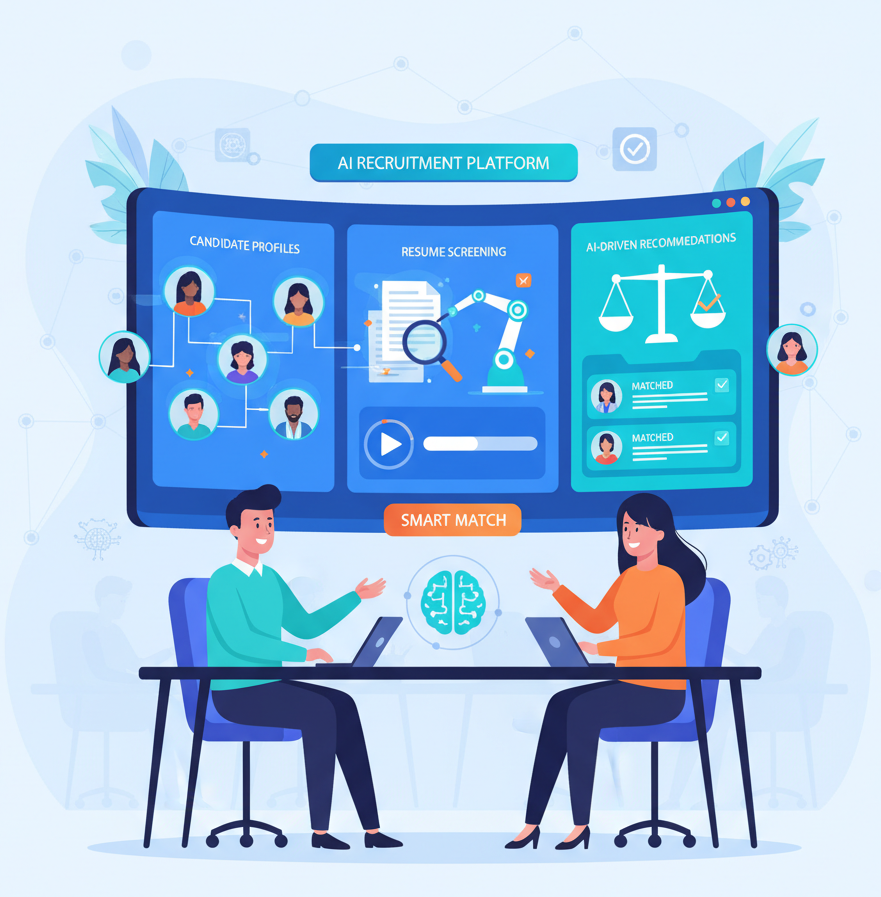
Revolutionize Your Hiring with AI!
Streamline recruitment, reduce bias, and find top talent with SutiHR’s AI-driven tools. Discover how to make smarter hiring decisions today!
Generative AI in Talent Acquisition
Generative AI, a subset of artificial intelligence, is making waves in talent acquisition by creating personalized candidate experiences. AI is transforming how organizations attract, engage, and hire talent. Unlike traditional AI, which focuses on data analysis and decision support, generative AI actively produces new content. This technology can generate tailored job descriptions, interview questions, and even simulate real-life job scenarios to assess candidate suitability.
These personalized experiences can significantly enhance candidate engagement, providing a more interactive and enjoyable recruitment process. By tailoring content to individual job seekers, generative AI helps organizations stand out in a crowded job market, attracting candidates who are not only qualified but also a good fit for the company culture.
Enhancing Candidate Engagement
Generative AI can be used to create interactive recruitment experiences, such as AI-driven chatbots that engage candidates in real-time conversations. These tools provide instant responses to candidate questions. The instant response to questions keeps the candidate engaged and improves the overall candidate experience.
By offering personalized interactions, AI-driven chatbots can answer specific questions and provide relevant information, enhancing the candidate’s journey from application to hire. Moreover, these tools can collect feedback from candidates, offering valuable insights such as the effectiveness of interview questions and the overall candidate experience, which can help improve the recruitment process for future applicants.
Identifying the Right Tools
With an ever-increasing number of AI recruitment tools available, it is crucial to select solutions that align with the organization’s needs. Consider factors such as ease of integration, user-friendliness, and scalability when evaluating potential tools. By conducting a thorough needs assessment, companies can identify the specific functionalities required to meet their recruitment objectives. Additionally, seeking feedback from HR teams and other stakeholders can provide valuable insights into which tools will be most effective in addressing existing challenges and enhancing recruitment outcomes. An advanced applicant tracking system can greatly support this effort.
- Evaluate Organizational Needs: Begin by conducting a comprehensive needs assessment. It is necessary to identify the most time-consuming or error-prone aspects of current recruitment processes. This could be sourcing candidates, screening resumes, or managing communication. Clearly defining the pain points will help determine which AI features are most critical, such as natural language resume parsing, intelligent candidate ranking, or predictive analytics.
- Prioritize Integration and Usability: The new tool should integrate easily with the existing HR tech stack. Choose tools that are compatible with the applicant tracking system (ATS), HRIS, or CRM to avoid data silos and ensure smooth workflow automation. Equally important is user-friendliness. The HR team should be able to adopt and use the tool without extensive training.
- Consider Scalability and Flexibility: As the organization grows, so will hiring needs. Ensure the AI solution chosen is scalable and flexible enough to accommodate changes in hiring volume, role complexity, or geographic expansion. Cloud-based platforms often offer better scalability and easier updates.
- Engage Key Stakeholders: Involve HR professionals, recruiters, hiring managers, and IT teams early in the selection process. Their feedback can highlight practical considerations, from interface preferences to data handling capabilities, which may not be immediately obvious during vendor evaluations.
By carefully selecting AI recruitment tools that match organizational needs and involve key stakeholders in the process, companies can significantly improve hiring outcomes and future-proof their talent acquisition strategies.
Implementing AI Recruitment Tools
The successful implementation of AI in recruitment requires careful planning and consideration. Here are the key steps to ensure a seamless integration of AI recruitment tools:
- Assess Current Recruitment Workflows: Existing recruitment processes should be evaluated to identify bottlenecks and inefficiencies. Understanding where AI can add the most value, such as resume screening, candidate sourcing, or interview scheduling, is essential for targeted implementation.
- Define Clear Objectives: Determine why AI tools are being implemented and what is expected to be achieved. Some objectives could be reducing time-to-hire, improving candidate quality, or automating repetitive tasks. These goals will guide tool selection and success measurement.
- Choose the Right AI Solution: AI recruitment tools and how they align with the company’s size, hiring needs, and existing tech stack should be researched and considered. Look for features like resume parsing, candidate ranking, predictive analytics, and seamless ATS integration.
- Ensure Data Quality and Compliance: AI systems are run by data. Ensuring candidate data is clean, structured, and compliant with data protection regulations like GDPR or CCPA is paramount. Ethical use of AI should also be prioritized to avoid biases.
- Integrate with Existing HR Systems: For maximum efficiency, integrate AI tools with current systems. Some examples are applicant tracking systems (ATS), HRIS, or other recruitment platforms. APIs and middleware should be used to enable smooth data flow and avoid redundancy.
- Train Your Recruitment Team: With any new processes or changes to current ones, training is necessary. Recruiters and any other resource who will be using the new AI recruitment tool should be equipped with the knowledge and training needed to work effectively with the tools. This includes understanding how the tools work, interpreting AI-generated insights, and maintaining human oversight.
- Monitor Performance and Optimize: Regularly assess the effectiveness of the AI recruitment tools against KPIs like time-to-fill, candidate satisfaction, and quality-of-hire. Use this data to refine your workflows and maximize ROI.
- Foster Transparency and Trust: Be transparent with candidates about the use of AI in your hiring process. Clear communication builds trust and aligns with ethical AI standards.
By approaching AI implementation strategically, companies can maximize the benefits of these tools and enhance their overall recruitment strategy.
Ensuring Data Privacy and Security
The practice of recruitment involves handling sensitive candidate data. Ensuring that all AI tools comply with data privacy regulations and have robust security measures in place to protect candidate information is essential. Organizations should establish clear policies and protocols for data management, including regular audits and updates to security practices. By prioritizing data privacy and security, companies can build trust with candidates and protect themselves from potential legal and reputational risks associated with data breaches.
The Future of AI in Talent Acquisition
As AI technology continues to advance, its applications in talent acquisition will undoubtedly expand. Future developments may include more sophisticated predictive analytics, enhanced virtual reality assessments, and even greater personalization of the recruitment process. These advancements promise to revolutionize the way organizations attract and retain talent, offering unprecedented opportunities for innovation and growth. By being informed about emerging trends and technologies, companies can position themselves at the forefront of the evolving recruitment landscape.
Embracing Change for Competitive Advantage
Organizations that embrace AI in their hiring processes are poised to gain a competitive edge in attracting and retaining top talent. By leveraging AI to streamline operations and enhance decision-making, companies can create more efficient and effective recruitment strategies. This proactive approach not only enhances the candidate’s experience but also strengthens the organization’s ability to adapt to changing market conditions. By continuously refining their recruitment strategies, companies can maintain a competitive advantage and secure the talent needed to drive future success.
Continuous Adaptation and Improvement
The dynamic nature of AI technology necessitates continuous adaptation and improvement. Organizations should remain open to experimenting with new AI tools and methodologies to stay ahead in the ever-evolving recruitment landscape. By fostering a culture of innovation and continuous learning, companies can ensure they are always ready to embrace new opportunities and challenges. Regularly reviewing and updating AI tools and processes will help organizations maintain their competitive edge and achieve long-term success in talent acquisition.
Conclusion
Incorporating AI into talent acquisition processes offers transformative potential for organizations of all sizes. By addressing traditional recruitment challenges, enhancing candidate engagement, and providing data-driven insights, AI enables smarter and more strategic hiring decisions. As AI technology continues to evolve, its role in recruitment will undoubtedly expand, offering even more innovative solutions for talent acquisition. Embracing AI in recruitment is not just a trend, but a necessity for organizations aiming to remain competitive in the modern business environment. Companies that leverage AI effectively will be well-positioned to attract, engage, and retain the talent needed to thrive in today’s rapidly changing world. Job boards, video interviews, and other digital tools will continue to play an essential role in helping organizations connect with top candidates and evaluate candidates efficiently to ensure a strong cultural fit for job openings across departments.