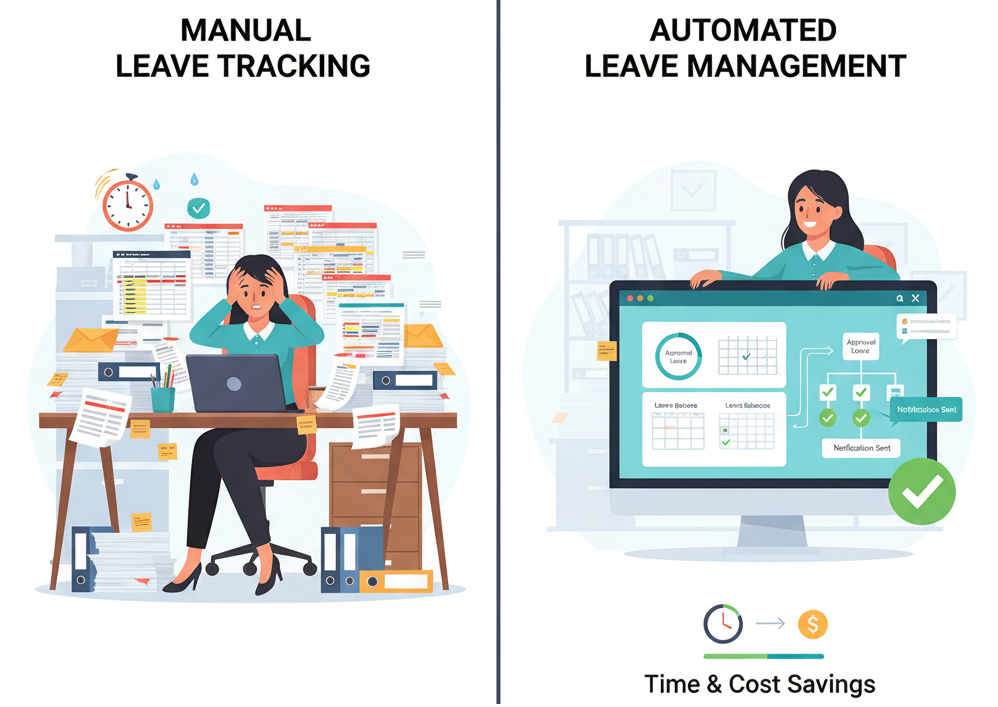
Leave management is one of the most underestimated functions in HR, until a mistake happens. What appears to be a simple process of tracking time off quickly becomes a complex web of compliance rules, payroll coordination, documentation deadlines, and workforce scheduling challenges. When organizations rely on manual tools such as spreadsheets, email threads, or informal manager approvals, errors accumulate quietly in the background. These errors eventually become compliance violations, financial inaccuracies, overpayments, scheduling breakdowns, or employee frustration.
Manual tracking isn’t just inefficient; it is fundamentally risky. As workplaces expand across multiple states and embrace hybrid or remote work, the number of leave laws HR must comply with has increased dramatically. Programs like FMLA must be managed alongside state-paid family leave, local sick-leave ordinances, disability programs, and company-specific PTO rules. Without automation, HR teams are forced to cross-check dozens of data points every time an employee requests leave, often under urgent or emotionally sensitive circumstances.
This article explores the hidden costs manual leave management imposes on HR teams, employees, and the organization, and how automation replaces those risks with accuracy, efficiency, and compliance.
Key Takeaways
- Manual leave tracking introduces significant compliance, payroll, and operational risks.
- Human error increases the likelihood of FMLA violations, misapplication of state laws, and audit exposure.
- Payroll discrepancies and inaccurate accruals are far more common with spreadsheets and email-based tracking.
- Employees lose trust when leave processes are slow, inconsistent, or confusing, impacting retention and morale.
- Automation reduces administrative burden, ensures consistent policy application, and creates audit-ready documentation.
- HR teams gain strategic bandwidth to focus on engagement, planning, and workforce development rather than administrative tasks.
The Hidden Costs of Manual Leave Tracking
Compliance Violations and Legal Exposure
Manual leave processes rely heavily on human interpretation, leading to inconsistencies and errors. Compliance rules, especially those related to FMLA, ADA, and state paid leave programs, require precise tracking of eligibility, hours worked, medical certification timelines, and job-protection measures. A missed deadline or miscalculated entitlement can quickly escalate into an audit, grievance, or lawsuit.
Organizations often underestimate how frequently minor errors occur. A manager approving intermittent leave incorrectly, HR applying sick time before PFML, or a failure to notify employees of their rights are all examples that can trigger compliance penalties. Because manual systems lack audit trails, it becomes difficult to prove that leave was administered fairly and consistently, thereby increasing the employer’s risk during investigations.
Payroll Errors and Financial Loss
Leave data affects payroll in real time, yet manual processes create delays, discrepancies, and inaccuracies that lead to costly corrections. Incorrect accrual balances, misapplied pay codes, and outdated spreadsheets can result in employees being overpaid or underpaid. When leave is not appropriately tracked, payroll teams are forced to spend hours retroactively adjusting wages, recalculating benefits, or reversing disallowed payments.
These errors also erode employee trust. An employee returning from medical leave should never have to question whether their paycheck is accurate. Automated systems help prevent this by synchronizing leave data directly with payroll, ensuring that balances, payments, and entitlements remain aligned.
Administrative Burden on HR Teams
Manual leave tracking forces HR professionals to act as gatekeepers, auditors, and calculators, requiring significant time spent reconciling data rather than focusing on strategic initiatives. Every request requires HR to cross-check balances, confirm eligibility, verify documentation, route approvals, notify payroll, and update records. For high-volume or multi-state organizations, this becomes a full-time administrative load.
This excessive administrative work leads to burnout within HR and reduces the department’s overall effectiveness. By automating these tasks, HR teams gain valuable time to invest in employee engagement, workforce planning, and organizational development rather than repetitive data entry.
Negative Employee Experience and Retention Impact
Leave is requested during essential and often stressful life moments, illnesses, caregiving responsibilities, parental bonding, or emergencies. When an organization’s process is unclear, slow, or inconsistent, employees experience unnecessary anxiety. They may not know how much leave they have available, when they can expect approval, or how their pay will be affected.
Manual systems create a lack of transparency that fosters distrust. Employees compare experiences with coworkers, leading to perceptions of favoritism or unfairness. These frustrations directly influence an employee’s decision to stay with or leave the organization. Automation alleviates this by giving employees real-time visibility into balances, clear approval workflows, and reliable updates throughout the leave lifecycle.
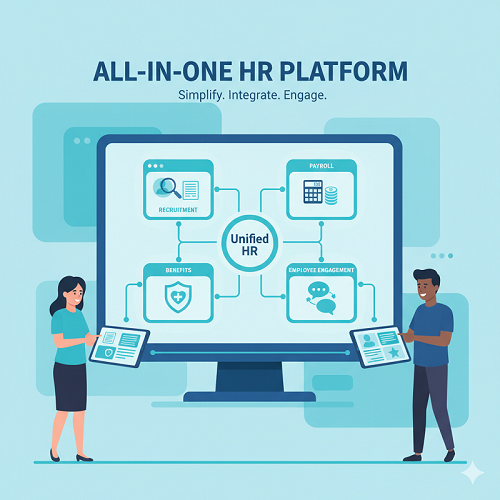
Want to experience seamless HR management?
Schedule a personalized demo and see how SutiHR can help streamline recruitment, payroll, benefits, and employee engagement—all in one platform.
The ROI of Automating Leave Management
The return on investment for automated leave management goes far beyond time savings. Organizations that implement an automated system experience improvements across nearly every operational area, from payroll accuracy to employee satisfaction. The financial benefits are measurable, reduced overtime costs, fewer payroll corrections, fewer compliance penalties, and decreased turnover related to poor leave experiences. Automation also strengthens cross-department alignment. HR no longer spends hours validating data; payroll receives clean, accurate information; and managers gain visibility into staffing needs before they impact productivity. Over time, these improvements compound, creating a more stable, predictable, and cost-effective leave management process that supports business growth.
Key Takeaways
- Automation eliminates human error, improves compliance accuracy, and reduces legal exposure.
- Real-time data and system-driven workflows reduce administrative workload and prevent payroll discrepancies.
- Consistent application of leave rules enhances employee trust and strengthens organizational fairness.
- Audit-ready documentation protects employers during internal audits or regulatory investigations.
- Automated insights support better scheduling, forecasting, and workforce planning.
Accuracy Through Real-Time Data
Automated systems calculate accruals, eligibility, and entitlements instantly and consistently. HR no longer has to reconcile spreadsheets or correct discrepancies, and employees have full confidence in the accuracy of their leave balances.
Consistent Policy Enforcement
Automation standardizes the leave process so every employee receives equal treatment. Approvals follow the same workflow regardless of department or manager, significantly reducing liability and ensuring fairness.
Better Workforce Planning and Scheduling
Managers gain visibility into upcoming absences, allowing them to plan coverage, adjust staffing needs, and prevent operational disruptions. This creates stability for teams and reduces last-minute scheduling emergencies.
Audit-Ready Recordkeeping
Every action, every request, approval, certification, and return-to-work step is logged automatically. This creates a permanent, defensible audit trail that protects the organization during compliance reviews.
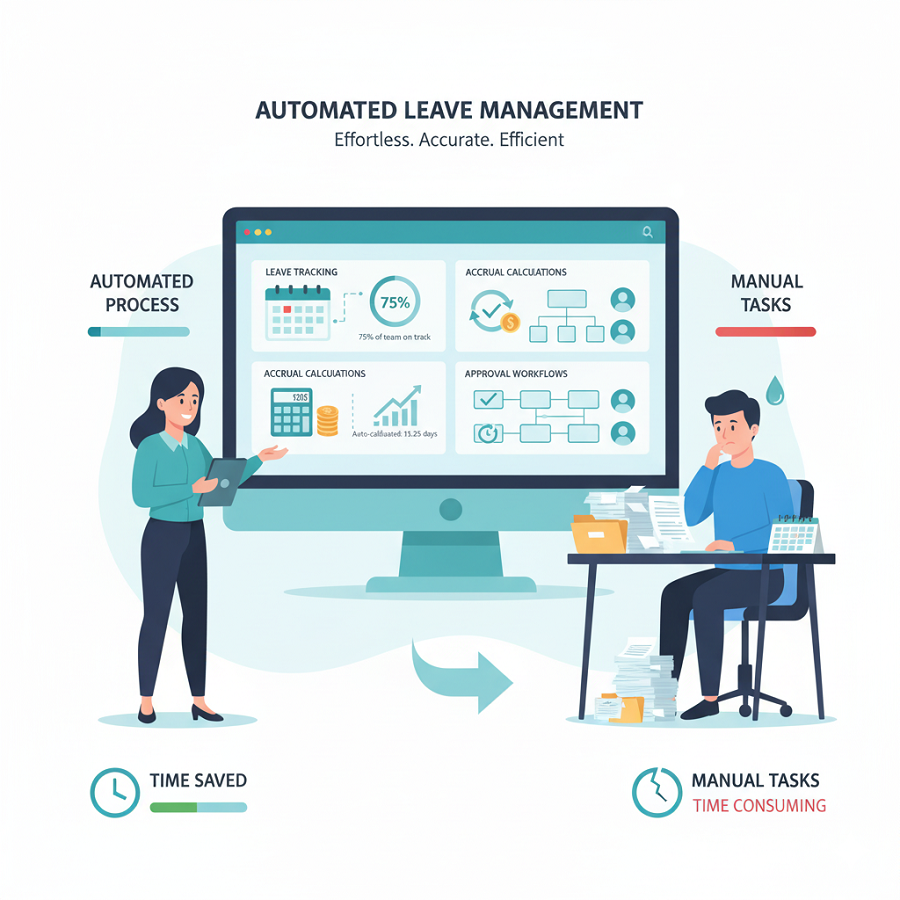
Stop Losing Time to Manual Processes
See how SutiHR automates leave tracking, accruals, and approvals in one seamless workflow.
Conclusion
The cost of manual leave management extends far beyond inefficiency. It impacts payroll accuracy, compliance stability, employee trust, operational consistency, and HR’s ability to operate strategically. As workplaces become more geographically diverse and leave laws continue to evolve, organizations can no longer rely on spreadsheets or independent manager judgment to administer leave.
Automating the leave process replaces risk with reliability. It ensures that every request follows a compliant, transparent workflow and that employees receive a consistent, supportive experience. With systems like SutiHR, organizations gain accuracy, efficiency, and peace of mind, transforming leave management from a daily burden into a streamlined, strategic function.
FAQs
Most HR departments save between 40% and 60% of the administrative time previously spent managing leave manually, depending on organizational size.
Yes. Automated systems apply state-specific rules based on an employee’s work location, ensuring accuracy without manual research.
Absolutely. Integrated platforms sync leave activity directly with payroll, eliminating the need for manual adjustments.
Workflow automation sends reminders, escalations, and notifications to keep the process moving and prevent bottlenecks.
Yes. Cloud-based platforms like SutiHR offer scalable, affordable options that deliver immediate ROI, even for small HR teams.