Suppliers have a direct impact on cost, quality, delivery, and day-to-day business operations. When a supplier performs well, things tend to move smoothly. When performance starts to slip, procurement teams may deal with late deliveries, quality issues, rising costs, or unresolved problems.
This is why many procurement and sourcing teams use supplier performance management to track supplier performance and identify where improvements may be needed. The challenge is knowing what to measure.
Tracking too many metrics can make supplier reviews difficult to manage, while tracking too few can leave important problems unnoticed. The right supplier performance KPIs give procurement teams a practical way to understand supplier performance, discuss issues with suppliers, and support more informed decisions.
What Are Supplier Performance KPIs?
Supplier performance KPIs are measurable indicators used to understand how well a supplier is meeting agreed expectations.
These measures can cover areas such as delivery, quality, cost, service, compliance, and responsiveness. The KPIs used will depend on the supplier, category, contract, and business requirements.
For a Category Manager or Strategic Sourcing Manager, KPIs are more than numbers in a report. They provide a common basis for supplier conversations and make supplier reviews more structured and consistent.
Why Do Supplier Performance KPIs Matter?
When a business works with many suppliers, it can be difficult to keep track of performance without consistent information.
A well-planned KPI process helps procurement teams spot changes earlier and have more productive conversations with suppliers. It can also reduce the need to gather information manually from spreadsheets, emails, and different reports before every review.
The goal is not simply to identify poor performance. Supplier KPIs should help procurement teams and suppliers understand what is working, where problems exist, and what needs to improve.
Key Supplier Performance KPIs Procurement Teams Should Measure
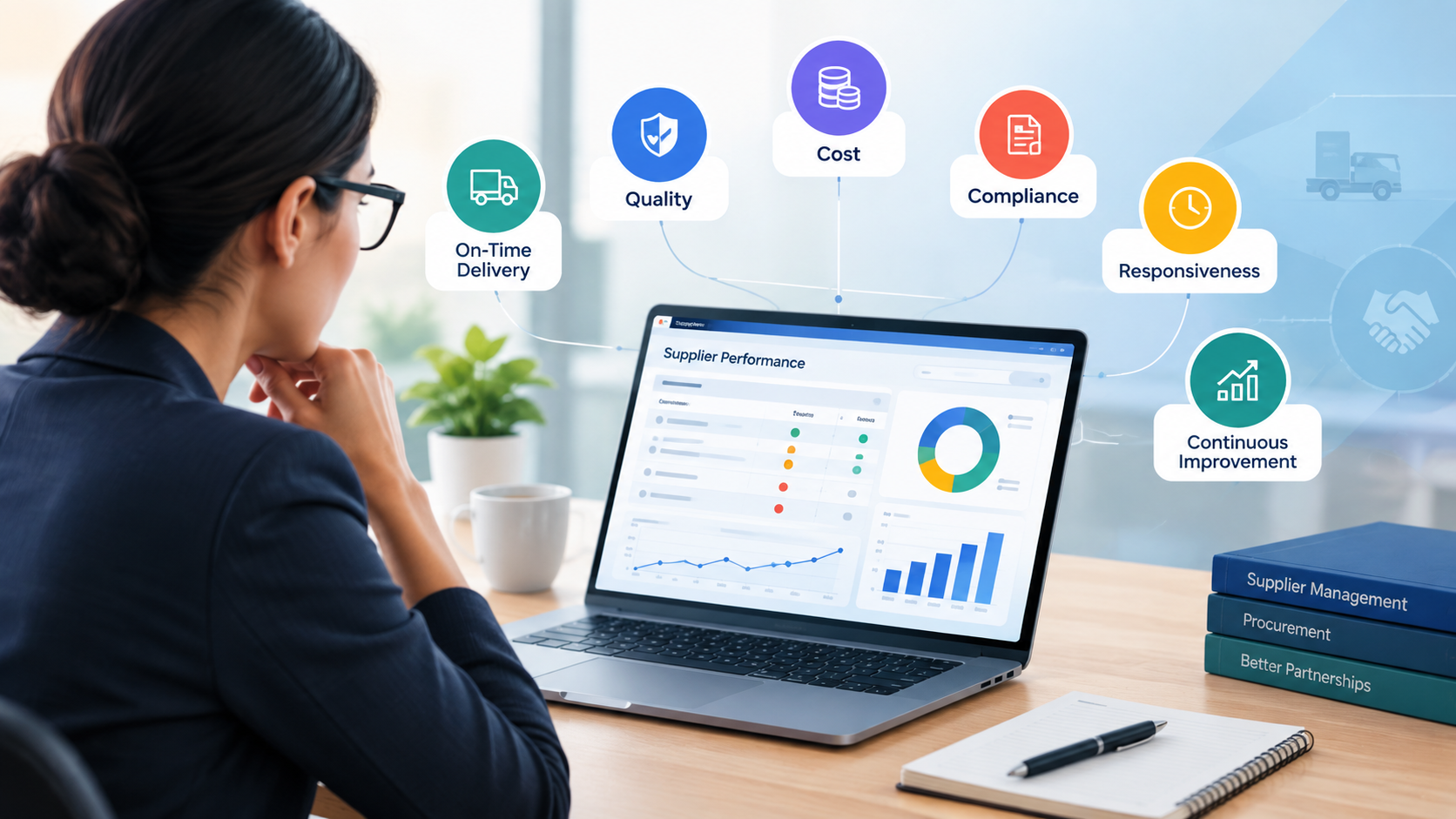
There is no single set of KPIs that works for every supplier. However, several measures provide a useful starting point for most supplier programs.
1. On-Time Delivery
On-time delivery shows how consistently a supplier delivers goods or services within the agreed timeframe.
A supplier may offer competitive pricing, but repeated late deliveries can create problems for operations, production, and customers. Tracking delivery performance over time can help procurement teams identify changes in supplier reliability.
2. Quality Performance
Quality KPIs help procurement teams understand whether suppliers are consistently meeting agreed standards.
Depending on the category, this could include defective items, rejected deliveries, returns, rework, or service quality issues. Looking at quality trends over time can provide a more useful picture than focusing on a single incident.
3. Cost Performance
Price is an important part of supplier evaluation, but procurement teams also need to understand how supplier costs perform against agreed terms.
Cost-related KPIs can help identify unexpected price changes, recurring cost differences, or other areas that may require supplier discussion. This gives Category Managers a clearer basis for reviewing supplier value over time.
4. Contract Compliance
Supplier agreements often include requirements related to pricing, service levels, delivery, documentation, and other commitments.
Contract compliance measures help procurement teams see whether suppliers are consistently meeting those requirements. This can be particularly important for strategic or high-value suppliers.
5. Supplier Responsiveness
A supplier’s ability to respond quickly can make a significant difference when an issue or request arises.
Procurement teams can track how quickly suppliers respond to questions, requests, or reported problems. Response time can provide useful insight into how effectively a supplier communicates and supports the business.
6. Issue Resolution Time
Problems are sometimes unavoidable. What matters is how quickly they are addressed.
Issue resolution time measures how long it takes a supplier to resolve reported problems or requests. Repeated delays may indicate that the supplier needs closer attention or a more structured improvement plan.
7. Corrective Action Closure
When a supplier does not meet expectations, procurement teams may agree on corrective actions to address the problem.
Tracking whether those actions are completed on time helps ensure that agreed improvements do not get forgotten after a supplier review. It also creates clearer accountability for both the procurement team and supplier.
Should Every Supplier Have the Same KPIs?
Not necessarily. A common mistake is trying to evaluate every supplier using exactly the same scorecard. A logistics provider, manufacturing supplier, software provider, and professional services firm do not have the same performance expectations.
A better approach is to establish a common framework while allowing individual KPIs to reflect the supplier’s role.
For example, delivery and quality may be especially important for a manufacturing supplier, while response time and service-level performance may matter more for an IT services provider.
This keeps supplier evaluations consistent without treating every supplier in exactly the same way.
How to Turn Supplier KPIs Into Action
Having KPIs in place is only the first step. Procurement teams also need to use the information during regular supplier reviews.
Looking at performance trends can help teams understand whether a supplier is improving, remaining consistent, or gradually falling below expectations. A single late delivery may not tell the whole story, but repeated delivery problems over several review periods may deserve closer attention.
KPI results should also lead to practical conversations. If quality has declined, for example, procurement teams can work with the supplier to understand the cause and agree on corrective actions.
This makes supplier performance measurement more than a reporting exercise. It becomes an ongoing process for addressing problems and improving supplier performance.
How Technology Can Simplify Supplier Performance Management
Managing supplier information manually becomes more difficult as the supplier base grows. Procurement teams may have to collect information from spreadsheets, emails, documents, and different internal systems before every supplier review.
Modern supplier management software can bring supplier information, evaluations, scorecards, and performance records together in one place. Automated workflows and reminders can also reduce repetitive administrative work.
AI-powered capabilities can further help procurement teams organize supplier information, identify performance patterns, generate reports, and highlight areas that may need attention.
Turn Supplier Data Into Better Supplier Management
Supplier KPIs give procurement teams a practical way to understand whether suppliers are meeting expectations. The most useful measures will depend on the supplier, category, and business priorities, but delivery, quality, cost, responsiveness, compliance, and corrective actions can provide a strong foundation.
The real value comes from what procurement teams do with the information.
Structured supplier performance management can help teams identify recurring issues, prepare for supplier reviews, and work with suppliers on measurable improvements. AI-powered supplier relationship management software can make this process easier by bringing supplier information together and reducing manual work.
SutiSRM provides a centralized way to manage supplier evaluations, scorecards, performance tracking, and supplier collaboration, helping procurement teams maintain a more organized approach to supplier management.

Ready to simplify supplier performance management?
Explore SutiSRM to see how smart supplier management can support your procurement team.
FAQs
There is no universal score that defines good supplier performance. Organizations should set targets based on their category, supplier agreements, business requirements, and historical performance.
SutiSRM supports ongoing supplier evaluations and performance reviews. Procurement teams can review suppliers based on their importance, performance history, contract requirements, or evaluation schedules.
Procurement usually leads the process, while teams such as operations, quality, finance, logistics, or other relevant departments may contribute depending on the supplier and category.
Yes. SutiSRM helps procurement teams evaluate supplier performance against defined expectations, including requirements established through supplier agreements or service-level expectations.
SutiSRM helps procurement teams manage supplier evaluations, scorecards, performance data, and review processes in one place. This can make it easier to track supplier performance against defined expectations.