Managing HR manually might work when you have a handful of employees, but it rarely scales as your business grows. As organizations grow, HR responsibilities become more complex. New hires, compliance, payroll updates, approvals, and employee requests increase rapidly, making manual processes inefficient. Modern HR software combines automation, AI, and workforce analytics to streamline operations, improve decision-making, and enable HR teams to focus on strategic initiatives rather than administrative work.
What Is Manual HR Administration?
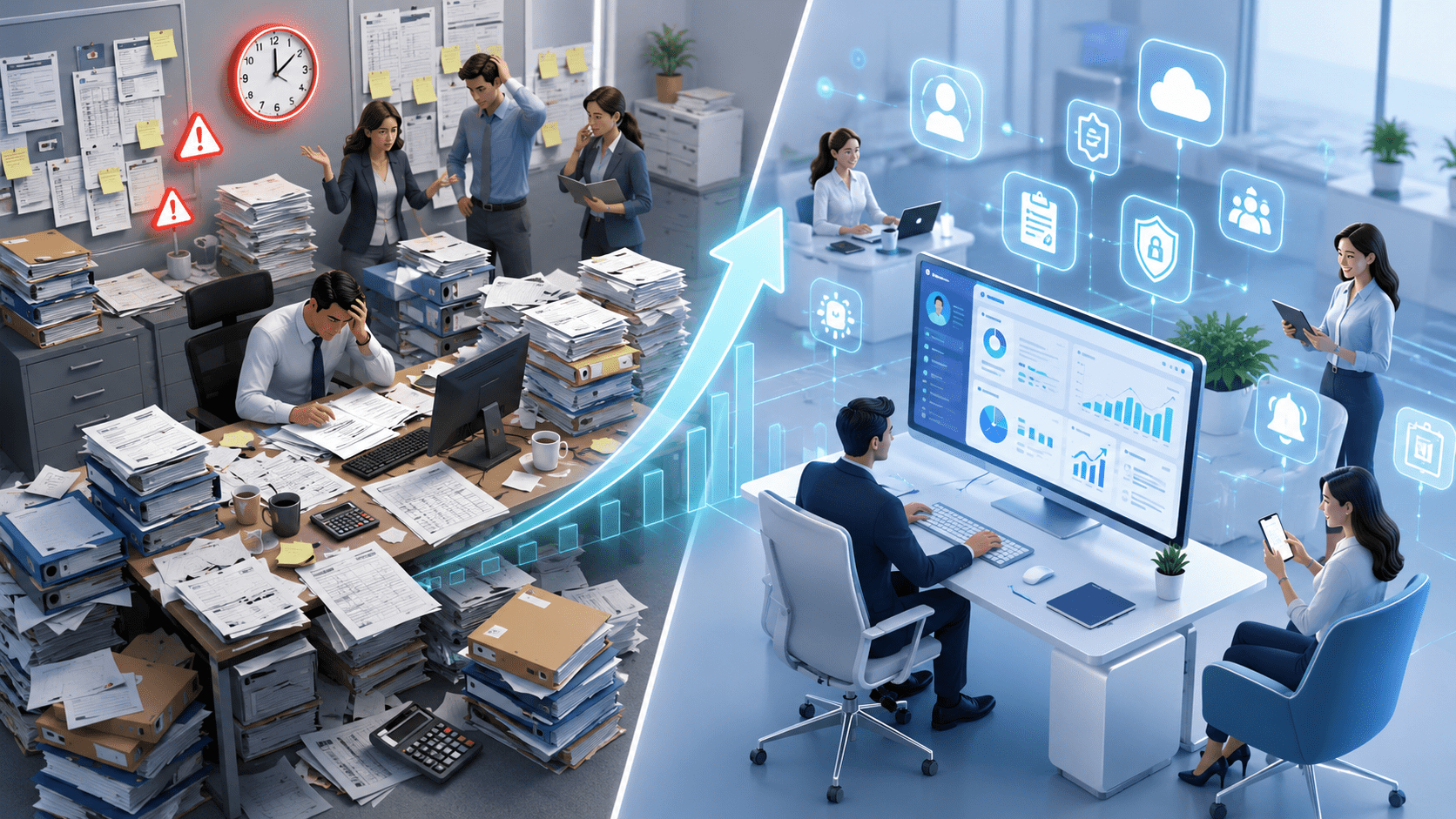
Manual HR administration involves managing HR activities through paper documents, spreadsheets, email chains, or disconnected applications rather than a centralized HR platform. Even organizations using multiple standalone tools often rely on manual data entry, duplicate updates, email approvals, and disconnected workflows, creating inefficiencies and increasing the risk of errors.
Manual processes may work for small businesses but become increasingly difficult as organizations grow. As employee numbers increase, administrative work expands, information becomes fragmented, decision-making slows, and HR teams spend more time maintaining records than supporting employees.
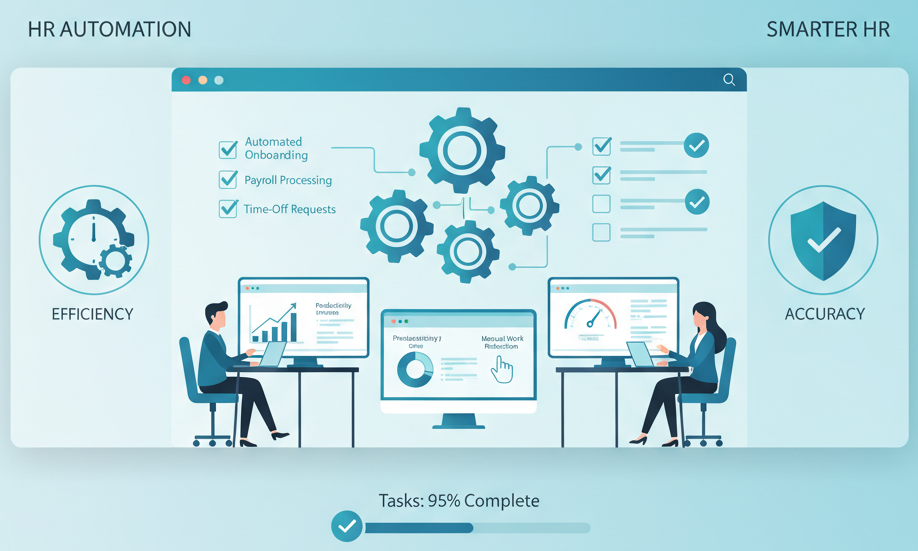
Eliminate Manual HR Tasks with SutiHR
Automate workflows, reduce errors, and boost productivity with an all-in-one HR platform.
Manual HR vs Automated HR: Understanding the Real Difference
At first glance, the difference between manual HR and automated HR seems obvious; one relies on people, while the other relies on technology. In reality, the distinction is much deeper. It’s about how work gets done, how decisions are made, and whether HR can support a growing business without adding complexity.
In a manual environment, HR teams spend much of their day coordinating activities. They enter employee information into multiple systems, send approval reminders, follow up on incomplete documents, update spreadsheets, and manually generate reports. The work gets done, but it depends heavily on individual effort and constant oversight.
Automated HR replaces repetitive manual tasks with standardized workflows. Employee data is centralized, approvals follow predefined rules, notifications are sent automatically, and connected processes update records without duplicate data entry. This creates consistent, scalable HR operations that support business growth.
Why Growing Organizations Move Beyond Manual HR
Manual HR processes rarely fail overnight; they gradually become operational bottlenecks. As organizations hire more employees, routine activities such as onboarding, leave approvals, employee record updates, payroll changes, and policy acknowledgments increase significantly. Every additional employee brings more requests, more approvals, and more information to manage.
Without a centralized system, HR data becomes scattered across spreadsheets, emails, and standalone applications. Teams spend valuable time searching for information, updating multiple records, and coordinating approvals, rather than supporting employees.
Growing organizations also face higher employee expectations. Employees want self-service access to payslips, leave balances, company policies, onboarding documents, and performance goals. Manual HR processes often struggle to deliver this level of responsiveness, increasing dependency on HR teams for even the simplest requests.
The Hidden Business Costs of Manual HR
Many see manual HR primarily as extra paperwork. In reality, the greatest costs are often indirect and become visible only as the organization grows.
Delayed onboarding can slow employee productivity before a new hire even begins contributing. Manual approval processes extend hiring timelines, while inconsistent employee records increase the likelihood of payroll errors and compliance issues.
Employees also experience frustration when routine requests take days instead of minutes. Whether it’s requesting leave, accessing HR documents, or updating personal information, slow response times negatively affect the employee experience.
Leadership faces another challenge: limited visibility. Questions about turnover, absenteeism, hiring progress, workforce planning, or compliance often require manual data collection from multiple sources. Without timely insights, management is forced to make important workforce decisions based on incomplete information.
The Financial Impact of Manual HR
One of the biggest misconceptions about manual HR is that it costs very little because it doesn’t require significant software investment. While that may seem true initially, the operational costs increase steadily as the workforce grows.
As administrative workloads expand, organizations often hire additional HR staff simply to maintain manual processes. Existing HR teams may spend more time on overtime, repetitive data entry, and administrative coordination rather than on strategic initiatives.
Manual processes also increase the likelihood of payroll corrections, compliance penalties, delayed hiring, and employee turnover caused by inconsistent onboarding or poor employee experiences. These hidden expenses often exceed the cost of implementing an integrated HR platform, making manual HR increasingly expensive over time.
AI is Transforming HR from Administrative to Strategic
Artificial intelligence is changing HR in ways that go beyond automating repetitive tasks. Rather than replacing HR professionals, AI helps them make better decisions, identify trends, and focus on higher-value work.
AI supports HR across recruitment, onboarding, document management, and employee support. It can screen resumes, answer common employee questions, extract information from HR documents, and automate routine workflows, reducing repetitive administrative work.
Another growing application is workforce intelligence. By analyzing historical employee data, AI can identify trends in absenteeism, employee turnover, hiring performance, or training participation. These insights help HR leaders make proactive decisions rather than react after problems arise.
The goal isn’t to automate every HR decision. Human judgment remains essential for hiring, employee development, conflict resolution, and leadership planning. AI simply provides the information and recommendations needed to make those decisions more confidently.
Workforce Analytics Turn HR Data into Business Decisions
Collecting employee data is no longer enough. The real value comes from understanding what that data reveals about the workforce.
Manual HR systems often produce reports only after significant effort. Information is gathered from multiple spreadsheets, validated manually, and presented weeks after decisions need to be made. By the time reports reach management, many of the insights are already outdated.
Smart HR platforms provide real-time workforce analytics through centralized dashboards. HR leaders can monitor hiring progress, employee turnover, absenteeism, leave trends, workforce demographics, compliance status, and organizational growth without manually compiling reports.
This visibility enables better planning. If one department experiences unusually high turnover, leadership can investigate the underlying causes before they begin to affect productivity. If onboarding timelines are increasing, HR can identify bottlenecks and improve the process. Workforce planning becomes proactive rather than reactive.
Analytics also strengthens conversations between HR and executive leadership. Instead of relying on assumptions, HR can present measurable insights that support business decisions.
How Modern HR Platforms Bring Everything Together
The most effective HR platforms don’t simply digitize paperwork; they connect people, processes, and data within a single ecosystem.
Solutions like SutiHR bring together core HR functions, including employee information management, recruitment, onboarding, leave management, document management, performance management, workflow automation, and workforce analytics on one centralized platform. Rather than maintaining information across multiple spreadsheets and disconnected applications, HR teams work from a single source of truth.
Automated workflows, reminders, audit trails, employee self-service, and AI-powered insights reduce administrative work while improving visibility, compliance, and collaboration across the organization. As a result, HR teams can focus more on supporting employees and business growth.
What Should Growing Organizations Look for in an HR Platform?
Choosing HR software is about more than replacing spreadsheets; it’s about investing in a platform that simplifies today’s HR processes while supporting future growth.
Look for strong automation capabilities. Routine tasks such as onboarding, leave approvals, document collection, and employee lifecycle changes should flow through predefined workflows, reducing delays and manual effort, and ensuring consistent employee experiences.
A centralized employee database is equally important. Keeping employee information in one place eliminates duplicate data entry and improves data accuracy across HR processes.
Reporting and workforce analytics should provide real-time visibility into hiring, turnover, leave, compliance, and other workforce trends, enabling HR leaders to make informed decisions without having to manually compile reports.
AI-powered capabilities, including candidate screening, intelligent document processing, employee support, and workforce insights, help HR teams improve efficiency while enhancing decision-making.
Finally, choose a platform that integrates with payroll, eSign, expense, and other business systems to eliminate data silos and streamline operations.
The best HR platform doesn’t simply automate existing processes; it creates a connected digital workplace that supports employees, managers, and business leaders as the organization grows.
Conclusion
As organizations grow, manual HR processes become increasingly difficult to manage, leading to operational inefficiencies, rising administrative costs, compliance risks, and limited workforce visibility. Modern HR platforms address these challenges by combining automation, AI, and workforce analytics to streamline HR operations, improve employee experiences, and support better business decisions.
Organizations that invest in an integrated HR system aren’t simply replacing spreadsheets; they’re building a scalable HR foundation that can adapt as their workforce grows. By centralizing employee data, automating routine processes, and providing actionable workforce insights, HR teams can spend less time on administration and more time driving organizational success.
Ready to simplify your HR operations?
Explore how SutiHR helps organizations automate HR processes, centralize employee data, and make smarter workforce decisions, all from one integrated platform.
Frequently Asked Questions
Automation reduces repetitive administrative work by handling routine tasks such as onboarding workflows, leave approvals, document collection, notifications, and employee record updates. This allows HR professionals to focus on strategic initiatives instead of manual coordination.
AI supports HR teams by automating repetitive activities, analyzing workforce data, assisting with recruitment, improving document management, and identifying trends that help leaders make informed workforce decisions. It complements human expertise rather than replacing it.
Workforce analytics provide real-time insights into hiring, employee turnover, absenteeism, performance, and workforce planning. These insights enable organizations to identify trends early, measure HR effectiveness, and make data-driven decisions.
Yes. Modern HR platforms maintain centralized employee records, automate policy acknowledgments, generate audit trails, manage document retention, and help organizations stay aligned with evolving labor regulations and internal policies.