Procurement has evolved far beyond emails, spreadsheets, and back-and-forth vendor calls. Today, businesses are expected to move faster, make smarter decisions, and maintain full control over supplier selection, all while keeping costs optimized.
At the center of this transformation is a critical process: the Request for Quotation (RFQ).
If you’ve ever needed to compare supplier pricing, evaluate offers, or standardize purchasing decisions, you’ve already touched the RFQ process, whether formally or informally. But in a modern, digital-first procurement environment, RFQs are no longer just documents. They are part of an intelligent, automated sourcing workflow that drives efficiency, transparency, and better outcomes.
In this guide, you’ll learn what RFQ really means, how the process works, where organizations struggle, and how automation is transforming supplier sourcing into a faster, smarter, and more strategic function.
Understanding RFQ in Today’s Procurement Landscape
An RFQ (Request for Quotation) is a formal document used by organizations to request pricing and terms from suppliers for specific goods or services. It is typically used when the requirements are clear and well-defined, allowing vendors to provide accurate and comparable quotes.
Unlike broader sourcing methods, RFQs focus primarily on price, delivery, and predefined specifications. This makes them ideal for repeat purchases, standardized products, or situations where cost optimization is a priority.
However, in modern procurement, RFQs are not just about collecting quotes. They are about creating a structured, data-driven decision-making process that ensures consistency, fairness, and speed.
Why RFQs Still Matter in a Digital Procurement World
With the rise of AI and automation, some might assume traditional processes like RFQs are becoming obsolete. In reality, they are becoming even more important and effective.
RFQs remain essential because they:
- Standardize supplier communication
- Ensure fair and transparent comparisons
- Help organizations secure competitive pricing
- Create a documented trail for compliance and audits
What has changed is how RFQs are managed.
Instead of manual emails and spreadsheets, modern procurement teams use intelligent platforms to automate RFQ creation, distribution, evaluation, and selection. This shift transforms RFQs from a slow administrative task into a strategic sourcing tool.
RFQ vs RFP vs RFI: Clearing the Confusion
Before diving deeper, it’s important to understand how RFQs differ from other sourcing documents:
- RFI (Request for Information) is used to gather general information about suppliers and capabilities.
- RFP (Request for Proposal) is used for complex requirements where solutions may vary.
- RFQ (Request for Quotation) is used when specifications are fixed and pricing is the key decision factor.
In simple terms, RFQs are used when you know exactly what you need and want the best price and terms.
The RFQ Process: Step-by-Step Breakdown
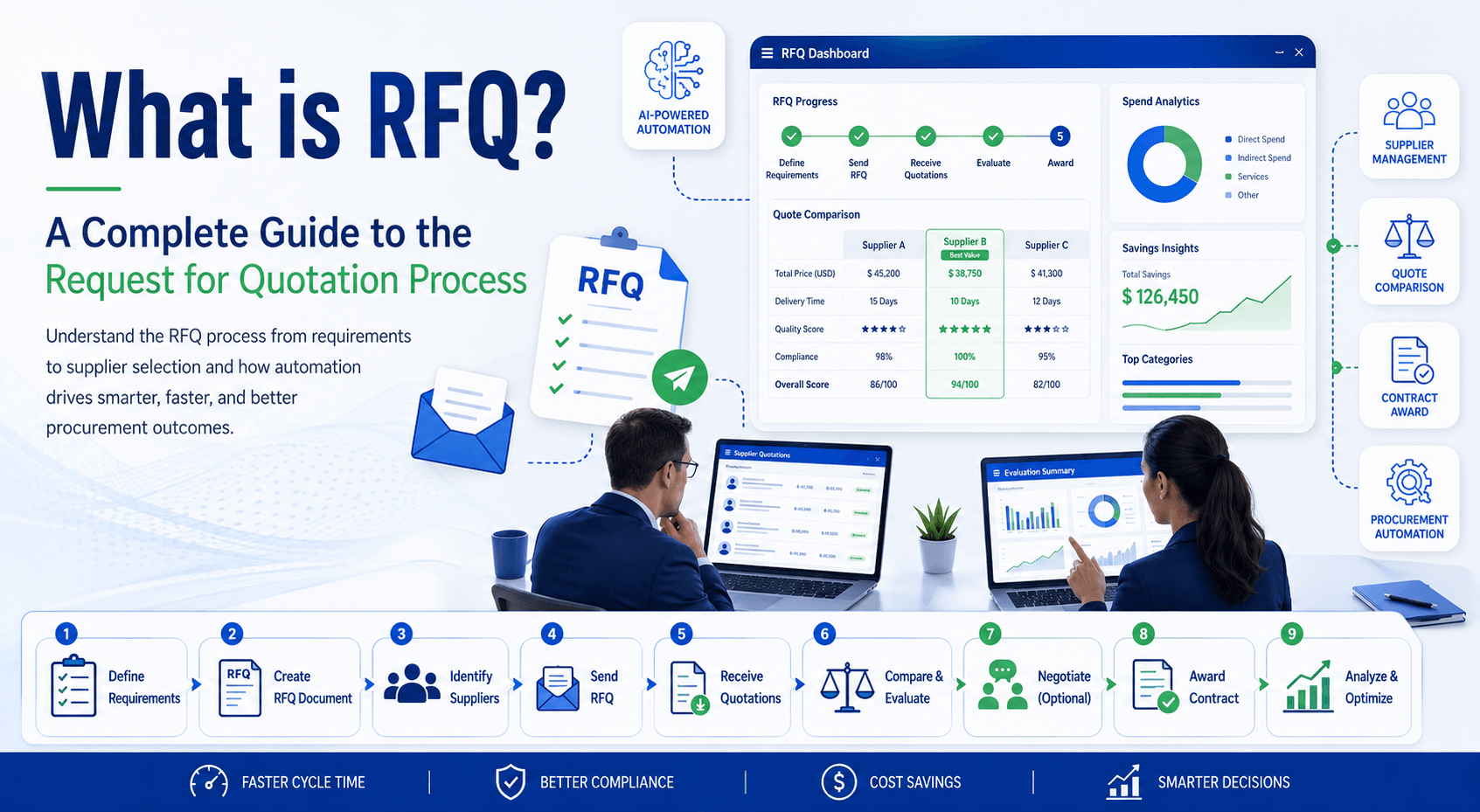
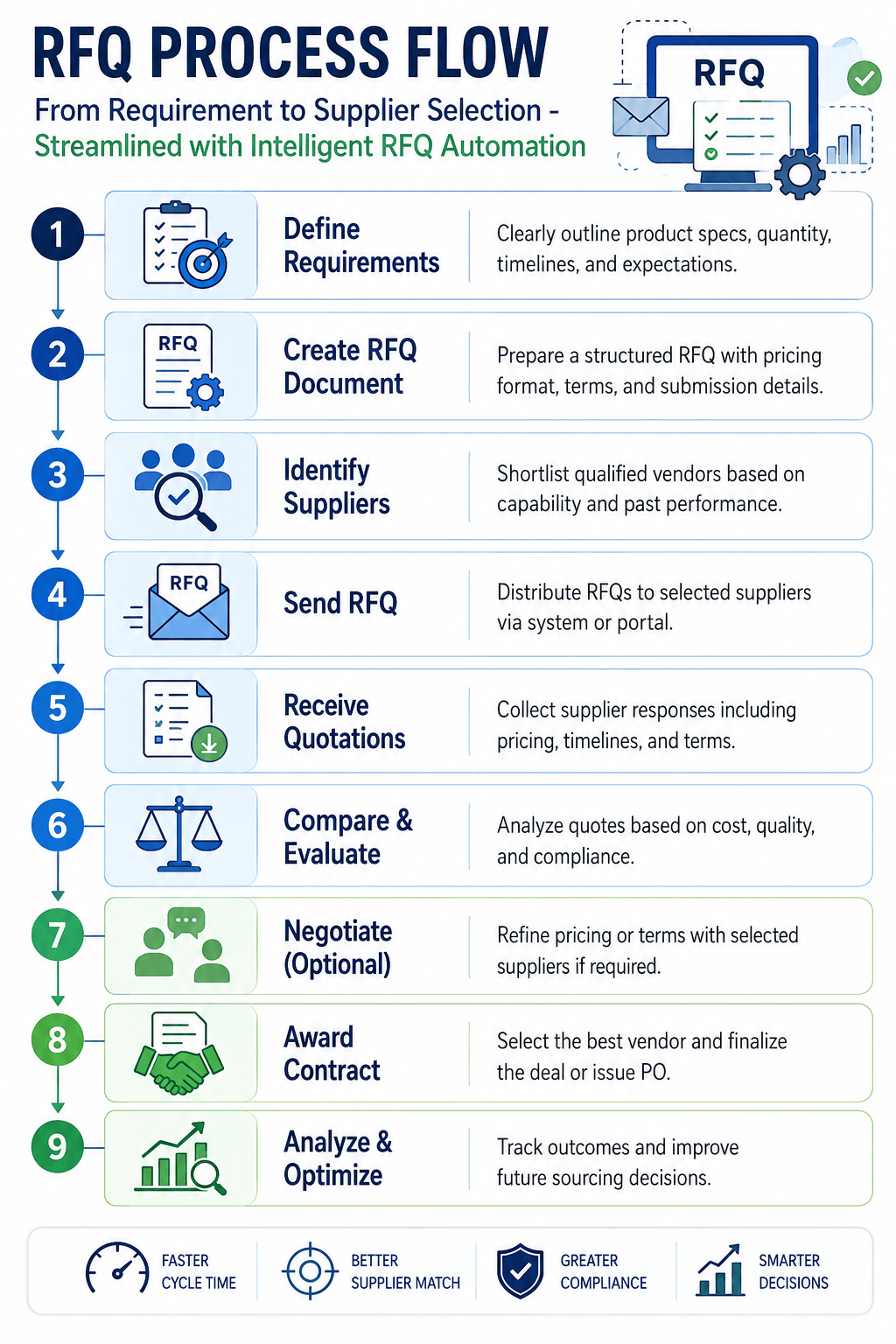
While every organization may tailor the process slightly, a typical RFQ workflow follows a structured path:
1. Define Requirements Clearly
The process begins with identifying exactly what needs to be purchased. This includes specifications, quantities, delivery timelines, and quality expectations. The more precise the requirement, the more accurate the quotes.
2. Create the RFQ Document
A formal RFQ is prepared with all necessary details such as product specifications, pricing format, submission deadlines, and evaluation criteria. This ensures all suppliers respond in a consistent format.
3. Identify and Invite Suppliers
Procurement teams select qualified suppliers from their vendor database or external sources. Invitations are sent to ensure a competitive and diverse set of responses.
4. Distribute the RFQ
The RFQ is shared with suppliers through email, procurement systems, or supplier portals. In modern systems, this step is automated to ensure speed and consistency.
5. Receive Supplier Quotations
Suppliers submit their quotes within the specified timeline. These responses include pricing, delivery commitments, and any additional terms.
6. Evaluate and Compare Quotes
Procurement teams review all submissions, comparing them based on price, quality, delivery, and compliance. Automated systems can streamline this step with side-by-side comparisons.
7. Negotiate (If Needed)
In some cases, negotiations may take place to refine pricing or terms before finalizing the decision.
8. Select Supplier and Award Contract
The best supplier is selected based on predefined criteria, and the contract or purchase order is issued.
9. Record and Analyze Data
Modern procurement teams track RFQ outcomes to improve future sourcing strategies and supplier performance.
Common Challenges in Traditional RFQ Processes
Despite its importance, the RFQ process often becomes inefficient when managed manually.
- Lack of Standardization
Different formats and inconsistent data make it difficult to compare supplier responses effectively.
- Time-Consuming Communication
Back-and-forth emails slow down the process and create confusion.
- Limited Visibility
Procurement teams struggle to track RFQ status, supplier responses, and decision timelines.
- Data Silos
Information is scattered across systems, making reporting and analysis difficult.
- Risk of Errors
Manual data entry increases the chances of mistakes in pricing, quantities, or supplier details.
These challenges highlight why organizations are moving toward automation and intelligent sourcing platforms.
How Automation is Transforming the RFQ Process
Modern procurement platforms are redefining how RFQs are created and managed.
- Smart RFQ Creation
Templates (request for quotation templates) and predefined fields allow teams to create RFQs quickly and consistently.
- Automated Supplier Communication
RFQs can be sent to multiple suppliers instantly, reducing delays and manual effort.
- Real-Time Tracking
Teams can monitor RFQ status, supplier participation, and response timelines in real time.
- Intelligent Quote Comparison
AI-powered tools can analyze supplier responses, highlight differences, and recommend the best options.
- Centralized Data Management
All RFQ-related data is stored in one place, improving visibility and reporting.
- Faster Decision-Making
Automation reduces cycle time, enabling quicker supplier selection and procurement execution.
In short, automation turns RFQs into a fast, transparent, and data-driven process.
Benefits of a Modern RFQ Approach
Organizations that modernize their RFQ process experience measurable improvements:
- Faster sourcing cycles with reduced manual effort
- Better pricing outcomes through competitive bidding
- Improved supplier relationships with clear communication
- Greater transparency and compliance across procurement
- Enhanced decision-making with real-time insights
These benefits make RFQ automation a key component of digital procurement transformation.
Best Practices for an Effective RFQ Process
To get the most out of your RFQ process, consider these proven strategies:
- Be Clear and Detailed
Provide complete and precise specifications to avoid confusion and rework.
- Use Standardized Templates
Ensure consistency across all RFQs to simplify evaluation.
- Invite the Right Suppliers
Focus on qualified vendors who can meet your requirements.
- Set Realistic Deadlines
Give suppliers enough time to prepare accurate quotes.
- Leverage Technology
Use intelligent procurement software to streamline the process and improve efficiency.
- Analyze Past RFQs
Use historical data to refine supplier selection and pricing strategies.
The Role of AI in RFQ Optimization
Artificial intelligence is taking RFQ processes to the next level.
AI can:
- Identify the best suppliers based on past performance
- Predict pricing trends and recommend optimal bids
- Detect anomalies or risks in supplier responses
- Automate routine decision-making
This shift enables procurement teams to move from reactive sourcing to proactive strategy.
When Should You Use an RFQ?
RFQs are most effective when:
- Requirements are clearly defined
- Products or services are standardized
- Price is a primary decision factor
- Multiple suppliers can fulfill the need
In these scenarios, RFQs provide a structured and efficient way to achieve the best value.
Turning RFQs into a Strategic Advantage
The RFQ process may seem straightforward, but when executed effectively, it becomes a powerful driver of cost savings, efficiency, and supplier performance.
In today’s fast-paced business environment, relying on manual RFQ processes is no longer sustainable. Organizations need smart, automated, and connected systems to stay competitive.
By embracing automation and AI-powered purchasing systems, procurement teams can transform RFQs from a routine task into a strategic capability that delivers measurable business value.
Still managing RFQs manually? It’s time to switch to a smarter, automated approach. Book a demo and see how SutiProcure simplifies sourcing with AI-powered efficiency.