Why the Annual Review is Fading Away
For years, annual performance reviews were the main way companies measured employee performance. But in today’s fast-changing workplace, once-a-year reviews are no longer enough. They feel outdated, slow, and often don’t help employees grow or improve in real time.
Continuous Performance Management (CPM) is changing that. Instead of waiting 12 months for feedback, employees and managers now talk regularly. Goals are updated often, feedback is given quickly, and employees stay more engaged. It’s a new way to help people do their best work—every day, not just once a year.
Key Takeaways:
- Annual reviews are too slow and disconnected from day-to-day work.
- Continuous Performance Management provides frequent, helpful feedback.
- CPM increases employee growth, engagement, and alignment with company goals.
- Success with CPM requires strong leadership, tools, and a culture shift.
- SutiSoft’s HR software makes it easier to roll out and manage CPM.
The Problems with Annual Reviews
Annual performance reviews have been a workplace tradition for decades, but they’re quickly becoming obsolete. As businesses move faster and job roles evolve rapidly, the once-a-year evaluation model is failing to meet the needs of both employees and managers. For a deeper dive into why traditional appraisals fall short—and how to fix them—check out our article on increasing the value performance appraisals add.
Annual performance reviews have been a workplace tradition for decades, but they’re quickly becoming obsolete. As businesses move faster and job roles evolve rapidly, the once-a-year evaluation model is failing to meet the needs of both employees and managers. Understanding the key problems with annual reviews is the first step toward building a more effective performance strategy.
Annual reviews used to work when jobs were more stable, and business moved more slowly. But now, they often do more harm than good. In fact, a study by Deloitte found that 58% of companies believe their current performance review process does not drive high performance. Imagine a fast-paced marketing team launching multiple campaigns per quarter—waiting until the end of the year to assess an employee’s contribution to a campaign from nine months ago doesn’t just feel outdated—it risks missing the context and impact of that work entirely. In today’s agile work environment, real-time decisions require real-time feedback.
Delayed Feedback Doesn’t Help
Waiting a whole year to give or receive feedback isn’t helpful. Managers can’t remember every detail, and employees can’t grow if they don’t know how they’re doing. According to Gallup, only 14% of employees strongly agree that their performance reviews inspire them to improve. When feedback is delayed, opportunities for development are lost.
Too Generic and Outdated
Annual reviews often rely on rigid rating scales or templates that don’t reflect each employee’s unique role or goals. For example, a software engineer working on an evolving product might have shifted focus multiple times throughout the year. A one-time review can’t capture those changes—or the employee’s ability to adapt—accurately.
Low Morale and Engagement
Instead of motivating people, annual reviews can cause stress and dissatisfaction. Especially when tied to bonuses or raises, these conversations often feel judgmental rather than supportive. A report by Adobe showed that 22% of employees have cried after a performance review, highlighting how emotionally taxing the process can be when not handled with care.
Looking to learn more about the tools that support a real-time performance strategy?
Continuous Performance Management Drives Ongoing Growth
To keep up with today’s agile work environment, organizations need more than just annual feedback—they need a performance model that’s built for continuous growth. Continuous Performance Management (CPM) helps companies achieve this by creating a system of ongoing communication, coaching, and goal setting that drives real-time improvement and engagement.
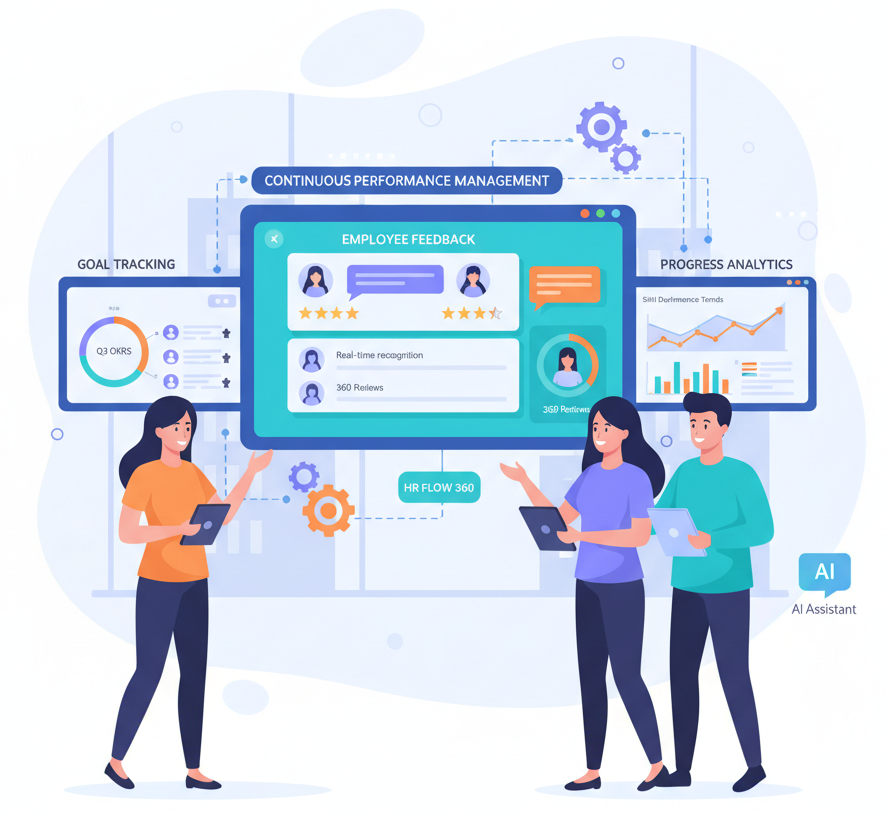
Continuous Performance Management is an ongoing process that helps employees grow with regular check-ins, real-time feedback, and flexible goals. It creates a steady rhythm of communication between employees and their managers.
Key Takeaways:
- CPM is about regular, meaningful conversations between managers and employees.
- It helps track progress, adjust goals, and support career growth in real time.
- CPM leads to stronger relationships and better performance.
Ongoing Check-Ins
Instead of one big meeting a year, managers meet with employees weekly or monthly. A sales manager, for example, might use bi-weekly one-on-ones to review pipeline updates, provide coaching, and adjust goals based on shifting market conditions. These touchpoints improve visibility and help everyone stay aligned.
Fast, Helpful Feedback
Feedback happens as things happen—not months later. Whether it’s praise for a well-run client presentation or guidance after a missed deadline, timely input helps employees course-correct and improve quickly. According to Harvard Business Review, employees who receive daily feedback are 3x more engaged than those who receive it once a year.
Flexible Goal Setting
With CPM, goals are not set in stone. They evolve. An IT manager might shift an engineer’s goals mid-quarter to focus on security upgrades after a new threat emerges. CPM supports this kind of agility by keeping goals relevant and employees focused on the highest priorities.
How CPM Helps Businesses and Employees
The benefits of Continuous Performance Management go far beyond more frequent check-ins. Companies that adopt CPM often see higher employee engagement, stronger performance, and improved manager-employee relationships. Performance strategies like these are key to building great company culture—just like the employee-focused benefits discussed in this article.
The benefits of Continuous Performance Management go far beyond more frequent check-ins. Companies that adopt CPM often see higher employee engagement, stronger performance, and improved manager-employee relationships. Let’s explore how this approach creates value for both individuals and the organization as a whole.
Employees Feel More Engaged
Employees who get regular, meaningful feedback are more motivated. Gallup reports that employees who have regular performance conversations are nearly four times more likely to be engaged at work. CPM builds a culture where people feel supported and valued.
Stronger Manager Relationships
Frequent check-ins help managers build trust with their teams. Instead of being evaluators once a year, they become active coaches. For example, a project manager can guide team members through challenges in real time rather than waiting until review season to point out mistakes.
Better Business Results
Companies that use continuous performance practices are more agile. A real-world example: Adobe replaced annual reviews with regular feedback sessions and saw a 30% drop in voluntary turnover. With CPM, organizations adapt faster and keep high performers longer.
Ready to experience the benefits of Continuous Performance Management firsthand?
How to Start Using Continuous Performance Management
Making the shift from annual reviews to a continuous model may feel overwhelming at first, but with the right foundation, it can be a smooth transition. If you’re exploring platforms to support this change, here are the top 5 reasons to choose HRM software that can guide your decision-making.
Making the shift from annual reviews to a continuous model may feel overwhelming at first, but with the right foundation, it can be a smooth transition. From leadership support to the right HR software, this section covers the practical steps your organization can take to successfully implement Continuous Performance Management.
Key Takeaways:
- Start with support from company leadership.
- Use good software to track performance and goals.
- Train managers to give great feedback and coach their teams.
Get Leadership Support
Leadership buy-in is key. When executives speak openly about the benefits of CPM and participate in it themselves, it sends a powerful message. Culture shifts start at the top.
Use the Right Tools
You need technology to support the process. With SutiSoft’s HR Software, you can automate check-in scheduling, collect real-time feedback, and adjust goals easily. This ensures a smooth, scalable rollout.
Train Managers
Managers must shift from being evaluators to being coaches. Invest in training that helps them ask better questions, listen actively, and guide performance through conversation—not just judgment.
Communicate the Change
Introduce CPM with a clear message: “We’re doing this to support you, not to catch you off guard.” When people see that the change is about growth and support, not punishment, they’ll be more likely to participate fully.
Want to see how SutiSoft’s HR solution makes implementing CPM easier?
How to Measure CPM Success
Introducing Continuous Performance Management is a big step forward—but how do you know it’s working? Success isn’t just about having regular check-ins or using a new tool. It’s about seeing real improvements in employee engagement, productivity, and alignment with business goals. To make sure your investment in CPM delivers results, it’s important to track the right metrics and continually refine the process based on what you learn.
Performance and Goal Progress
Review how often goals are achieved and how individual performance has changed over time. You might find that employees reach targets faster or show improvement in areas they struggled with under the old review system.
Engagement and Retention
Use surveys and exit interviews to measure how employees feel about the new process. Companies that adopted CPM, like Microsoft, reported stronger employee morale and higher retention rates among top performers.
Participation in Feedback
Are check-ins happening regularly? Are employees and managers giving meaningful feedback? Tracking usage and sentiment over time helps refine the process and ensure long-term success.
Conclusion
Continuous Performance Management is not just a trend—it’s a necessary evolution for organizations that want to stay competitive, agile, and employee-focused. By replacing annual reviews with frequent, constructive conversations and flexible goal-setting, companies can drive performance, improve engagement, and support long-term development. With the right tools and leadership commitment, CPM can become a strategic advantage, creating a more connected and high-performing workforce.
Frequently Asked Questions
It’s a process where employees and managers have regular check-ins, give feedback often, and update goals throughout the year. It replaces the once-a-year performance review.
They’re too slow, too generic, and don’t help employees grow. Most businesses need faster, more flexible ways to manage performance.
It depends on the team, but weekly or monthly check-ins are common. The goal is to keep communication open and consistent.
Yes. Using HR software makes it easier to schedule check-ins, track goals, and give feedback. It also helps you measure results.
Be clear about the benefits, provide training, and show that leadership is on board. When employees see how it helps them grow, they’re more likely to support it.