The Evolution of HR Management Software
Human Resource Management (HRM) plays a critical role in the success of any organization, irrespective of its size or industry. Over the years, HRM systems have evolved from basic administrative tools into powerful, cloud-based platforms that streamline everything from recruitment and onboarding to performance management and compliance. As the workplace continues to transform with emerging technologies like AI and advanced analytics, HR software must keep pace. In this article, we’ll explore the evolution of HR management software—from its early days to the modern digital era—and uncover what the future holds for HR technology.
Key Takeaways
- HRM software has evolved from basic record-keeping tools to intelligent, cloud-based platforms that automate and streamline HR operations.
- Integration with ERP systems and cloud technology has made HR software more accessible, scalable, and cost-effective, especially for small to mid-sized businesses.
- The future of HR technology will be shaped by innovations such as artificial intelligence (AI), machine learning, and predictive analytics.
- Remote workforce management, employee experience, and data-driven decision-making will be top priorities in next-generation HR systems.
- Investing in modern HR solutions helps organizations boost efficiency, ensure compliance, and attract and retain top talent in a competitive market.
A Look at the Past of HR Software
HR systems evolved in the 1980s from simple computer applications to virtual vaults containing sophisticated human resources information and processes. HRM software brought human resources professionals into the world of technology, especially in areas related to employment and personnel management. It was widely used across various aspects of talent acquisition, including applicant tracking, performance and training management, attendance tracking, rewards and recognition, workforce analytics, and much more.
This early shift to digital systems laid the groundwork for today’s integrated HR platforms. While the initial focus was on automating administrative tasks, these early solutions began to highlight the strategic value of data-driven HR decisions. The evolution of HR software during this era also marked the beginning of centralized employee data storage, enabling more consistent tracking of employee lifecycle events and improving overall HR visibility across departments.
HR Software Today: Present-Day Capabilities
Modern HR software has transformed into a powerful, centralized solution that supports the entire employee lifecycle—from recruitment to retirement. Today’s systems go far beyond basic record-keeping; they integrate with other business tools, enable real-time data access, and provide automation for complex HR functions such as payroll, benefits administration, compliance, and performance management. With user-friendly interfaces, self-service portals, and cloud-based accessibility, HR solutions have become essential for improving efficiency, ensuring accuracy, and enhancing the employee experience across organizations of all sizes.
Discover How to Simplify Your HR Operations
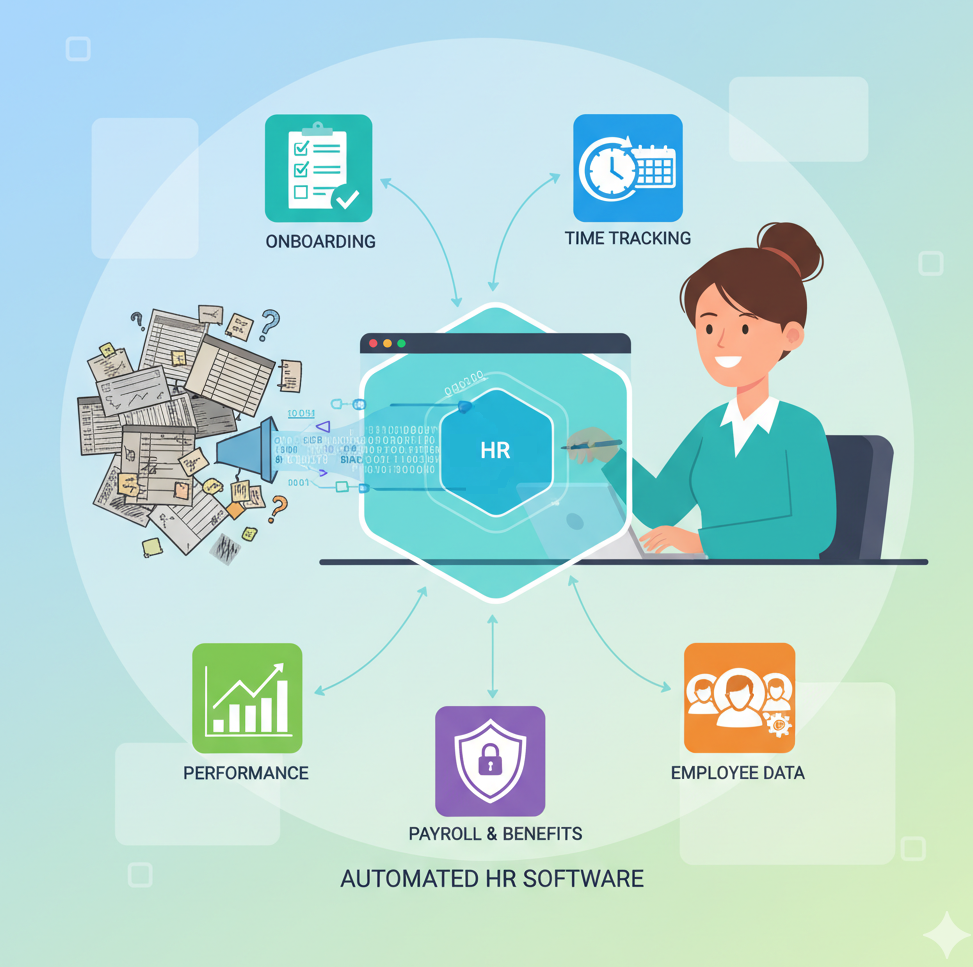
Tired of juggling spreadsheets and manual HR processes?
SutiHR automates onboarding, performance management, time tracking, and more—so you can focus on your people.
Integration with ERP Systems
As human resource management software evolved, it was integrated with Enterprise Resource Planning (ERP) systems. An ERP platform provides broader insights by combining HR functions with key areas like profitability analysis, inventory control, and investor relations. These sophisticated systems were designed primarily for large enterprises with complex technology requirements.
Adoption by SMEs
Over time, the demand for an integrated HR solution grew, and gradually, small and mid-sized enterprises started adopting these platforms for the advantages they offer. These systems were typically monitored by qualified specialists who understood both the technology and the & functional aspects. These professionals would ensure compliance with state and federal laws, streamlining recruitment and selection processes, and generating valuable reports and analytics for strategic planning. As a result, technology began to streamline the entire HR lifecycle, from recruitment to retirement, helping organizations operate more efficiently and make data-driven decisions.
The Future of HR Technology
See SutiHR in Action
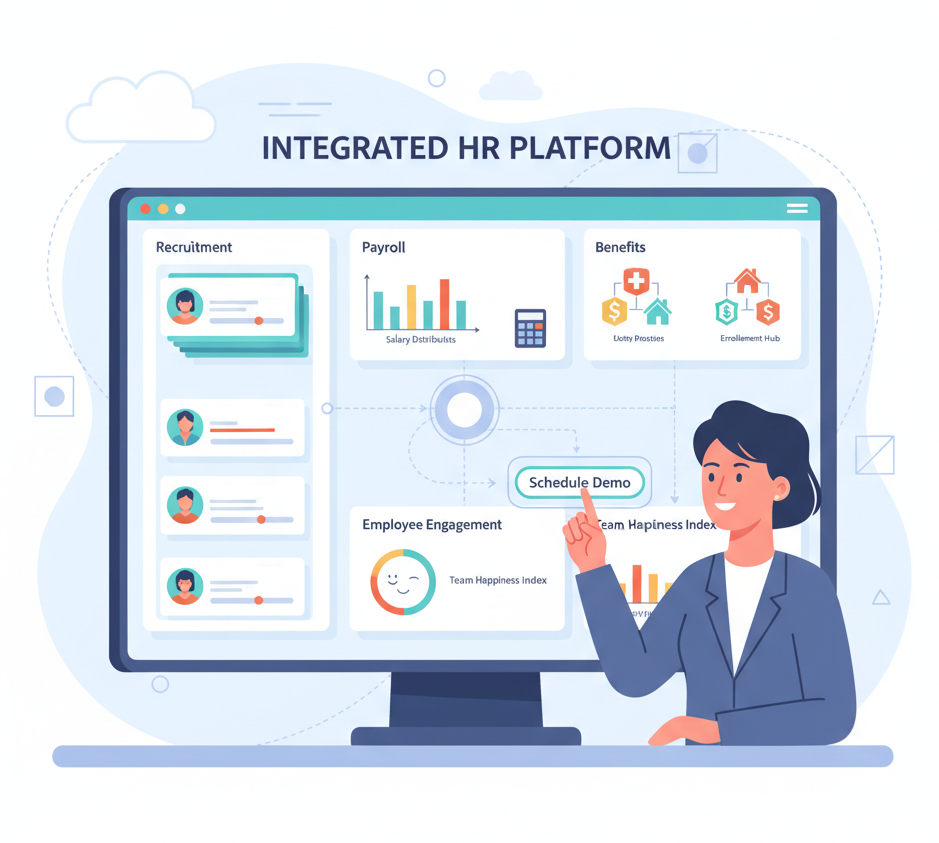
Want to experience seamless HR management?
See how SutiHR unifies recruitment, payroll, benefits, and employee engagement to simplify your HR processes.
The Rise of Cloud-Based HR Solutions
A cloud-based HR Management solution eliminates the need for on-premise infrastructure, maintenance, or dedicated storage space. Over the last two decades, HR systems have undergone a major transformation, evolving from routine, labor-focused administrative tools to dynamic, communicative platforms that enhance employee engagement and streamline workforce operations.
One of the key advantages of a cloud-based HR software is its low cost of ownership and minimal technical requirements. It doesn’t require ultra-fast internet speeds or complex hardware setups. These systems provide centralized access to various HR functions, allowing different stakeholders within an organization to use applications such as online recruitment, project management, onboarding, and more—all from a single, unified interface. Cloud-based HR platforms manage everything from hiring and induction to employee records, performance tracking, appraisals, payroll, and beyond.
AI and HR Analytics
Artificial Intelligence (AI) and HR analytics are rapidly transforming the way organizations manage their workforce. These technologies empower HR teams to shift from reactive administration to proactive, strategic decision-making—unlocking new levels of efficiency, accuracy, and insight.
AI-driven tools can automate repetitive tasks such as resume screening, interview scheduling, employee queries, and even parts of the onboarding process. This reduces manual workload and allows HR professionals to focus more on employee engagement, development, and retention.
Meanwhile, HR analytics enables organizations to harness data for smarter workforce planning. By analyzing trends in employee performance, turnover, attendance, and engagement, businesses can identify issues early, make data-backed decisions, and align HR strategies with overall business goals. Predictive analytics goes a step further—helping companies forecast future talent needs, identify high-potential employees, and reduce attrition.
As AI and analytics continue to evolve, their integration into HR platforms will be critical for companies looking to remain agile, competitive, and people-focused in the digital age.
Managing a Remote Workforce
As remote and hybrid work models become permanent fixtures in the modern workplace, HR technology must adapt to support a distributed workforce. The challenge is no longer just about enabling remote access. It has become more about maintaining engagement, collaboration, compliance, and performance across different locations and time zones.
Cloud-based HR systems play a crucial role in managing remote teams effectively. These platforms allow HR professionals to monitor attendance, manage time-off requests, conduct virtual onboarding, and run performance reviews—all through a centralized, online interface. Employee self-service portals give remote workers greater autonomy, while built-in communication tools and feedback systems help maintain a sense of connection and belonging.
Moreover, integrating collaboration platforms (like Slack or Microsoft Teams) with HR software ensures seamless day-to-day operations and communication. HR analytics can also provide insights into remote employee productivity, engagement levels, and potential burnout risks—allowing proactive intervention.
To successfully manage a remote workforce, HR teams need to adopt a combination of digital tools, flexible policies, and a data-driven approach. Technology not only supports operational efficiency but also strengthens company culture, no matter where employees are located.
Technology-Driven Challenges and Strategic Shifts in HR
As HR technology continues to evolve, organizations will face new challenges that go beyond software implementation. Regulations around employment and benefits are expected to grow more complex, driven by changing labor laws and increasing global competition. To meet the rising expectations of both businesses and employees, newer and more advanced technologies will continue to emerge.
However, not all organizations will be able to afford or adopt these technologies at the same pace. This may lead to a shift where in-house HR departments downsize, and outsourcing becomes more common, especially for administrative tasks. At the same time, strategic HR functions such as workforce planning, employee engagement, and talent development will remain in-house, powered by advanced analytics and data-driven insights. Another key challenge on the horizon: effectively managing remote and hybrid workforces, ensuring productivity and engagement in increasingly digital work environments.
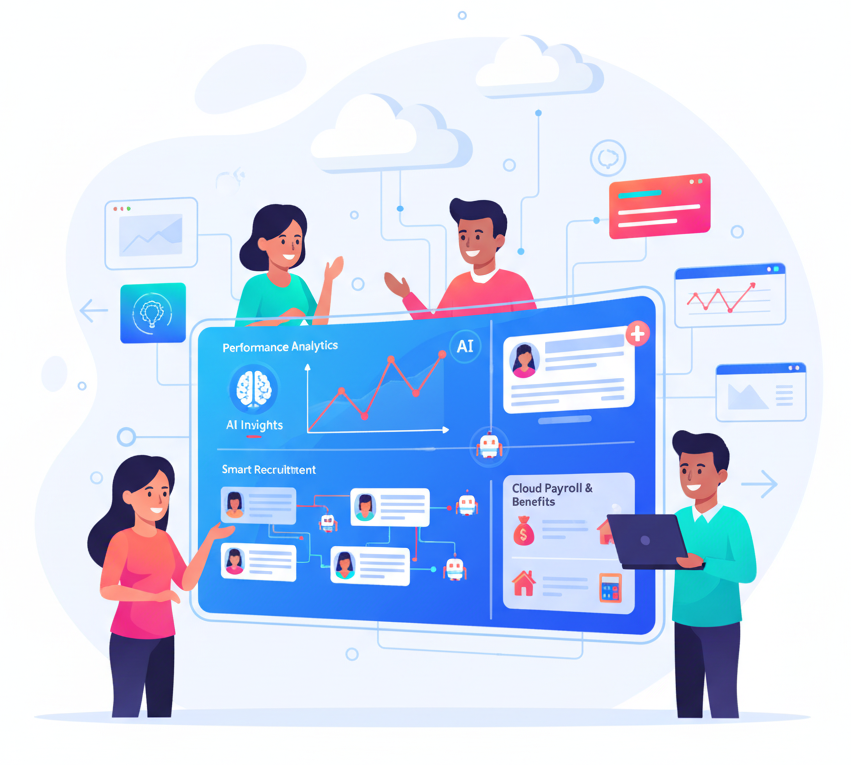
Stay Ahead with Smart HR Tech
The future of HR is digital. Are you ready?
Learn how businesses like yours are transforming their HR departments with intuitive, cloud-based tools.
Key Benefits of Modern HR Management Software
Today’s HR management software offers far more than administrative convenience; it delivers strategic value across the entire organization. From improving employee experience to driving smarter business decisions, here are the key benefits of modern HR solutions:
1. Centralized Data and Accessibility
Cloud-based HR systems store employee data securely in one place, accessible anytime and from any device. This eliminates data silos, reduces paperwork, and ensures real-time access to critical information for HR teams and employees alike.
2. Improved Efficiency Through Automation
Routine tasks such as payroll processing, leave tracking, onboarding, and performance appraisals are automated, saving time and minimizing errors. HR professionals can focus on strategic initiatives rather than manual data entry and compliance checks.
3. Enhanced Compliance and Risk Management
Modern HR software helps organizations stay compliant with labor laws, tax regulations, and company policies. Built-in alerts, document tracking, and audit trails reduce the risk of penalties and ensure timely reporting.
4. Data-Driven Decision-Making
Integrated analytics tools provide actionable insights into workforce trends, turnover rates, performance metrics, and engagement levels. This enables HR leaders to make informed decisions that align with business goals.
5. Better Employee Experience
Features like self-service portals, mobile access, e-signatures, and automated notifications empower employees to manage their own information, improving satisfaction and reducing HR’s administrative burden.
6. Scalability for Growing Businesses
As organizations expand, modern HR systems can scale to accommodate new users, locations, and functionalities without disruption. This flexibility makes them ideal for both small businesses and large enterprises.
Final Thoughts
The evolution of HR management software, from its early beginnings to today’s AI-driven, cloud-based systems, demonstrates how technology continues to reshape the workplace. What was once a back-office function has now become a strategic powerhouse, empowering HR teams to lead workforce transformation, ensure compliance, and drive employee engagement. As we look to the future, the integration of AI, analytics, and remote-friendly tools will further define how organizations attract, retain, and support top talent.
Investing in modern HR technology is no longer optional; it’s a strategic necessity. Companies that embrace innovation and digital transformation in their HR practices will be best positioned to thrive in an increasingly dynamic and competitive global market.
Frequently Asked Questions (FAQs)
HR management software is a digital solution that helps organizations automate and manage HR functions such as recruitment, onboarding, payroll, benefits, performance management, and compliance, improving overall efficiency and employee experience.
Emerging trends include the use of AI and machine learning in recruitment and talent management, predictive HR analytics, cloud-based platforms, and tools designed to support remote and hybrid workforces.
Cloud-based HR software offers scalability, cost-efficiency, and remote accessibility. It allows HR teams and employees to access real-time data and manage HR tasks from anywhere without the need for complex infrastructure.
It enables virtual onboarding, attendance tracking, self-service portals, performance reviews, and collaboration via integrations with tools like Slack or Microsoft Teams, ensuring consistent communication and productivity across distributed teams.
Absolutely. Many modern HR platforms are built with scalability in mind, offering flexible pricing and features tailored for small and mid-sized businesses looking to streamline HR operations and stay compliant.
Have a view on the future of HR Software? Let us know!