For startups, choosing an HR platform isn’t just a software decision. It is a major decision that affects the infrastructure of the organization from the beginning. The right HR software platform can reduce the administrative burden, support compliance, and scale alongside the business. On the other hand, the wrong one will create fragmented data, the need for manual workarounds, and expensive migrations just as the company begins to grow.
Startups in the U.S. often face unique HR challenges that other parts of the world do not experience. For instance, some U.S. organizations will need to ensure multi-state compliance, while others contend with limited HR headcount. Most U.S. organizations will experience rapid hiring cycles and the need to do more with fewer tools. The platforms below were selected based on functionality, scalability, automation, and cost efficiency, with a focus on how well they serve startups at different stages of growth.
Key Takeaways
- HR software is a long-term infrastructure decision for startups. Choosing a platform that only solves payroll today can create costly migrations later as hiring, compliance, and performance needs grow.
- Startups should evaluate platforms based on lifecycle coverage, not just features. Recruiting, onboarding, payroll, time tracking, performance management, and reporting should work together in a single system or a tightly integrated ecosystem.
- Payroll-first tools like Gusto are ideal for very early-stage startups, but they often lack the depth required once HR becomes more structured and strategic.
- Automation-driven platforms like Rippling excel for tech and remote teams, especially when IT access, security, and onboarding workflows need to be tightly controlled.
- Core HRIS platforms such as BambooHR are well-suited for people-focused growth, helping startups formalize onboarding, engagement, and performance processes.
- PEO solutions like TriNet reduce compliance risk and administrative burden, but they trade flexibility and internal ownership for outsourced expertise and higher costs.
- All-in-one platforms like SutiHR offer the strongest long-term scalability, allowing startups to consolidate HR operations early and expand into advanced HR, performance, and analytics without switching systems.
- The best HR platform is the one that aligns with how your startup plans to scale, not just where it is today, including headcount growth, multi-state hiring, and leadership visibility needs.

Need an Affordable HR Solution for Your Business?
SutiHR offers scalable tools designed for growing companies.
What Startups Should Look for in an HR Platform
Before evaluating vendors, founders and operators should align on a few core criteria:
- Lifecycle coverage: Can the platform support recruiting, onboarding, payroll, time tracking, performance, and reporting in one system?
- Scalability: Will the platform still work at 100+ employees without forcing a need to change platforms?
- Automation & self-service: Does it reduce manual admin work for lean teams?
- Compliance readiness: Especially critical for multi-state hiring.
- Cost transparency: Startup budgets can’t absorb surprise add-ons.
With those factors in mind, here are the top 5 HR platforms for startups in the US.
SutiHR: Best All-in-One, Scalable HR Platform for Startups
Best for: Startups that want an HR system they can grow into without stitching together multiple tools.
Overview
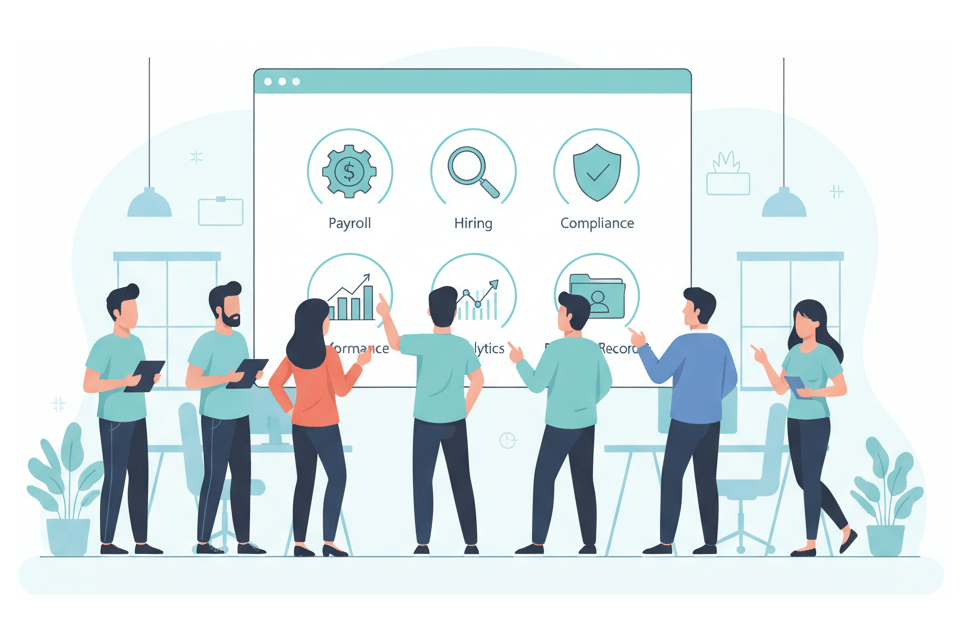
SutiHR is a cloud-based HR platform designed to manage the full employee lifecycle from talent acquisition through offboarding. Unlike payroll-first or point-solution tools, SutiHR offers a broad, modular HR suite that allows startups to start with core functionality and add additional modules to layer in more advanced HR capabilities as the organization grows.
Core Features
Talent Acquisition & Recruiting
- Built-in Applicant Tracking System (ATS) with resume parsing, candidate pipelines, interview scheduling, scorecards, and offer letter workflows
- Centralized candidate database and job posting management
- AI-assisted resume screening and candidate ranking on advanced tiers.
Onboarding & Offboarding
- Digital onboarding with automated task checklists, document collection, and e-signature support
- Role-based onboarding workflows for employees, managers, and HR
- Structured offboarding workflows, exit interviews, and compliance documentation
Core HR & Employee Records
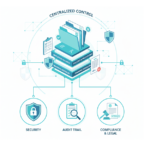
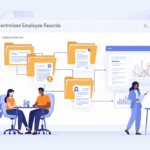
- Centralized employee profiles storing personal data, job history, compensation, and compliance documents
- Secure document management with access controls and audit trails
- Role-based permissions for HR, managers, and employees
Time, Attendance & Leave Management
- Web and mobile time tracking with configurable overtime rules
- PTO and leave management with customizable policies and multi-level approvals
- Optional GPS and geofencing features for mobile or field-based teams
Payroll & Benefits Administration
- Payroll support with payroll exports or integrations
- Benefits enrollment tracking and open enrollment management on higher tiers
Performance, Goals & Talent Management
- Customizable performance review cycles, including 360° feedback
- Goal tracking aligned to individual and organizational objectives
- Succession planning and leadership development tools for advanced plans
Reporting & Analytics
- Pre-built HR dashboards for attendance, performance, and workforce trends
- Custom report builder with scheduled delivery and export options
- Workforce analytics to support data-driven decisions as the company scales
Mobile & Employee Self-Service
- Full-featured mobile app for clock-in/out, PTO requests, approvals, and reviews
- Employee and manager self-service reduces HR administrative workload
Strengths for Startups
- True all-in-one HR platform reduces the need for multiple vendors
- Modular design supports growth without forcing re-platforming
- Strong automation and mobile functionality for lean HR teams
- Competitive per-employee pricing compared to buying multiple point solutions
Limitations
- Initial configuration can take time, depending on feature depth or customization
Ideal Startup Stage
- Early to growth-stage startups (10–500 employees)
- Teams planning to scale hiring, performance management, and reporting
Want to experience seamless HR management?
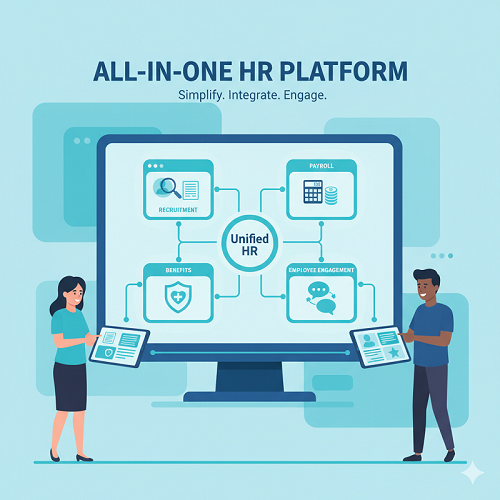
Schedule a personalized demo and see how SutiHR can help streamline recruitment, payroll, benefits, and employee engagement—all in one platform.
Gusto: Best Payroll-First HR Platform for Early-Stage Startups
Best for: Startups that need fast, reliable payroll with basic HR tools.
Overview
Gusto is widely adopted by U.S. startups as their first HR system. It’s built around a strong payroll engine that automates tax calculations, filings, and payments, making it especially attractive for founders without HR or payroll experience.
Core Features
- Full-service payroll with unlimited runs and automated tax filings
- Multi-state payroll compliance support
- Benefits administration include health insurance, 401(k), and workers’ comp
- Basic onboarding, PTO tracking, and employee self-service
- Accounting integration with tools like QuickBooks and Xero
Strengths for Startups
- Extremely easy to set up and use
- Strong payroll and tax compliance coverage
- Transparent pricing for small teams
Limitations
- Limited performance management and analytics
- HR functionality becomes shallow as teams grow
- Add-ons can increase costs over time
Ideal Startup Stage
- Very early-stage startups (1–50 employees)
- Founder-led companies prioritizing payroll simplicity
Rippling: Best HR + IT Automation Platform for Tech Startups
Best for: Tech-centric startups with distributed teams and complex onboarding needs.
Overview
Rippling differentiates itself by combining HR, payroll, and IT management into a single platform. It allows startups to automate not just HR workflows, but also application access, device provisioning, and security controls.
Core Features
- Unified HRIS, payroll, benefits, and time tracking
- IT provisioning for apps, devices, and access management
- Workflow automation builder for onboarding and approvals
- Extensive integration ecosystem
- Real-time reporting and workforce dashboards
Strengths for Startups
- Deep automation across HR and IT
- Strong fit for remote and distributed teams
- Scales well with operational complexity
Limitations
- Higher learning curve than simpler tools
- Modular pricing can escalate quickly
- Less focus on long-term HR development tools
Ideal Startup Stage
- Series A+ startups
- Tech companies with remote or global teams
BambooHR: Best Core HR Platform for People-Focused Growth
Best for: Startups formalizing HR processes and prioritizing employee experience.
Overview
BambooHR is a well-known HRIS focused on core HR, onboarding, and performance management. It’s commonly adopted when startups move beyond ad-hoc HR and need structure without excessive complexity.
Core Features
- Centralized employee database and document storage
- Onboarding and offboarding workflows
- Performance reviews, goal tracking, and employee surveys
- PTO and time-off management
- HR reporting and dashboards
Strengths for Startups
- Intuitive user experience
- Strong employee engagement tools
- Good reporting for core HR metrics
Limitations
- Payroll often requires add-ons or third-party integrations
- Limited automation compared to platforms like SutiHR or Rippling
- Costs increase as functionality is expanded
Ideal Startup Stage
- Growing startups (25–200 employees)
- Teams investing in culture and retention
TriNet: Best for Compliance & Outsourced HR Support
Best for: Startups that want hands-on HR and compliance support rather than software alone.
Overview
TriNet operates as a Professional Employer Organization (PEO), combining HR software with outsourced payroll, benefits, and compliance services. It assumes co-employment responsibilities, reducing HR and legal risk for startups.
Core Features
- Full-service payroll and tax compliance
- Access to enterprise-level benefits packages
- HR advisory and compliance support
- Core HRIS for employee records and reporting
Strengths for Startups
- Strong compliance and risk mitigation
- Competitive benefits access for small teams
- Dedicated HR expertise
Limitations
- Higher per-employee cost than software-only platforms
- Less flexibility and internal control
- Limited customization and analytics
Ideal Startup Stage
- Regulated industries (healthcare, fintech)
- Startups prioritizing compliance over customization
Side-by-Side Snapshot
| Platform | Best For | Core Strength | Scalability |
|---|---|---|---|
| SutiHR | All-in-one HR growth | Full lifecycle HR + automation | High |
| Gusto | Early payroll | Payroll simplicity | Low–Medium |
| Rippling | Tech startups | HR + IT automation | High |
| BambooHR | People ops | Core HR & engagement | Medium |
| TriNet | Compliance | HR services & benefits | Medium |
Final Thoughts
For startups, HR software is not just a back-office tool; it becomes the system of record for people, compliance, and operational maturity. The decision you make early on can either support growth seamlessly or introduce friction that compounds as headcount increases.
One of the most common mistakes startups make is choosing a platform that only solves today’s problem. This is usually payroll, and no consideration is given to what HR will look like at 50, 100, or 300 employees. As teams scale, needs expand quickly to include structured onboarding, performance management, reporting, compliance tracking, and leadership visibility. Replacing an HR system mid-growth is costly, disruptive, and often avoidable with better upfront planning.
Here’s how to think about platform fit more strategically:
- Payroll-first tools like Gusto are excellent for getting started quickly, but they often lack the depth required once HR becomes more than a founder-managed function.
- Automation-heavy platforms like Rippling shine when IT access, security, and remote onboarding are central challenges, particularly for tech-first startups.
- Core HRIS platforms like BambooHR help formalize people operations and improve employee experience but may require additional systems to cover payroll or advanced analytics.
- PEO-based solutions like TriNet reduce compliance risk and administrative burden, but at the cost of flexibility, ownership, and higher per-employee expenses.
- All-in-one platforms like SutiHR are best suited for startups that want to consolidate HR operations early, avoid fragmented systems, and scale into more advanced people management without switching platforms later.
Ultimately, the “best” HR platform depends on how your startup plans to grow, not just how many employees you have today.