A purchase requisition is the formal internal request to buy something before a purchase order is created. For procurement managers at mid-market companies, the requisition process is where spend control begins. When that process is structured, procurement can enforce purchasing policies, route requests to the right approvers, and give finance visibility into planned spend before an invoice arrives.
When requisitions arrive through email chains, verbal requests, or spreadsheets, procurement teams often become the middleman between employees, approvers, and finance. Someone must re-enter the request, chase missing information, determine who should approve it, and follow up when the request stalls. As purchasing volume grows, those manual steps create delays and make it harder to know what has been requested, approved, or committed.
A structured requisition process gives employees a defined way to submit requests, routes them through the right approvals, and allows approved requests to move into purchase order creation.
This blog explains how the purchase requisition process works, where manual processes create problems, how automation improves control, and what to look for in a procurement system for purchase requisitions.
What Is a Purchase Requisition?
A purchase requisition is an internal request submitted by an employee or department to obtain approval for a planned purchase. It is not sent to the supplier. Instead, it gives procurement and budget owners the information they need to determine whether the purchase should proceed.
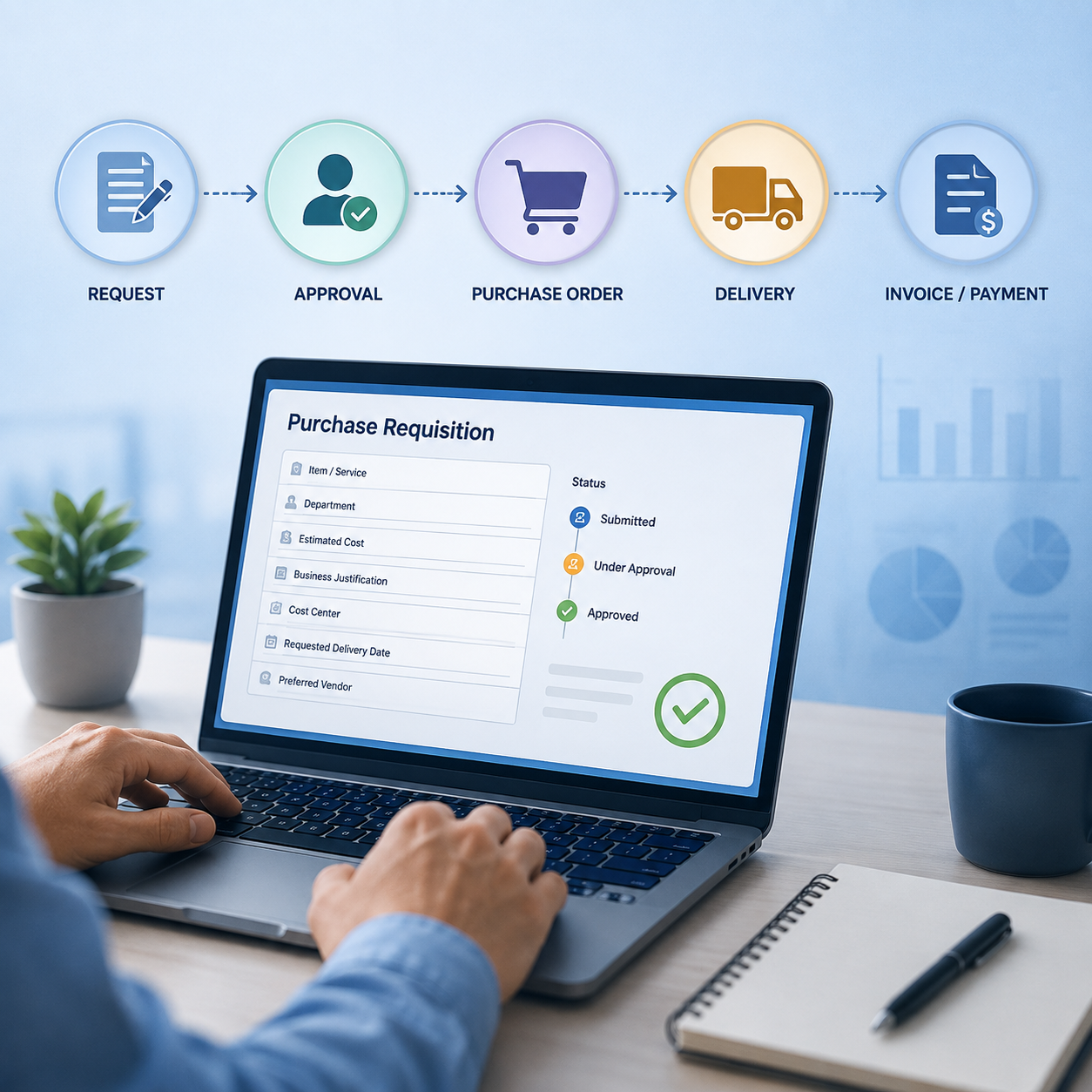
A typical requisition captures:
- Item or service description
- Requesting employee and department
- Business justification
- Estimated cost
- Budget or cost center
- Preferred vendor, if known
- Required delivery date, when applicable
Once submitted, the requisition enters an approval workflow. The routing can be based on factors such as purchase amount, department, cost center, vendor, or the employee’s role. After the required approvals are completed, procurement can convert the approved requisition into a purchase order and send it to the supplier.
The key distinction is timing. A purchase requisition controls the request before the purchase is committed, while a purchase order formalizes the approved purchase with the supplier.
Where the Purchase Requisition Fits in the Procurement Process
A requisition is the starting point of the purchasing workflow. It connects the employee who needs something with the procurement and finance teams responsible for controlling the purchase.
A typical process looks like this:
Purchase request → Requisition → Approval → Purchase Order → Receipt → Invoice Matching → Payment
The requisition stage is particularly important because it is the first point where an organization can evaluate the business need, budget impact, and purchasing policy before a financial commitment is made.
Without a structured requisition process, procurement may not know about a purchase until a PO is requested or an invoice reaches accounts payable. At that point, the opportunity to prevent unnecessary or unauthorized spend has already passed.
The Manual Requisition Problem
In a manual process, employees may submit purchasing requests through email, spreadsheets, forms, or even verbal communication. Procurement then must consolidate that information into the purchasing system.
The problem is not simply that manual entry takes time. It creates gaps in the purchasing process.
Re-keying Purchase Requests
When request information arrives through email or spreadsheets, procurement has to manually enter it into the PO or procurement system.
The same information is effectively entered twice: once by the requester and again by procurement. This creates unnecessary work and introduces the possibility of data-entry errors.
Chasing Missing Information
A requisition cannot always move forward if it is missing a cost center, business justification, estimated amount, or other required information.
Procurement then becomes responsible for tracking down the requester, waiting for a response, and updating the request before approval can begin.
Following Up on Approvals
Once the requisition reaches an approver, another manual dependency appears.
If the approver is traveling, unavailable, or simply misses the notification, the request can remain stalled until someone follows up. Procurement ends up spending time managing the workflow instead of managing purchasing.
Limited Visibility Into Pending Spend
Manual processes also make it difficult for finance and department heads to see what has been requested but not yet purchased.
A budget report may show actual spend, but it may not reflect pending commitments sitting in emails or spreadsheets. That creates a gap between planned purchases and actual financial visibility.
Mid-market companies typically begin looking for requisition automation when approval delays, maverick purchasing, budget surprises, or growing procurement volumes expose the limitations of their existing process.
How an Effective Purchase Requisition Process Works
A structured requisition process does more than replace an email form. It creates a controlled path from purchase request to approved purchase.
1. The Employee Submits a Purchase Request
The process begins when an employee identifies a business need.
Instead of sending an email to procurement, the employee submits a requisition through a centralized system. The request captures the information required for procurement and finance to evaluate it before it moves forward.
For recurring purchases, catalogs can make the process even simpler by allowing employees to select pre-approved products, suppliers, pricing, and purchasing categories.
2. The Request Is Validated
Before the requisition enters approval, the system can ensure that required information has been provided.
Structured forms reduce incomplete requests by requiring fields such as department, cost center, estimated amount, justification, and item details before submission.
This shifts the responsibility for complete information closer to the point of request and reduces the amount of administrative work procurement has to perform later.
3. The Requisition Is Routed for Approval
Once submitted, the requisition moves through predefined approval rules.
Approval workflows can route requests according to purchase amount, department, vendor, role, or cost center. More complex organizations may also require sequential or parallel approvals depending on the type and value of the purchase.
If an approver does not act within the required timeframe, automatic reminders or escalation rules can keep the request moving without procurement manually tracking every pending approval.
4. Budget Impact Is Evaluated
Approval should not be separated from budget control.
When budget information is available during the requisition stage, approvers can understand the financial impact of a purchase before authorizing it. This gives finance and budget owners an opportunity to address potential overruns before the purchase becomes a commitment.
This is especially important for organizations managing budgets by department, cost center, project, or other spending categories.
5. The Approved Requisition Becomes a Purchase Order
After approval, procurement can convert the requisition into a purchase order.
Because the purchase details were captured during the requisition stage, procurement does not need to recreate the request from scratch.
The approved information can flow into the PO, reducing duplicate entry and helping maintain consistency between the original request and the final order.
6. The Purchase Continues Through Procure-to-Pay
The requisition is the first step in the broader procure-to-pay process. After the PO is created, the transaction can continue through receiving, invoice matching, and payment.
When these stages operate on connected data, procurement and finance have a clearer record of the transaction and its progress.
This avoids repeating the same P2P explanation from the earlier section.
Purchase Requisition Automation and Procure-to-Pay
A requisition system delivers the most value when it is part of a connected procure-to-pay process rather than a standalone request tool.
Consider what happens when procurement and AP operate separately. A requester submits a purchase request in one place, procurement creates a PO somewhere else, receiving information is recorded separately, and AP receives an invoice through another channel. Each handoff creates an opportunity for information to be lost, duplicated, or entered incorrectly.
A connected workflow gives procurement visibility into requests and approvals while allowing finance to trace invoices back to the related purchasing activity.
The result is fewer manual handoffs, better purchasing compliance, and a clearer audit trail.
How Purchase Requisitions Help Control Maverick Spend
Maverick spend occurs when employees purchase outside approved suppliers, processes, or purchasing channels.
A requisition process helps prevent this by making the approved purchasing path the easiest path to follow.
Catalogs can direct employees toward preferred products and suppliers. Approval workflows can enforce purchasing thresholds. Budget controls can flag requests that exceed available allocations.
Instead of relying on employees to remember procurement policies, the workflow builds those policies into the purchasing process.
That does not eliminate every exception, but it makes exceptions visible, reviewable, and traceable.
What to Look for in a Procure-to-Pay System for Purchase Requisitions
When evaluating a procure-to-pay system, look for capabilities that make requisitions easy to submit, approve, and manage while connecting them to downstream purchasing and finance activities:
- Guided requisition intake: Structured forms and catalogs help employees submit complete requests with the required information.
- Configurable approval routing: Approval workflows can adapt to departments, roles, vendors, cost centres, and spending thresholds.
- Budget visibility: Approvers can evaluate requested and committed spend before purchases move forward.
- Purchase order conversion: Approved requisitions can flow directly into PO creation without duplicate data entry.
- ERP integration: Connections with ERP and accounting systems help reduce manual data entry and keep purchasing information consistent.
- Audit trail: A complete record of submissions, approvals, changes, and purchasing activity improves visibility and accountability.
- Procure-to-pay connectivity: Requisitions should connect seamlessly with POs, receipts, invoices, and payment.
A good procure-to-pay system should make requisitions simple for employees while giving procurement and finance the control and visibility needed to manage purchases from request through payment.
Next Steps
If purchase requests still come through email or spreadsheets, map the current requisition process and identify gaps such as incomplete requests, manual re-entry, approval delays, and limited budget visibility.
A purchase requisition is a key control point for ensuring purchases are necessary, approved, and within budget. Connecting it to the broader procure-to-pay process helps reduce manual work, improve spend control, and keep procurement moving efficiently.

Struggling with manual purchase requests and approval delays?
See how SutiProcure helps automate requisitions, approvals, purchase orders, and the broader procure-to-pay process.
FAQs
Yes. A requisition can be rejected if the purchase does not meet budget, policy, or business requirements.
Depending on the workflow, a requisition may be edited while pending approval or withdrawn and resubmitted.
A purchase request is an informal request, while a purchase requisition is a formal request submitted for internal approval.
Yes. Requisitions can support recurring purchases using catalogs, preferred suppliers, and predefined purchasing information.
Approval time depends on the purchase, approval rules, and number of approvers. Automated reminders can help reduce delays.