Choosing procurement software in 2026 comes down to a question of fit. Mid-market companies evaluating their first dedicated platform or migrating from manual processes need a system that adapts to their organization structure without requiring a months-long implementation project and a dedicated IT team. The platform you choose will either conform to the approval workflows, budget controls, and vendor relationships you’ve already built, or it will force you to rebuild those processes around a vendor template.
This guide walks CFOs, Procurement Managers, and Department Heads through the trade-offs between enterprise-scale platforms like Coupa and JAGGAER and right-sized configurability from vendors like SutiProcure. You’ll see how procurement automation eliminates manual requisition entry, how configurable approval routing prevents the bottlenecks that stall purchasing decisions, and where real-time budget visibility stops overruns before month-end. By the end, you’ll know which platforms to shortlist and which questions to ask during demos.
What Procurement Software Does
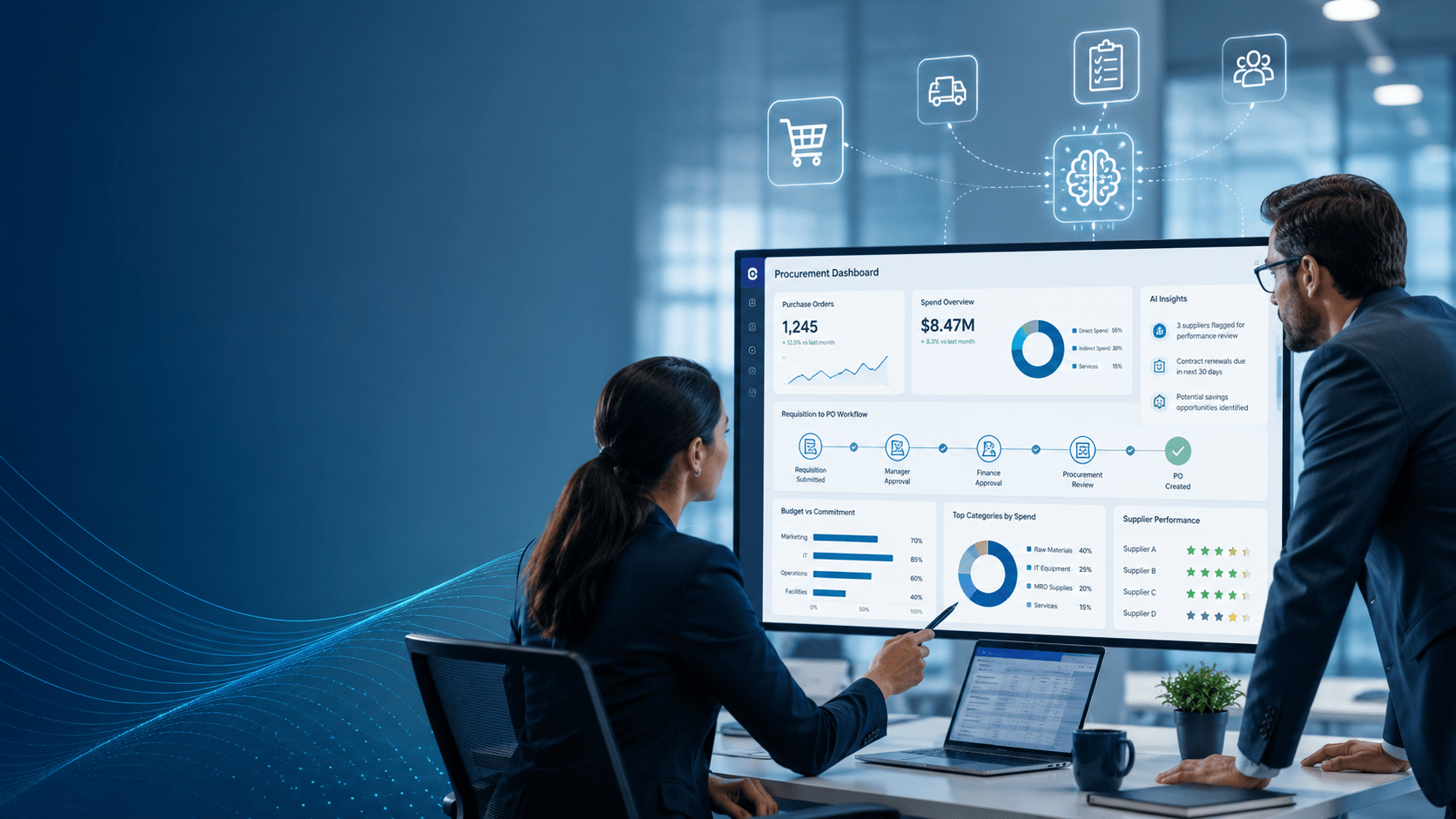
Procurement software automates the requisition-to-purchase-order workflow. Requesters submit purchase requests through guided forms or catalogs instead of relying on emails or spreadsheets. Approvals route automatically based on rules you configure such as role, department, budget threshold, or vendor type. The procurement team reviews and processes requests instead of manually re-entering information from email threads. The platform tracks what’s been requested, what’s been approved, and what’s committed against the budget in real time, giving finance a live picture of spend before it becomes actual.
The workflow replaces manual processes that rely on spreadsheets, email chains, and memory. When a requisition arrives correctly coded and routed to the right approver without manual intervention, the time procurement team spends chasing signatures drops to near zero. When budget tracking surfaces overruns while there’s still time to act rather than discovering them at month-end, finance gains the visibility it needs to control spend structurally instead of reactively.
Core Features to Evaluate
Catalog-Based Requests and Custom Forms
SutiProcure supports catalog-based requests, custom requisition forms, and AI-based purchasing suggestions at intake. Requesters select what they need from a catalog or fill out a structured form rather than writing a free-text email. The system carries the policy and budget knowledge so the requester doesn’t need procurement training to submit correctly. Procurement reviews and routes clean requests instead of chasing down missing details.
Configurable Approval Workflows
Intelligent procurement platforms typically support configurable approval workflows by vendor, role, account code, department, or cost center in serial or parallel flows. The answer to “can you support our approval workflow” is always yes for any decent-sized vendor. The difference is whether the vendor configures to your structure or you adapt to theirs. SutiSoft customizes the software to work the way your business works at no extra cost. Approval chains, delegation rules, coding dimensions, and policy logic adapt to your org structure, not a vendor template.
Real-Time Budget Tracking
Real-time budget tracking flags overruns with AI-driven alerts before month-end, giving finance a live picture of committed vs. actual spend by department, category, and supplier. An overrun discovered at month-end wasn’t invisible. It was unmonitored. The platform should surface it while there’s still time to act.
RFQ/RFP Functionality
RFQ/RFP functionality allows procurement teams to send requests to multiple suppliers, collect quotes, compare bids, and award contracts within the platform. The alternative is managing supplier conversations across email threads and spreadsheets, which fragments the audit trail and makes vendor comparisons harder than they need to be.
Procure-to-Pay Integration
SutiProcure integrates with SutiAP as part of SutiSoft’s connected Spend Management platform, supporting a procure-to-pay workflow where PO data feeds directly into invoice matching. A disconnected procurement and AP system creates a reconciliation gap that manual processes have to close every month. When procurement and AP share a data layer, the audit trail runs from request to payment without a manual step in between.
Enterprise-Tier vs. Mid-Market Platforms
Enterprise-tier platforms like Coupa and JAGGAER are built for large organizations with dedicated procurement teams and IT resources to manage multi-month implementations. Typical implementation for Coupa runs 4 to 12+ weeks. Pricing is quote-based, negotiated annually, and rarely published. These platforms deliver breadth: supplier portals, contract lifecycle management, spend analytics, and integrations across complex ERP environments. The trade-off is complexity. If your organization doesn’t have the internal resources to manage an enterprise-scale rollout, the platform becomes a cost center before it becomes a productivity tool.
SutiProcure is positioned explicitly against this complexity. Typical implementation is 2 to 4 weeks vs. Coupa’s 4 to 12+ weeks, with simple usage-based pricing per request or PO vs. quote-based enterprise pricing. The platform is built to scale from SMB to enterprise without requiring dedicated procurement or IT resources to implement. For mid-market companies choosing their first procurement platform, the question isn’t whether Coupa has more features. It’s whether you need those features now and whether you have the internal capacity to deploy them.
Mid-market companies choosing procurement software typically evaluate 3 to 5 vendors. SutiSoft is frequently not on the initial shortlist, meaning content must intercept earlier in the research process. The buyers who find SutiProcure are usually searching for solutions to specific pain points: maverick spend, approval bottlenecks, budget overruns discovered too late. They’re not looking for the category leader. They’re looking for the platform that solves the problem without creating a six-month implementation project.
The Six Direct SutiProcure Competitors
The six direct SutiProcure competitors are Coupa, JAGGAER, Kissflow Procurement Cloud, Precoro, ProcureDesk, and Procurify. This is SutiSoft’s own published comparison set. Each vendor occupies a slightly different market position, but all compete for the same mid-market buyer evaluating their first dedicated procurement platform.
Coupa sits at the enterprise end of the spectrum. Broad feature set, complex implementation, quote-based pricing. Strong in large organizations with existing procurement teams. The platform SutiProcure positions against most directly on implementation speed and configurability.
JAGGAER similarly targets enterprise buyers. Deep sourcing and supplier relationship functionality. Implementation timelines and pricing structures mirror Coupa’s complexity.
Kissflow Procurement Cloud, Precoro, ProcureDesk, and Procurify compete more directly with SutiProcure in the mid-market segment. Each offers requisition-to-PO automation, approval workflows, and budget controls at price points accessible to companies without enterprise budgets. The differentiation comes down to configurability, integration depth, and whether the vendor customizes to your workflow or you adapt to theirs.
When evaluating these six alternatives, ask: how long does implementation take, what does pricing look like at your volume, and who owns configuration changes after go-live. The answers separate platforms that adapt to your business from platforms that require your business to adapt.
What to Ask During Demos
Demos surface what documentation hides. Go in with the edge cases that break your current process and watch how the platform handles them.
Approval Workflow Configuration
Walk through your actual approval structure. Department-based routing with amount thresholds. Vendor-specific approval chains. Delegation when an approver is out of office. Serial vs. parallel flows. Ask the vendor to configure one of your real workflows during the demo. If they can’t do it live, they’ll make you wait for professional services to build it later.
Budget Tracking and Alerts
Ask to see real-time budget dashboards tracking committed vs. actual spend by department. What happens when a requisition pushes a department over budget? Does the system flag it at submission or let it through and notify finance after the fact? The difference matters when you’re trying to stop overruns before they happen.
Requester Experience
Have someone on your team who’s not a procurement specialist try to submit a requisition during the demo. Can they do it without training? Do they know where the request stands after submission? If the requester experience requires a user manual, adoption will stall.
Integration Depth
Ask how PO data flows into your ERP and your AP system. Is it a real-time sync or a nightly batch? Does it require middleware or custom development? If procurement and AP don’t share data, you’ll reconcile manually every month.
Implementation Timeline
Get a specific timeline from kickoff to go-live for a company your size. Not a range. A number. Ask what happens if you need workflow changes after launch and who owns those changes. The vendor that says “our team handles it at no extra cost” is signaling a different support model than the one that routes you to a partner or a billable change request.
Next Steps
Start by mapping your current requisition-to-PO workflow on paper. Where do requests stall? Where does procurement spend time on manual follow-up? Where do budget overruns surface, and when? Those pain points are the requirements your platform needs to solve.
Shortlist three vendors. Include one enterprise-tier option and two mid-market platforms. Request demos that walk through your actual approval structure and budget-tracking needs, not a generic feature tour. After the demo, ask each vendor for a written implementation plan with a go-live date and a pricing breakdown that includes all costs: software, implementation, training, and post-launch support.
If you’re evaluating SutiProcure, request a demo at request a quick demo. Come prepared with your hardest workflow scenario and your most complex budget-control requirement. The platform either adapts to your business or it doesn’t. The demo is where you find out.
FAQs
Look for integrations with your ERP, accounting software, AP automation, inventory management, and supplier portals. Seamless integrations eliminate duplicate data entry and improve end-to-end purchasing visibility.
Yes. Cloud-based procurement software can support more users, suppliers, locations, and approval workflows as your business expands, eliminating the need to switch platforms later.
Choose software with role-based access, data encryption, audit trails, single sign-on (SSO), and compliance certifications. These features help protect purchasing data and maintain regulatory compliance.
Compare subscription and usage-based pricing based on your purchasing volume. Consider implementation, support, training, and future scalability to understand the total cost of ownership.
Yes. SutiProcure enables organizations to manage procurement across multiple companies, business units, or locations from a single platform. Each entity can maintain its own approval workflows, budgets, suppliers, and reporting while providing centralized visibility and control.