Most mid-market finance and procurement teams encounter both “procure-to-pay” and “source-to-pay” during vendor research and may wonder which one they actually need.
The difference is simple: procure-to-pay (P2P) manages the purchasing process after a buying decision has been made, while source-to-pay (S2P) covers the broader procurement journey, starting with finding and selecting suppliers.
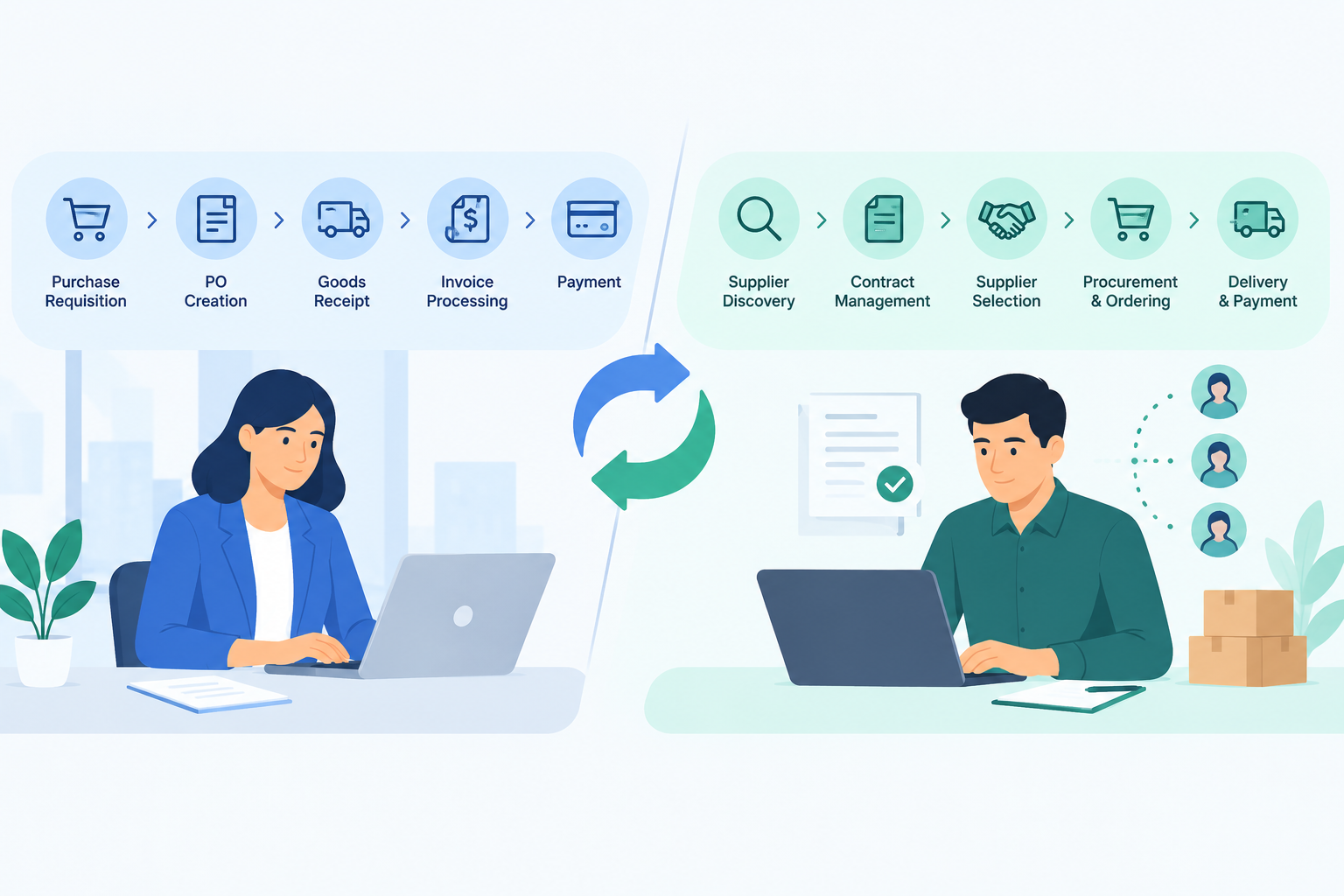
P2P typically begins with a purchase requisition and continues through approval, purchase order creation, receiving, invoice matching, and payment. S2P includes these activities while also covering processes that happen earlier, such as supplier sourcing, bid evaluation, contract management, and supplier onboarding.
The right approach depends on where your procurement challenges begin. If your main concerns are uncontrolled purchasing, slow approvals, purchase order management, or invoice matching, P2P may be the more immediate need. If your organization also needs to improve supplier selection, contracts, onboarding, and supplier management, S2P provides a broader scope.
What Procure-to-Pay Covers
Procure-to-pay begins at the purchase requisition stage and runs through invoice receipt, approval, purchase order creation, goods receipt, invoice matching, and payment. It manages the buying workflow once a need has already been identified.
A requisition originates when an employee or department identifies something they need to purchase. That request enters an approval process, gets converted into a purchase order, and moves through receiving and invoice matching before payment is released.
P2P platforms such as SutiProcure automate this sequence by managing requisition intake, approval routing, PO generation, receiving, and purchasing information that can be used by accounts payable for invoice matching.
The value of P2P automation is primarily operational. It can help organizations enforce budget and approval rules at the point of request, reduce manual data entry, improve visibility into purchases, and maintain a documented record from requisition through payment.
What Source-to-Pay Adds
Source-to-pay is broader than P2P because it includes the activities that happen before a purchase requisition is created.
These activities can include identifying potential suppliers, issuing RFQs or RFPs, comparing bids, negotiating pricing and terms, selecting suppliers, managing contracts, and onboarding vendors.
Strategic sourcing, the “source” in S2P is about finding and selecting suppliers. It answers a question that P2P generally does not: Which supplier should the organization buy from?
Supplier relationship management can extend this process after a supplier has been selected. Depending on the organization’s requirements, this may include supplier onboarding, compliance monitoring, performance tracking, and ongoing supplier evaluation.
This is the key distinction between P2P and S2P. Procure-to-pay focuses on managing the purchase itself. Source-to-pay also addresses how suppliers are sourced, selected, contracted with, onboarded, and managed.
When Does P2P Make More Sense?
P2P is generally a good fit when an organization already has established suppliers but needs better control over purchasing.
Common challenges include:
- Employees making purchases outside approved processes
- Slow or inconsistent approval cycles
- Limited visibility into purchase orders
- Manual invoice and PO reconciliation
- Difficulty enforcing purchasing budgets
- Disconnected procurement and accounts payable processes
In these situations, the priority is to create a consistent process for requesting, approving, purchasing, receiving, and paying for goods and services. P2P automation can provide that structure while giving finance and procurement teams better visibility into purchasing activity.
When Does S2P Make More Sense?
S2P becomes more relevant when procurement challenges extend beyond the purchase itself.
An organization may benefit from a broader S2P approach when procurement teams need to:
- Run and manage RFQs or RFPs
- Compare and evaluate supplier bids
- Improve supplier onboarding
- Manage contracts and renewals
- Monitor supplier performance
- Track supplier compliance
- Manage a growing supplier base more consistently
In these situations, automating only the P2P process may leave important sourcing and supplier-related activities outside the system. S2P brings more of those activities into the overall procurement process.
How SutiSoft’s Platform Supports Both
SutiSoft supports both P2P and the broader S2P approach through its intelligent procurement applications.
SutiProcure manages the core P2P workflow, including requisitions, approval routing, purchase orders, receiving, and purchasing controls. It also works with SutiAP to support invoice matching and accounts payable processes.
For organizations that need capabilities beyond purchasing, SutiSRM and SutiCLM extend the platform into supplier and contract management.
SutiSRM supports supplier onboarding, supplier performance tracking, compliance management, and ongoing supplier evaluation.
SutiCLM supports contract creation, negotiation tracking, renewal management, and contract lifecycle visibility.
This approach allows organizations to address their current procurement needs without having to adopt every capability at once. They can expand into supplier and contract management as those requirements become more important.
P2P or S2P: Which Is Right for Your Business?
The decision comes down to where your procurement process needs the most improvement.
If the biggest problems occur after a purchase need has been identified, such as slow approvals, uncontrolled purchasing, poor PO visibility, or manual invoice matching, P2P is likely the more immediate priority.
If the challenges begin before the purchase request, such as finding the right suppliers, managing sourcing events, comparing bids, negotiating contracts, or onboarding vendors, a broader S2P approach may be more appropriate.
There is also no need to treat P2P and S2P as completely separate choices. Organizations can focus on the procurement processes that need attention today while choosing a platform that can support additional sourcing, supplier, and contract management capabilities as their needs change.
When evaluating procurement software, look beyond whether a platform is labeled P2P or S2P. Consider which processes you need to automate now, which areas you expect to address next, and whether the platform can support those needs without creating disconnected systems.
The Bottom Line
P2P and S2P are closely related, but they cover different parts of the procurement lifecycle.
P2P focuses on managing the purchase from requisition through payment. S2P takes a broader approach by adding supplier sourcing, selection, contracting, onboarding, and supplier management.
If your immediate goal is to gain better control over purchasing and streamline day-to-day procurement, P2P may be the right place to start. If your organization also needs to improve how suppliers are sourced, selected, contracted, and managed, S2P provides a broader set of capabilities.
SutiSoft supports both approaches through SutiProcure, SutiSRM, and SutiCLM, giving organizations the flexibility to address their current procurement needs while building toward a more connected procurement process.
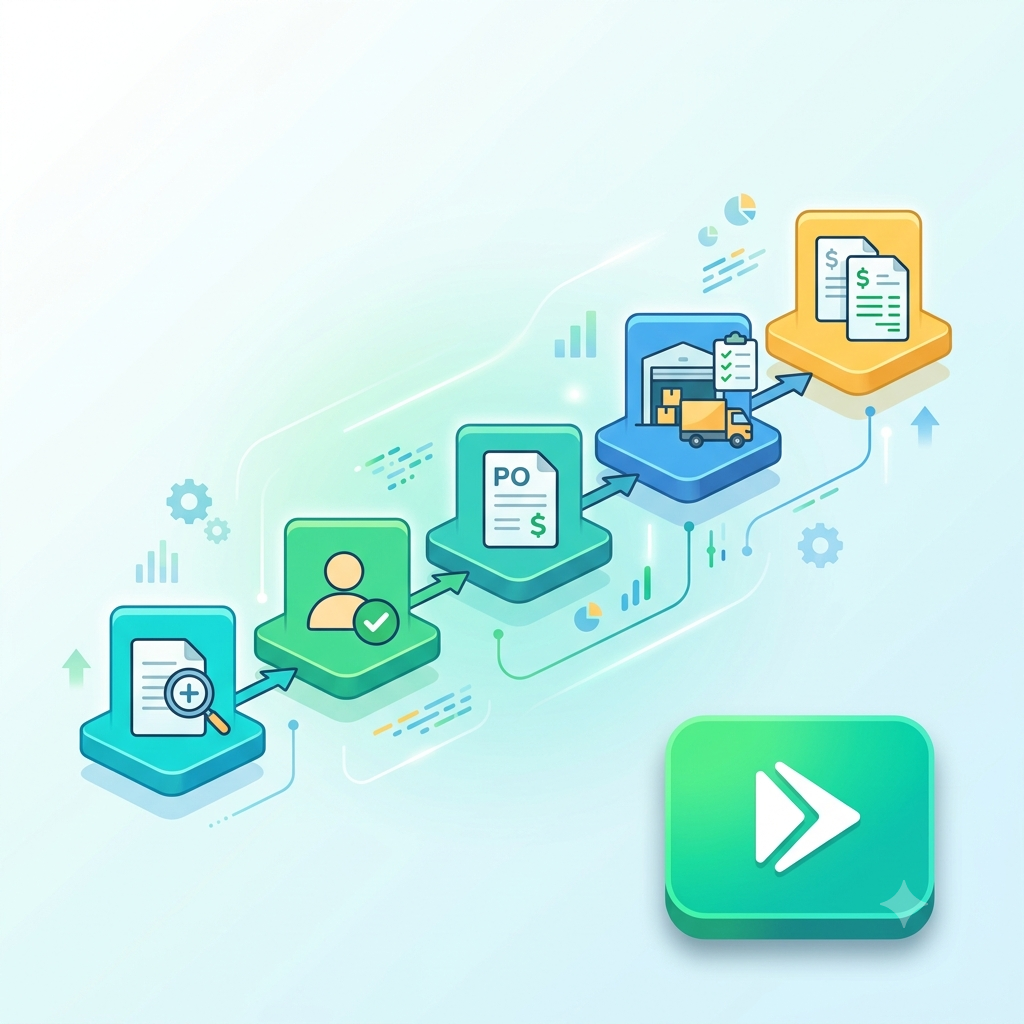
Simplify Your Procure-to-Pay Process
With SutiProcure, streamline requisitions, approvals, purchase orders, receiving, and invoice matching in one connected procurement workflow.
FAQs
Yes. P2P software can connect with ERP and financial systems to sync purchasing, supplier, PO, receiving, and invoice data. SutiProcure supports integrations with common ERP and accounting systems.
Yes. SutiProcure can route purchase requests based on factors such as department, purchase type, spending limits, and organizational approval rules.
Yes. SutiProcure can direct employees toward approved purchasing processes, suppliers, and controls, helping procurement teams improve compliance with purchasing policies.
Consider integration requirements, approval structures, purchasing policies, user adoption, supplier processes, reporting needs, and how easily the software can adapt to existing workflows.
Yes. SutiProcure supports purchasing workflows such as catalog-based buying, punchout procurement, requisitions, and other purchasing methods based on organizational requirements.
SutiProcure provides visibility across requisitions, approvals, purchase orders, receiving, and purchasing activity, helping teams monitor transactions and identify process issues.