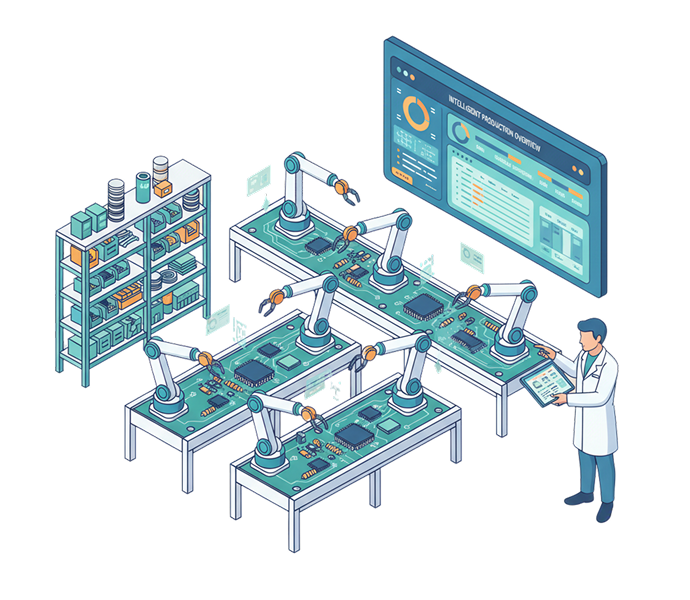
Adapt to changing product requirements with connected production and material planning. SutiMRP brings materials, procurement, production, and shop floor operations together for smoother manufacturing.
Electrical and electronic products can contain hundreds or thousands of components, including semiconductors, connectors, circuit boards, cables, and other parts. Managing these components across multi-level product structures requires accurate and connected planning.
Production can be disrupted when critical electronic components are unavailable or supplier lead times change unexpectedly. Manufacturers need early visibility into material requirements to prevent shortages from affecting production schedules.
Electronic products often undergo design updates, component substitutions, and product revisions. Changes to product structures can affect material requirements, purchasing, inventory, and production planning if they are not managed efficiently.
Demand for electronic products can change rapidly due to market trends, customer requirements, and product launches. Manufacturers need flexible production planning to adjust schedules without creating unnecessary inventory or capacity issues.
Assembly lines, testing stations, machines, and skilled labor must be aligned with production requirements. Limited visibility into available capacity can lead to bottlenecks, underutilized resources, and production delays.
Electronic components can represent a significant portion of manufacturing costs, while excess or obsolete inventory can increase financial exposure. Manufacturers need better visibility into material requirements and consumption to support efficient inventory planning.
Create production schedules based on customer demand, forecasts, production priorities, available materials, and manufacturing resources. SutiMRP helps manufacturers respond to changing requirements while maintaining coordinated production plans.
Create and maintain detailed Bills of Materials for electronic products, circuit assemblies, components, and sub-assemblies. Structured BOM management helps ensure all required components are included in production and material planning.
Automatically calculate component and material requirements based on production schedules, BOMs, inventory levels, safety stock, open orders, and supplier lead times. Automated MRP helps identify potential shortages before they disrupt production.
Monitor inventory levels, purchase orders, production orders, and upcoming material requirements in one centralized system. Manufacturers can identify component gaps early and align purchasing with production schedules.
Evaluate machine, assembly line, workstation, testing, and labor capacity against planned production requirements. Capacity planning helps manufacturers identify bottlenecks and improve utilization of available resources.
Generate purchase requisitions and purchase orders based on calculated component requirements, inventory availability, and supplier lead times. Automated procurement planning helps ensure critical components are ordered according to production needs.
Create and release production orders while tracking work-in-progress, material consumption, labor, and machine activities. Improved WIP visibility helps production teams monitor progress and respond quickly to delays.
Connect product structures, material requirements, procurement, inventory, and production planning to help manufacturers manage changing component requirements more effectively. This supports smoother transitions when products or components are updated.
Analyze material consumption, production activities, capacity utilization, and manufacturing performance to identify inefficiencies. Manufacturers can use these insights to reduce material waste, improve resource utilization, and support more efficient production operations.
Explore smarter production planning, efficient material management, and optimized manufacturing operations.
©
SutiSoft, Inc. All Rights Reserved
By clicking “Accept,” you agree that we may use cookies to enhance site functionality, understand usage patterns, and deliver relevant marketing content. Not providing or withdrawing consent may limit certain features or affect site functionality.