
The human resources department is continually working to improve processes to enhance employee engagement and growth, retain employees, hire new talent, and operate more efficiently on a day-to-day basis. Performance management software is one of the best solutions organizations use to simplify and speed up the appraisal process, performance reviews, and the provision of appropriate feedback to employees.
Moreover, an effective performance management solution encompasses various human resource functions, such as setting goals and objectives, reviewing performance, providing rewards to employees, and more. It helps managers create clear performance expectations so employees can understand what is expected of them in a given job role.
There are some key factors of a performance management system that work for any organization to improve the overall quality of the performance management process.
Here, we present a few essential components of business performance management software:
Setting Proper Goals and Objectives
Clear objectives and goals for each employee are the most crucial step that boosts both employee and organizational productivity. Clearly state the performance objectives and plans. If your intentions are unclear or confusing, employees tend to lose interest. At the beginning of the year, managers need to meet with their employees, clearly define goals, and plan ways for employees to fulfill those goals and achieve positive outcomes.
Tracking Employee Performance
As performance management is a continuous process, monitoring weekly and monthly performance for each individual helps employees enhance overall performance and become more productive at work. When objectives and key results are set, it is crucial to constantly monitor them.
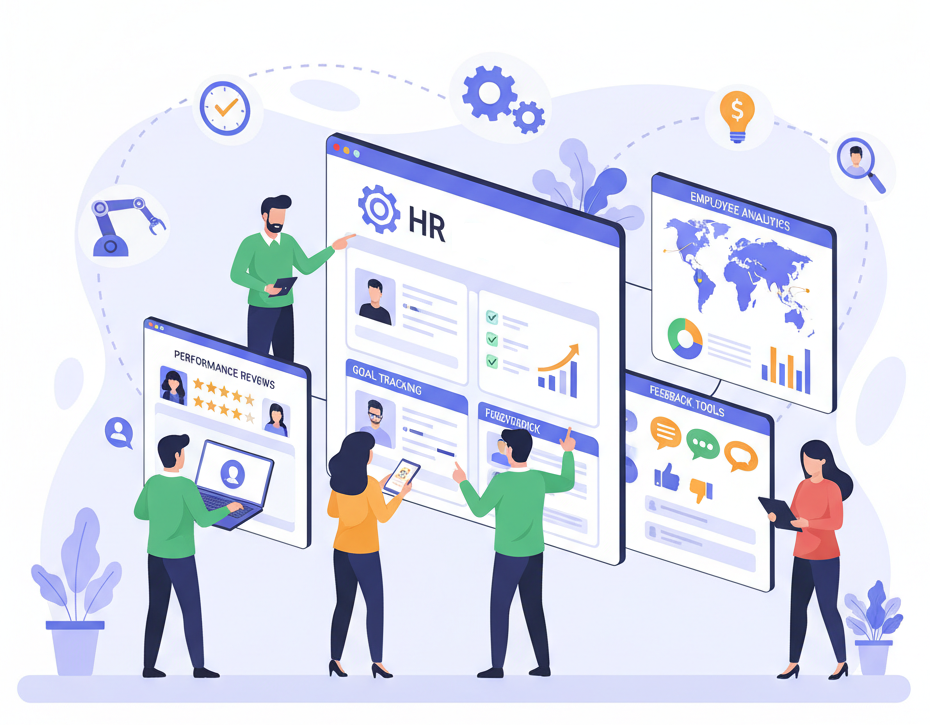
Streamline Performance Management with SutiHR’s All-in-One HR Solution!
Succession Planning
Employee engagement, benefits, and satisfaction can help with attrition rates. Very few employees remain with the same organization for their entire lives. Employee mobility is a significant problem that organizations face today and must manage carefully. Succession planning ensures that when employees move to their next job, the skills that have made them so good are transferred to other workers.
So, skill development and proper training should be expected through a good performance management software solution. Also, 360-degree feedback and self-assessment are useful for predicting employees’ future development needs.
Providing Granular Insights
An effective performance management system should provide managers with granular insights that can be used for employee evaluation. Information essential for making employee-specific decisions is required via an easy-to-use dashboard or reporting tool.
Real-time Feedback
Performance management software aids in creating a culture of communication about team objectives, training, development, and more. Real-time feedback keeps employees motivated and provides opportunities to continuously improve instead of waiting for the next performance review.
Employers can continuously monitor employees’ progress and provide performance suggestions as needed, rather than waiting until the annual review process.
With the above features, the right performance management system will help you build a robust environment of trust throughout the organization and provide the performance support you need.