AI-Powered Employee Scheduling Software to Optimize Shifts, Control Overtime & Improve Workforce Productivity
Eliminate manual scheduling inefficiencies, prevent costly overtime overruns, automate intelligent shift assignments, and align workforce capacity with business demand — all within one AI-powered employee scheduling software built for modern HR and operations leaders.
Rated 4.3 on Capterra, GetApp & Software Advice
SOC 1 Type II Certified
SOC 2 Type II Certified
ISO 9001:2015 Certified
HIPAA Compliant
GDPR-Ready
PCI DSS Compliant
Trusted by HR teams across IT, manufacturing and professional services.
The Hidden Cost of Manual Employee Scheduling
Many organizations still rely on spreadsheets, emails, and disconnected systems to manage employee shifts. While this may seem manageable at a small scale, it quickly becomes a source of operational inefficiency and financial leakage.
Manual scheduling often results in:
- Overtime overpayments due to poor shift planning
- Understaffed or overstaffed shifts
- Labor law compliance violations
- Employee dissatisfaction and burnout
- Administrative delays
- Lack of workforce visibility
SutiHR’s employee scheduling software eliminates these risks by automating shift planning, enforcing labor policies, and integrating seamlessly with payroll and time validation systems.
What is Employee Scheduling Software?
Employee Scheduling Software is a digital workforce management solution designed to streamline shift planning, improve workforce visibility, and ensure compliance.
Plan shifts in minutes, manage availability effortlessly, prevent scheduling conflicts, and automate workforce operations — all from one centralized platform.
Unlike basic calendar or spreadsheet-based tools, SutiHR’s Employee Scheduling Software is a comprehensive workforce scheduling platform designed to streamline shift management and optimize staff rostering.
SutiHR’s shift scheduling software:
- Automatically enforces overtime management policies and labor law compliance
- Aligns employee schedules with availability, roles, and skill sets
- Detects and prevents scheduling conflicts before shifts are finalized
- Integrates seamlessly with time tracking and payroll systems
- Provides real-time visibility into staffing coverage and workforce utilization
By combining intelligent workforce scheduling with compliance automation, SutiHR transforms employee scheduling from a manual administrative task into a strategic workforce optimization solution.
Why Modern Organizations Need Employee Scheduling Software
Below are the core capabilities that enable organizations to automate shift planning and improve labor control:
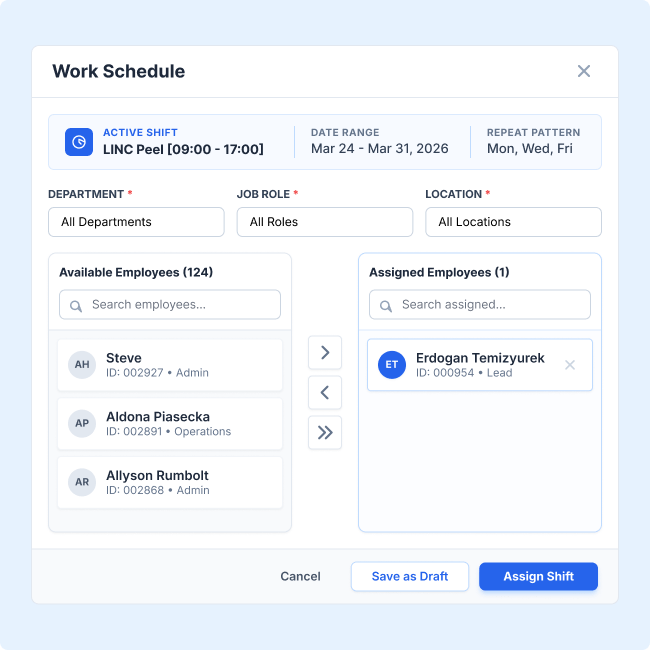
Role-Based & Location-Based Shift Assignment
Assign shifts based on job roles, departments, and locations. This ensures that qualified employees are scheduled appropriately without manual verification.
This is particularly valuable for:
- Manufacturing plants
- Healthcare organizations
- Retail chains
- Multi-location enterprises
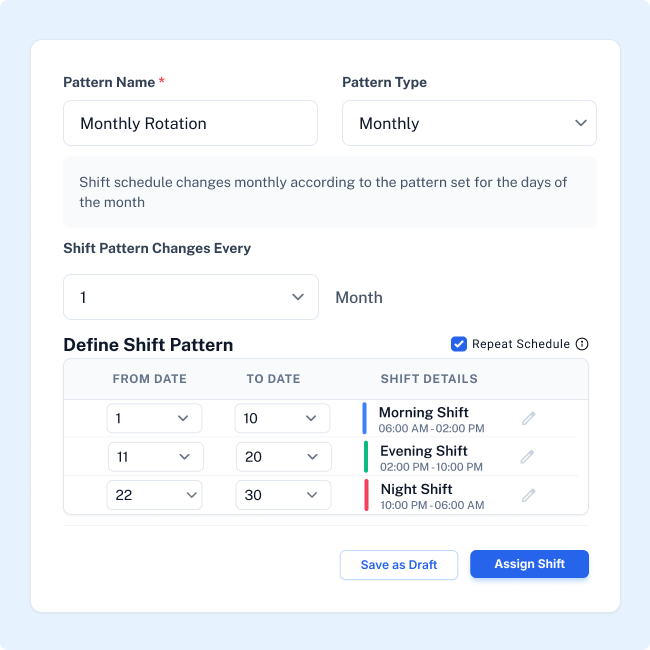
Custom Shift Rules & Recurring Rotations
Configure recurring shift patterns including:
- Rotating shifts
- Split shifts
- Weekend cycles
- Seasonal adjustments
- Overtime thresholds
Complex scheduling logic can be automated, eliminating manual configuration each cycle.
Automated Overtime Rule Enforcement
SutiHR automatically:
- Calculates overtime thresholds
- Flags potential overtime before schedule approval
- Applies shift premiums and pay rules
- Prevents non-compliant shift assignments
When integrated with Time Tracking Software, scheduled hours are validated against actual hours worked, reducing payroll discrepancies.
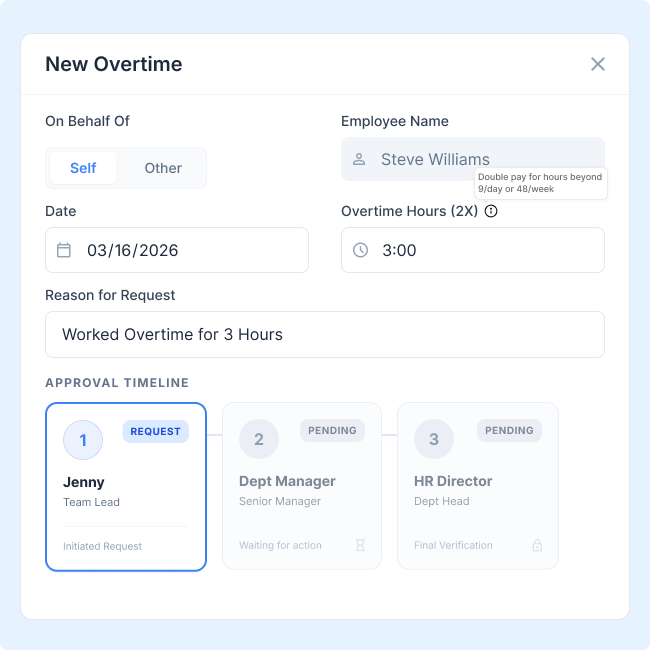
Conflict Detection & Shift Validation
- Overlapping shifts
- Availability conflicts
- Skill mismatches
- Labor law violations
- Exceeding maximum weekly hours
Managers receive alerts before publishing schedules, preventing downstream issues.
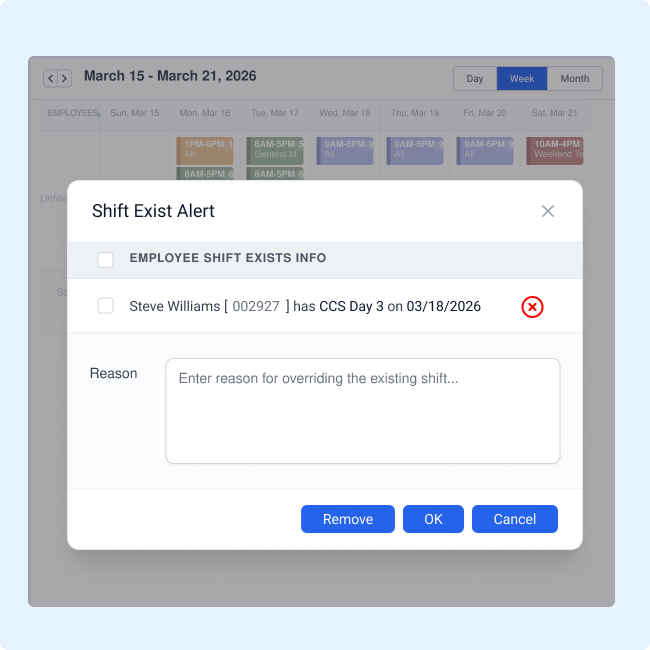
Shift Swap & Drop Automation
Employees can request:
- Shift swaps
- Shift drops
- Open shift claims

Open Shift Management
- Role eligibility
- Location
- Certifications
- Overtime status
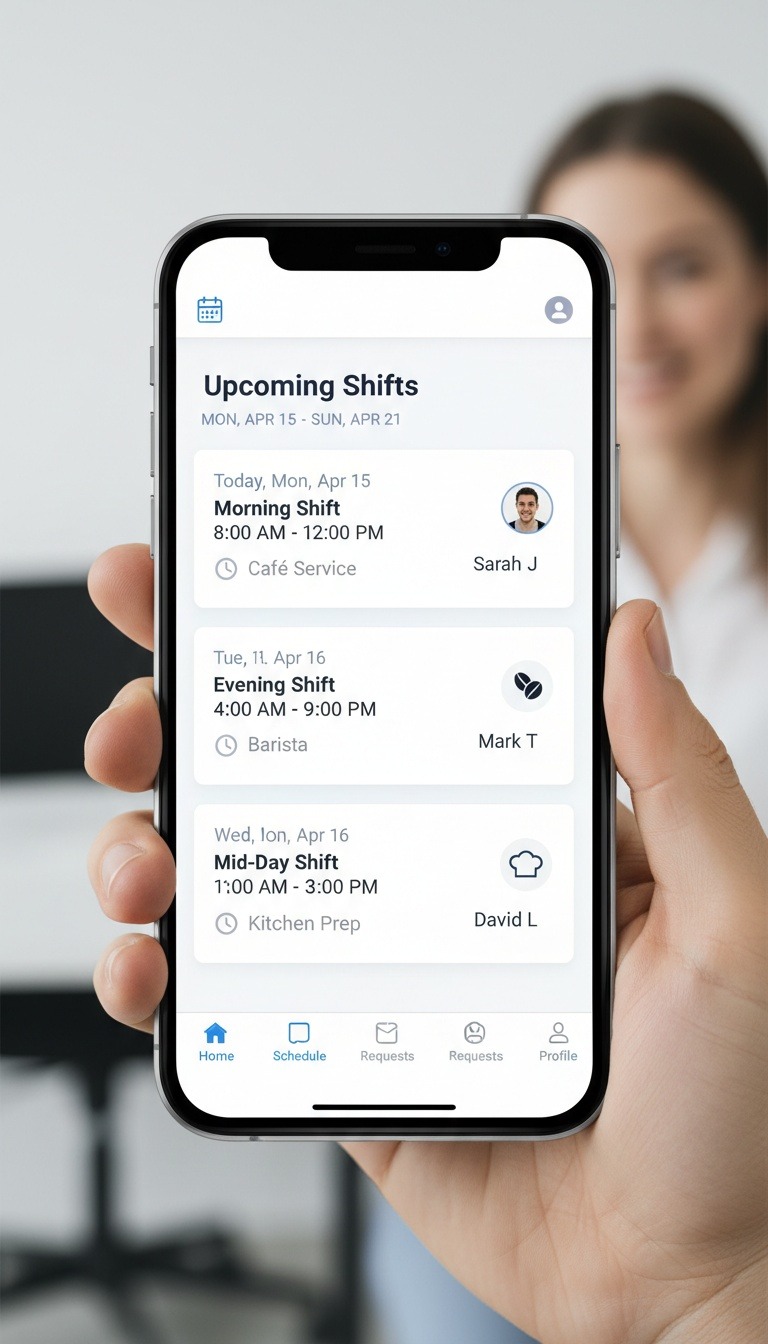
Mobile Shift Scheduling App
- View schedules
- Receive real-time notifications
- Request shift changes
- Accept open shifts
- Monitor assigned hours
Real-Time Staffing & Coverage Insights
Scheduling is not just about assigning hours — it’s about aligning workforce capacity with operational demand.
These insights enable leadership to align workforce supply with business demand, preventing both overstaffing and operational bottlenecks.
Executive Workforce Analytics
“Leadership teams gain visibility into workforce trends, labor costs, and operational performance through centralized executive dashboards.”
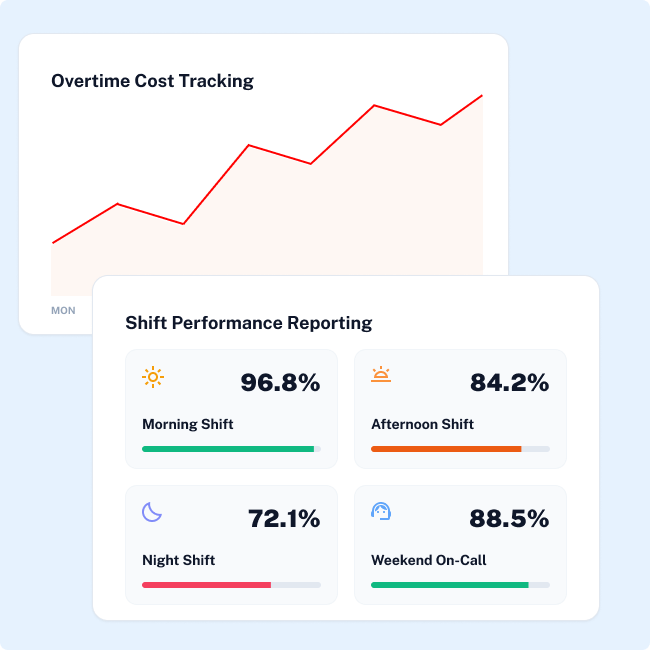
Modern scheduling decisions must be data-driven.
SutiHR delivers:
- Overtime cost tracking
- Shift performance reporting
- Absenteeism correlations
- Coverage gaps
- Labor budget comparison
Integrated Scheduling, Time & Leave Validation
Employee scheduling becomes significantly more powerful when tightly integrated with attendance management, time tracking, and leave management systems.
SutiHR’s employee scheduling software integrates seamlessly with:
- Time Tracking Software
- Attendance Management Software
- Leave Management and Approval Workflows
- Payroll Systems
This integrated workforce management ecosystem creates a structured data flow where:
- Scheduled shifts are validated against actual attendance records
- Approved leave requests automatically update shift allocations
- Overtime and labor compliance rules are enforced in real time
- Approved working hours are seamlessly synchronized with payroll
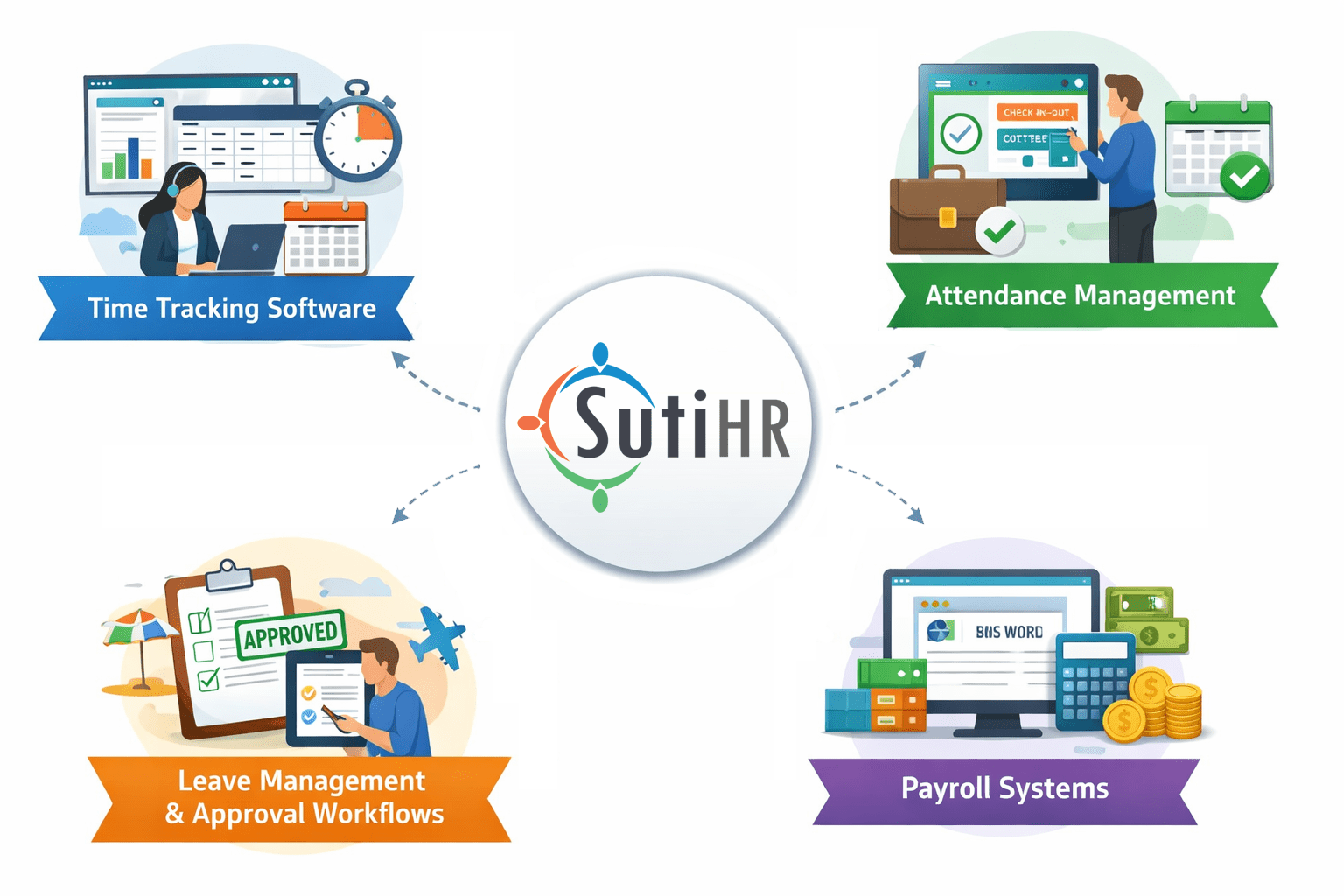
By connecting shift scheduling, attendance management, leave approval, and payroll processing, SutiHR eliminates manual reconciliation, prevents payroll discrepancies, and ensures compliance control across the workforce.
Built for Every Workforce Model
For Shift-Based Operations
Manufacturing, logistics, and healthcare environments benefit from automated rotation management and overtime control.
For Retail & Multi-Location Businesses
For Remote & Hybrid Teams
Distributed teams require structured scheduling to maintain accountability.
For Growing Businesses
As organizations scale, manual scheduling becomes unsustainable. SutiHR scales without increasing administrative overhead.
Ensure Labor Compliance Across Every Schedule
- Labor policy configuration
- Overtime alerts
- Regional compliance enforcement
- Audit-ready scheduling logs
Enterprise-Grade Security & Reliability






- 256-bit SSL encryption
- Role-based access permissions
- Secure cloud infrastructure
Why SutiHR Is More than Basic Scheduling Software
Unlike standalone scheduling tools that operate in isolation, SutiHR’s employee scheduling software is part of a unified HR ecosystem — connecting scheduling to attendance, leave, performance, payroll, and workforce analytics for true operational visibility.
Quick Comparison: SutiHR vs. Others
| Feature | Spreadsheets / Basic Tools | Basic Scheduling Apps | SutiHR |
|---|---|---|---|
|
AI-Powered Optimization |
No |
Limited |
Yes (demand forecasting, auto-suggestions) |
|
Built-in Overtime Enforcement |
No |
Partial |
Full auto-flagging & prevention |
|
Full Integration (Time Off+ Attendance + Payroll) |
No |
Rare |
Native & seamless |
|
Mobile Self-Service Swaps |
No |
Often paid add-on |
Included |
|
Compliance & Audit Logs |
Manual |
Basic |
Automated & configurable |
|
Real-Time Analytics Dashboards |
No |
Limited |
Advanced & predictive |
Explore the features designed to simplify HR processes and streamline workforce management.
Decision Accelerating Questions (DAQs)
Is this employee scheduling software suitable for complex rotating shifts?
Yes. SutiHR supports advanced recurring rotations, split shifts, and multi-location scheduling logic.
Can it prevent overtime violations automatically?
Yes. Overtime thresholds are enforced before schedules are finalized.
Does it integrate with payroll systems?
Yes. Scheduled and validated hours flow directly into payroll when integrated with time tracking.
Can employees request shift swaps?
Yes. Shift changes follow structured approval workflows to maintain control.
Is it scalable for growing organizations?
Absolutely. The system is designed for SMB and mid-market enterprises.
HR Platform
Resources

©
SutiSoft, Inc. All Rights Reserved